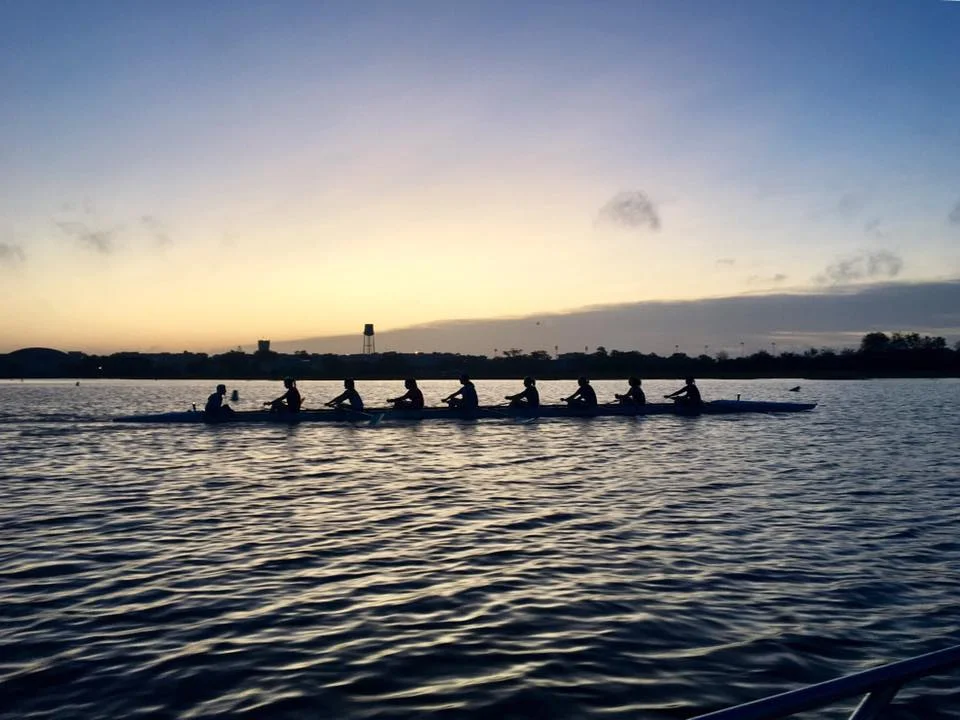
Clemson Sprints Weekend
Coverage and results from the team's trip to Clemson Sprints on Lake Hartwell.
Read More
A non-profit rowing team at the College of Charleston in Charleston, South Carolina.
Championship weekend is where months of training either become a clear, fast race plan or disappear under fatigue. Tapering before championship weekend is not a passive break; it is a controlled shift that protects peak performance while removing the extra load that no longer creates useful fitness.
A crew typically reduces total distance and session duration, then keeps a small amount of race-paced work so coordination and confidence remain sharp. The important word is controlled: abrupt idling can leave athletes flat, while a busy week can bury the work they need to race.
Australian rowers will recognise the rhythm: an early start, the walk down to the boat shed, and a coach calling the rating while the crew settles into the strokes. Whether racing on Sydney Harbour, the Yarra or a suburban regatta course, the same goal applies—arrive fresh enough to convert practice into boat speed.
The right taper is individual, especially in a college program with students carrying study, work and social commitments. It should fit the crew’s event, travel schedule and recent training, with decisions made from clear performance markers rather than copied blindly from an elite squad.
A useful taper often begins 10 to 14 days before the first championship race, although collegiate schedules and travel can shift that window. Total volume may fall substantially while the crew retains shorter pieces at controlled intensity. The aim is to lower accumulated fatigue without surrendering the speed already earned.
Cutting every hard session is equally unhelpful. Each athlete still needs enough high-quality exposure to keep the boat moving cleanly at race pace. Think of the final fortnight as sharpening, not searching: fewer long rows, fewer maximal tests and more precise work that mirrors race rhythm.
The clearest sign of a sound taper is improved readiness at the same output: a cleaner catch, steadier rate, calmer heart rate and better starts. Athletes should not chase personal bests in training this late. A first-year rower and an experienced athlete should not follow identical loading, so individual feedback matters throughout the final week.
Build the plan backward from the first race, then account for finals, travel and any earlier races. If a championship final is on Sunday, Saturday’s race is part of the preparation, not a separate mini-campaign. Decide which crew will race, when it will race and what recovery it needs between events.
Ten to fourteen days out, replace some steady aerobic mileage with efficient technique, starts and short race-pace segments. Over the next week, reduce frequency and duration again, but retain brief touch pieces so the crew does not lose feel for water and pressure. Collegiate athletes with exams nearby benefit from completing key sessions early rather than squeezing them into a rushed break before arvo classes.
In the final 48 to 72 hours, training becomes an activation tool. A light 15-to-20-minute row, a few accelerations and a short strength primer can maintain readiness without adding meaningful fatigue. Race morning should contain only familiar movements: a relaxed stretch, coordinated strokes, a few fast starts and an unhurried bow-on ramp.
Intensity can stay familiar while volume falls. On-water sessions should include clean race-length pieces, but the crew can stop each effort while the strokes remain efficient. Monitoring rate, split, heart rate and perceived effort helps coaches adjust the session rather than forcing every athlete to produce the same erg load.
Strength work also needs a taper. Heavy lifting can be reduced or stopped once the championship is close, with a few light cues used to maintain posture and force production. The greatest danger is a last-minute fitness test that leaves an athlete sore for several days; useful evidence comes from the last two or three weeks, not a final heroic effort.
A crew should rehearse race routines as well as rowing. Calls, starts, settles, sprint positions and recovery strokes need to feel automatic. A team’s coaching team can confirm which cues matter and prevent experimentation during the taper. For a coxed four, this is also the time to agree on concise, decisive calls that will be heard above the cox’s voice and the stroke noise.
Nutrition should remain familiar because digestion under pressure is harder than digestion after a familiar meal. Most rowers need generous carbohydrates before hard sessions and races, plus enough protein across the day to support repair. Do not experiment with a new supplement or heavily greasy breakfast on race morning; ordinary fuel works best when it has been tested.
Australian summer conditions deserve specific attention. UV exposure, heat and dehydration can make a seemingly easy row feel much heavier, so water and electrolyte intake should begin before the session. On courses such as Sydney Harbour or Melbourne’s Yarra, check the forecast, wind and storm warnings. Sunscreen, a light layer and a cool place to recover are basic race kit.
Sleep is the final training dose. Keep the same sleep window as race day, dim screens before bed and use earplugs or eye masks when shared accommodation makes noise likely. During interstate regatta travel, avoid late-night packing. A short nap can help, but it should not replace the planned night’s sleep, and caffeine is best kept to what the athlete already tolerates.
Treat travel and equipment as performance factors. College of Charleston crews competing throughout the Southeast and along the U.S. East Coast should send boats, blades, shoes, oarlocks, nutrition, medical supplies and spare clothing in labelled cases, then verify critical items at every venue. Time-zone changes across Australia can disrupt sleep, so move bedtime gradually. For international crews, jet lag requires the same discipline as a hard training week.
Learn the course before racing. Charleston’s tidal and wind conditions can differ from venues along the East Coast, while Australian crews may face a short ocean course, a river bend or a sheltered lake. Australian regattas often move through state and university events toward national championships, and they rely heavily on volunteer traffic marshals and club crews. Note the start, finish, prevailing wind and safest passing lanes.
Arrival should be calm rather than chaotic. Check the latest team news for schedule changes, weather updates and draw information, then allow time to rig, warm up and speak with the crew. After the race, cool down, replace fluids, eat familiar food and record honest observations about energy, boat speed and steering. Championship performance peaks when every part of the taper supports one clear plan: less accumulated fatigue, retained speed and complete trust in the crew.
College of Charleston Crew fields competitive eights and fours in both Fall head races and Spring sprint regattas across the Southeast.
Learn MoreRecent news, recaps, and announcements from the team.
Coverage and results from the team's trip to Clemson Sprints on Lake Hartwell.
Read More
Spring lineup including Clemson Sprints, SIRA, Dad Vail, and ACRA National Championship.
Read More
Previews and recap of past Head of the Charles appearances, including the 50th annual regatta in 2014.
Read MoreTeam practice, regatta dates, and meetings are listed on the team calendar. Coaches post weekly schedules and travel details for upcoming race weekends.
Charleston Crew / CCAA
PO Box 12941
Charleston, SC 29422
Email: info@cofccrew.org
Phone: 843.513.5900
Phone: 843.276.4241
Interested in joining the team? Fill out the recruitment form and the coaches will follow up.