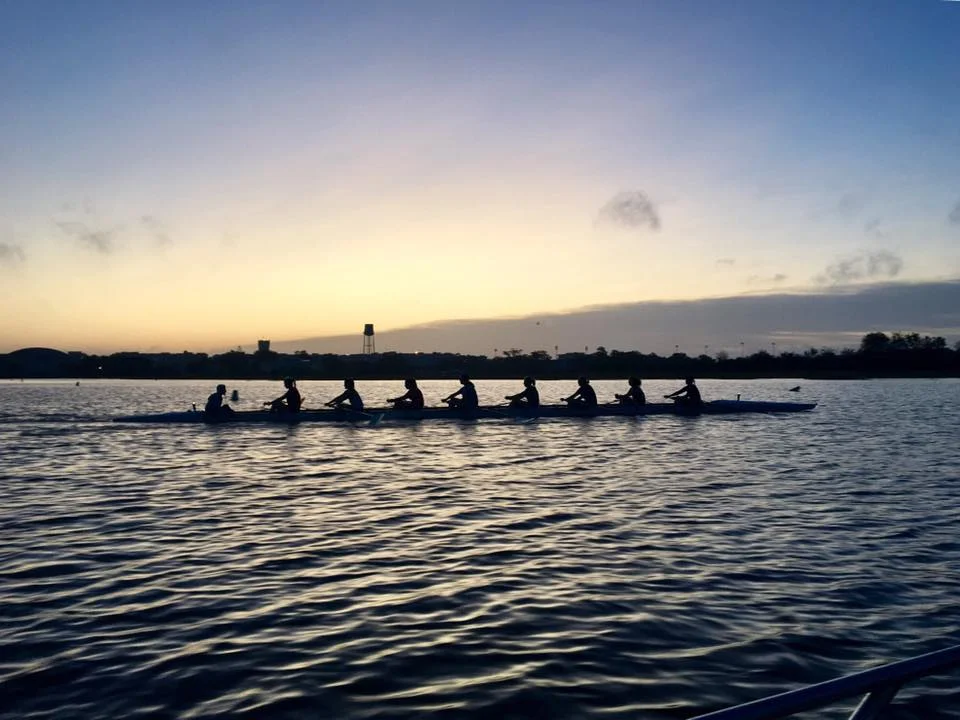
Clemson Sprints Weekend
Coverage and results from the team's trip to Clemson Sprints on Lake Hartwell.
Read More
A non-profit rowing team at the College of Charleston in Charleston, South Carolina.
Charleston, South Carolina, shares a subtropical climate with the kind of intense afternoon thunderstorms that rowers know all too well. Across the Pacific, clubs in Brisbane, Sydney, and Darwin face the same volatile skies during their summer months, which is why safety protocols matter as much in Charleston Harbour as they do on the Brisbane River or Sydney Harbour.
For a crew team, water and lightning make a dangerous combination. The College of Charleston Crew Team treats every storm cell with the seriousness it deserves, drawing on practices used by Australian clubs who navigate similar maritime weather. Whether the sky is building over the Ashley River or rolling in from the Tasman Sea, the principles of preparation, monitoring, and decisive action hold firm.
This piece walks through the layered approach our team uses to keep athletes, coaches, and equipment protected when the forecast turns volatile. From real-time lightning detection to shelter planning and post-storm recovery, every step is designed to make safety second nature.
| Lightning Distance | Crew Response |
|---|---|
| 32+ km out | Normal practice, monitor radar |
| 16–32 km out | Coaches alerted, keep close to dock |
| 8–16 km out | All shells return to dock, oars stowed |
| Under 8 km or storm overhead | Everyone inside boathouse or hard shelter, no exceptions |
Our coaching staff checks the National Weather Service forecast each morning, but we never rely on a single source. Many Australian clubs layer in data from the Bureau of Meteorology, which is widely regarded as one of the most accurate meteorological agencies in the world, and we have adopted a similar multi-source mindset here. We cross-reference radar, satellite imagery, and on-site observations before sending shells onto the water.
Communication matters as much as the forecast itself. Coaches text athletes when conditions shift, group chats buzz with radar screenshots, and captains know they have authority to call crews back without waiting for a formal announcement. Parents and guardians receive alerts through our team app, and a quick glance at the regatta schedule keeps everyone aligned on planned cancellations or delays.
Lightning detection plays a critical role in our daily decisions. Personal lightning detectors and mobile apps provide real-time strike data, allowing us to know exactly how far a storm sits from the boathouse. The general rule in rowing, mirrored by clubs from the Gold Coast to the Cooper River, is that practice ends when lightning comes within 8 to 16 kilometres of the launch point. The 30-30 rule (count seconds between flash and thunder, evacuate if under 30) remains a useful backup when technology falters.
Coaches carry handheld detectors during every outing, and the boathouse has a wall-mounted unit that sounds an audible alert when a strike is detected within range. That redundancy matters, because a single dead battery or lost signal should never be the reason a crew is caught off guard.
When lightning crosses the threshold, every second counts. Coxswains are trained to steer the shortest line to shore, and the nearest coach boat assists any crew that needs a tow. Our team practices "shell-to-shore" drills at the start of each season, similar to the evacuation exercises held by Sydney-based clubs preparing for the spring southerly busters that can whip across the harbour without warning.
Once on land, athletes move directly to the boathouse or, if the structure lacks plumbing and wiring, a designated hard-shelter building on campus. The Australian slogan seen on road signs across Queensland, "If it's flooded, forget it," applies just as well to lightning; no practice is worth standing under a lone tree or near a metal flagpole while a cell passes overhead. After the last clap of thunder, we wait a full 30 minutes before resuming any activity.
Lightning does not only threaten rowers; it can also damage expensive shells and electronics. Charging cables, launch motors, and timing systems are unplugged when storms approach, and bay doors are closed to keep driving rain out of the storage area. We tightened these practices after a particularly aggressive cell rolled through Charleston in 2023, and the boathouse has been far better for it.
Shells are stored indoors whenever possible, and any riggers left on the rack are checked for proper grounding. Coxswain speakers and stroke-coach devices go into padded cases, and laptops used for video review live in a surge-protected cabinet. Wet gear is laid out to dry in the loft after every storm, which helps fight the mould and mildew that thrive in South Carolina humidity.
Safety is only as strong as the newest member of the team. We run a dedicated thunderstorm briefing during novice orientation each August, and returning rowers refresh the protocol during the first week of fall camp. The briefing covers the lightning distance table, the 30-30 rule, and the exact location of our designated hard-shelter buildings on campus.
Newcomers pair with experienced rowers for the first few weeks on the water, and mentors are expected to model calm decision-making when the sky darkens. We have found that anxiety drops sharply when athletes know exactly what to do, who to call, and where to go, a pattern Australian clubs report as well when preparing first-year athletes for the storm-prone months.
Regattas require a different layer of planning because crews travel to venues where conditions may differ from home. Coaches call regatta directors the night before and again at dawn, and we always have a written contingency for shelter, warm-up cancellation, and lane reassignment. When a regatta is delayed, the squad uses the time for stretching, video review, or a team meal.
After a storm passes, we inspect every shell for hull damage, check oarlocks for looseness, and dry out any soaked cushions before the next outing. Fundraisers and outdoor team events follow the same cautious logic, with indoor backup locations and a captain who watches the radar throughout setup. Looking ahead, we are exploring partnerships with local meteorology students who could provide hyper-local forecasts for race days, because Charleston, like much of the southern Australian coast, is only going to see more volatile weather as the climate shifts.
The habits we build on the water carry over into every part of team life. After a cancelled practice, the squad often gathers at a local coffee shop or heads to a study hall together, turning a frustrating weather day into a chance to bond. Our team has a long tradition of cofc-crew-s-social-scene-team-bonding-beyond-the-boathouse that strengthens the culture year-round, and stormy days simply give us another excuse to come together.
College of Charleston Crew fields competitive eights and fours in both Fall head races and Spring sprint regattas across the Southeast.
Learn MoreRecent news, recaps, and announcements from the team.
Coverage and results from the team's trip to Clemson Sprints on Lake Hartwell.
Read More
Spring lineup including Clemson Sprints, SIRA, Dad Vail, and ACRA National Championship.
Read More
Previews and recap of past Head of the Charles appearances, including the 50th annual regatta in 2014.
Read MoreTeam practice, regatta dates, and meetings are listed on the team calendar. Coaches post weekly schedules and travel details for upcoming race weekends.
Charleston Crew / CCAA
PO Box 12941
Charleston, SC 29422
Email: info@cofccrew.org
Phone: 843.513.5900
Phone: 843.276.4241
Interested in joining the team? Fill out the recruitment form and the coaches will follow up.