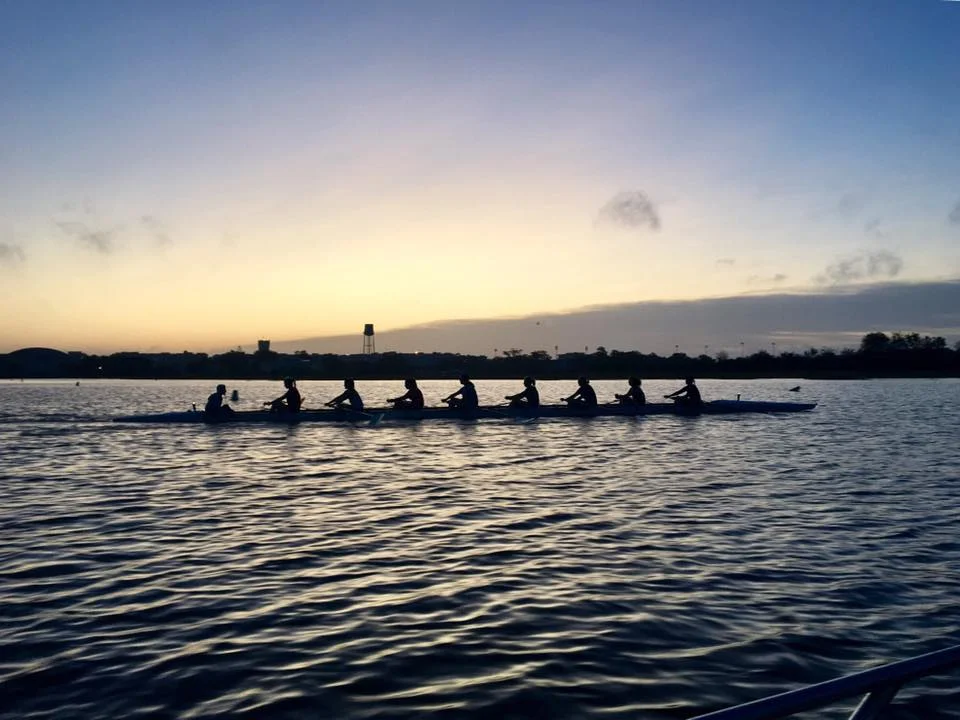
Clemson Sprints Weekend
Coverage and results from the team's trip to Clemson Sprints on Lake Hartwell.
Read More
A non-profit rowing team at the College of Charleston in Charleston, South Carolina.
Winter break erodes rowing fitness faster than most athletes expect. Even rowers who keep up erg sessions at home often find their on-water feel, raw strength and aerobic base have softened by the first practice back. The good news is that a structured four-week ramp brings nearly everyone to race-ready condition without injury.
In Australia, the club season follows a different rhythm than in the Northern Hemisphere. Southern winter runs June through August, so Brisbane, Melbourne and Adelaide clubs push their heaviest mileage through autumn and resume full water sessions around the start of the Australian academic year. Sydney University Boat Club typically restarts serious water work in late February after the southern break, while Melbourne crews lean on ergometer blocks during the coldest months.
For rowers in the United States, returning after the December–January break means rejoining a winter-to-spring calendar already dotted with early regattas. Whether you paddle out of Iron Cove in Sydney or Charleston Harbor, the conditioning principles below translate directly across hemispheres.
The first step is a frank physical audit. Hop on the erg for a two-thousand-metre test in your second week back and record both your split and stroke rate. Pair the result with a short mobility screen, focusing on hip flexors, hamstrings and lower back, since these areas flare up most after long periods sitting.
Australian rowers can lean on the Australian Institute of Sport's movement-screening protocols, while American rowers often use the U.S. Olympic & Paralympic Training Center resources. Write your baseline numbers somewhere visible, because what you cannot measure is harder to improve.
Most coaches apply a 10 to 15 percent weekly volume increase during the return-to-water phase. Weeks one and two should stay at low rate, around 18 to 20 strokes per minute, with steady pieces of forty to sixty minutes. Save rate work above 26 for weeks three and four once your shoulders and lower back have remembered the catch.
Spend roughly twice as long on stroke-length drills as on power-ten bursts during early sessions, setting the boat before driving. Rowing through Charleston Harbor offers an ideal low-stress environment to rebuild sequencing, and crews appreciate the coastal rowing appeal that comes with calm harbour water and reliable tidal flow in shoulder season.
Cross-training compresses aerobic gains when boat space is tight. Cycling, swimming and trail running each deliver a slightly different stimulus; coastal rowers from Hobart to Noosa often supplement with surf lifesaving drills, which train grip, breath control and shoulder stability alongside aerobic load. Two short sessions a week is plenty during the first month.
Resistance training belongs in the weekly plan, though volume should stay modest in the first fortnight. A simple programme of squats, Romanian deadlifts, pull-ups and core circuits at roughly 70 percent of your pre-break one-rep max rebuilds neural drive without crushing recovery. Students juggling labs and finals can use the framework in balancing classes practice and regattas as a cofc rower, a sample weekly template used by College of Charleston athletes.
Nutrition matters more during the return phase than at peak training, because the body is repairing tissue it hasn't stressed in weeks. The Australian Dietary Guidelines recommend five to seven grams of carbohydrate per kilogram of body weight for athletes in heavy training, with 1.6 to 2.2 grams of protein per kilogram. Hydration matters equally, so carry at least one litre during longer steady pieces, particularly in the hotter return-to-water weeks around Sydney and Brisbane.
Australian rowers increasingly book sports-recovery clinics accredited through state bodies such as Sport and Recreation Victoria, while American students rely on campus athletic training rooms. A ten-minute cool-down row, a protein-rich meal within an hour and a consistent lights-out time do more for your split than any gadget.
Once you rejoin team practices, sync your personal plan with the coaching staff. Programs like the College of Charleston post meeting times, erg tests and race weekends through their team schedule, making it easy to plan travel around midterms and family commitments. Australian club rowers should align similarly with the Sydney Rowing Club calendar or the Melbourne University Boat Club winter head race series.
Trust the timeline rather than racing back to peak numbers. Most recreational rowers regain 90 percent of pre-break capacity within three to four weeks of consistent training, with the final ten percent taking another month of steady work. Use early-season regattas as benchmarks rather than burners.
Keep a training log even if it is just a few notes per session. A short entry recording rate, split, how your back felt, and any niggles catches problems early. Patience is the most underrated skill in rowing, especially after a long break, and rowers who trust the process tend to arrive at the regatta ready rather than spent.
Track small wins alongside raw splits. A crisper catch, a smoother recovery slide, slightly better posture at the finish all signal that technique is rebuilding on top of fitness. Sharing notes with a training partner or coach keeps motivation high when erg scores feel stuck, and the same principle holds whether you are prepping for the Head of the Yarra or a spring regatta in Charleston.
| Phase | Weekly volume | Typical session | Stroke rate focus | Strength work |
|---|---|---|---|---|
| Week 1–2 | 50–60% of summer peak | 40–60 min steady state | 18–20 spm | 70% 1RM, full body |
| Week 3–4 | 65–75% of summer peak | Steady plus 4 × 10 min | 20–24 spm | 75% 1RM, posterior chain |
| Week 5+ | 80–90% of summer peak | Race-pace pieces | 22–28 spm | 80% 1RM, periodised |
College of Charleston Crew fields competitive eights and fours in both Fall head races and Spring sprint regattas across the Southeast.
Learn MoreRecent news, recaps, and announcements from the team.
Coverage and results from the team's trip to Clemson Sprints on Lake Hartwell.
Read More
Spring lineup including Clemson Sprints, SIRA, Dad Vail, and ACRA National Championship.
Read More
Previews and recap of past Head of the Charles appearances, including the 50th annual regatta in 2014.
Read MoreTeam practice, regatta dates, and meetings are listed on the team calendar. Coaches post weekly schedules and travel details for upcoming race weekends.
Charleston Crew / CCAA
PO Box 12941
Charleston, SC 29422
Email: info@cofccrew.org
Phone: 843.513.5900
Phone: 843.276.4241
Interested in joining the team? Fill out the recruitment form and the coaches will follow up.