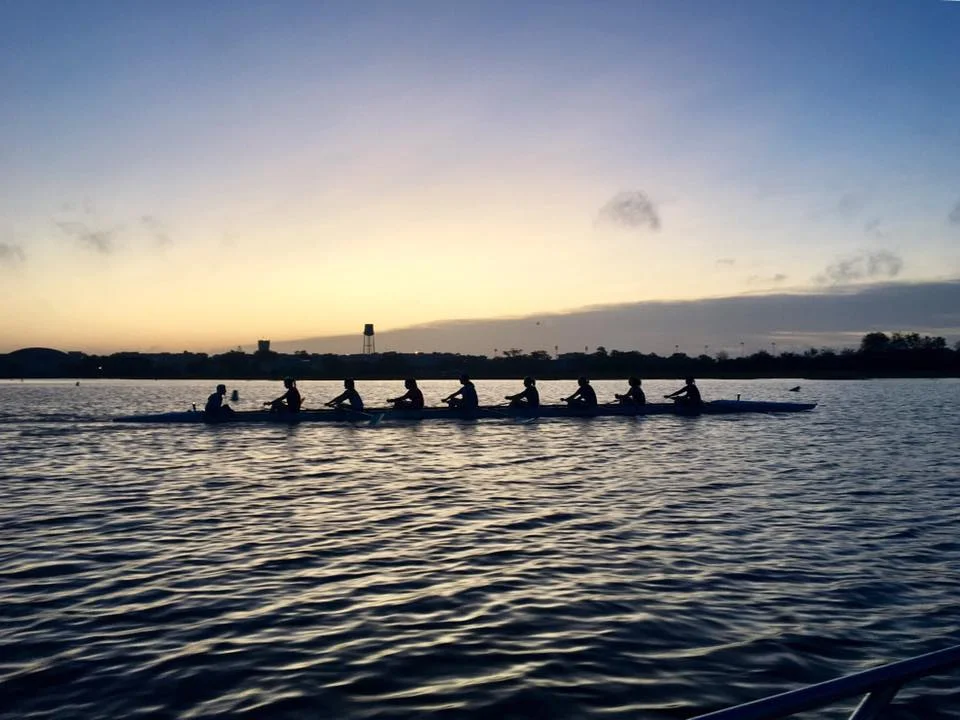
Clemson Sprints Weekend
Coverage and results from the team's trip to Clemson Sprints on Lake Hartwell.
Read More
A non-profit rowing team at the College of Charleston in Charleston, South Carolina.
Rowing demands early starts, repeated drills and careful attention to changing conditions. For student athletes, the day can fill quickly with lectures, practical classes, strength sessions, travel and recovery. Studying in a boat is therefore less about squeezing in every possible minute and more about using the right kind of work at the right time.
A crew boat is not a substitute for a quiet library. Movement, spray, wind and instructions from the coxswain make it unsuitable for reading dense chapters or writing an essay. It can, however, be a useful setting for memory work, language practice, audio revision and mental preparation.
The most effective approach is to divide university tasks into small categories. Deep-focus assignments belong on land, while short revision activities can fit around rowing. This system works for beginners as well as experienced athletes joining a collegiate club program.
For rowers in Australia, local routines may shape the schedule. An early session before a hot Brisbane day, a tram ride to class in Melbourne or a train commute across Sydney can all become part of a practical study plan. Sunscreen, water and reliable transport matter as much as a well-organised timetable.
Use quiet periods before launching or after landing for tasks that do not require intense concentration. Reviewing flashcards, listening to recorded lectures or reciting key definitions can be productive while the crew prepares equipment. Keep notes on a waterproof phone case or laminated cards rather than carrying loose paper near the water.
Avoid studying during active rowing unless the coxswain has clearly approved it and safety is unaffected. A rower must respond to commands, maintain posture and protect the rhythm of the boat. Academic progress should never interfere with crew awareness, equipment handling or water safety.
At the start of each week, place fixed commitments into one calendar: training, regattas, lectures, tutorials, work shifts and travel. Then assign realistic study blocks around them. A ninety-minute session after adequate recovery is usually more valuable than three exhausted attempts scattered through the evening.
Check the team’s regatta calendar when planning assessments and travel. Australian university terms can become particularly crowded around mid-semester tests, winter competitions and casual employment shifts, so identifying busy weeks early helps prevent last-minute pressure.
Commuting can provide useful study time when the task is portable and interruption-friendly. On a Sydney train, for example, a rower might review lecture slides or complete a short quiz. In Melbourne, a tram journey can suit audio notes, while a bus trip from a suburban campus may work for vocabulary practice.
Keep demanding writing and problem-solving for a stable desk. Travel is better suited to retrieval practice: close the textbook, recall the main ideas and check what was missed. This method reveals weak areas without requiring a full study setup.
Rowers often mistake fatigue for a time-management problem. After a hard ergometer session or long water workout, the brain may need food, hydration and a short rest before it can process new information. A simple post-training routine—refuel, shower, reset, then study—can improve concentration more than forcing an immediate two-hour block.
Use Australian everyday habits to your advantage. Prepare breakfast the night before, keep a water bottle in your training bag and pack a portable snack for the trip to campus. In warmer regions, schedule demanding work away from the hottest part of the afternoon and treat sleep as part of academic preparation.
Create separate folders for each subject, then keep a short “boat revision” file containing formulas, vocabulary, dates and essential concepts. Download materials before leaving campus because mobile reception can be unreliable near some waterways. Voice recordings can help with pronunciation or memorising a presentation, provided they do not distract from training.
Respect copyright when saving or sharing course readings. Australian students should use materials supplied through their university library or learning platform and avoid distributing scanned chapters without permission under the Copyright Act 1968. A clean, searchable note system also makes it easier to review material between competitions.
Tell tutors and lecturers about confirmed regattas as soon as the schedule is available, while still meeting each course’s formal requirements. The team’s latest team updates may help athletes track changes to training, travel or fundraising commitments that affect their study week.
Crew members should also communicate with coaches and student officers when assessment deadlines overlap with major racing. Australian universities usually publish clear special-consideration procedures, and workplace health and safety duties support sensible risk management during training. Planning early allows the athlete to protect attendance, recovery and academic standards without relying on emergency extensions.
College of Charleston Crew fields competitive eights and fours in both Fall head races and Spring sprint regattas across the Southeast.
Learn MoreRecent news, recaps, and announcements from the team.
Coverage and results from the team's trip to Clemson Sprints on Lake Hartwell.
Read More
Spring lineup including Clemson Sprints, SIRA, Dad Vail, and ACRA National Championship.
Read More
Previews and recap of past Head of the Charles appearances, including the 50th annual regatta in 2014.
Read MoreTeam practice, regatta dates, and meetings are listed on the team calendar. Coaches post weekly schedules and travel details for upcoming race weekends.
Charleston Crew / CCAA
PO Box 12941
Charleston, SC 29422
Email: info@cofccrew.org
Phone: 843.513.5900
Phone: 843.276.4241
Interested in joining the team? Fill out the recruitment form and the coaches will follow up.