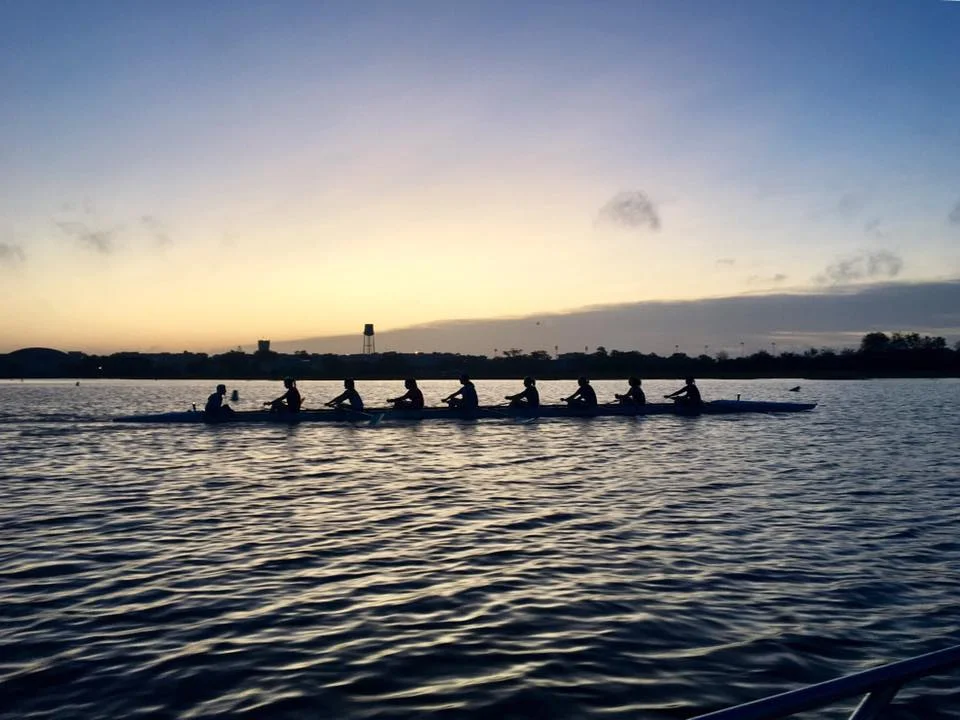
Clemson Sprints Weekend
Coverage and results from the team's trip to Clemson Sprints on Lake Hartwell.
Read More
A non-profit rowing team at the College of Charleston in Charleston, South Carolina.
Most athletes do not become varsity rowers by chasing one fast erg time. They develop repeatable technique, durable fitness, boat awareness and the consistency coaches need under pressure. Promotion is a performance journey rather than an overnight change.
Charleston’s collegiate schedule is not identical to Australia’s, where athletes often move from club competition to state or national selection. The pathway is nevertheless familiar. Sydney Harbour and Melbourne’s Yarra have strong rowing cultures, while Saturday regattas and club debriefs shape competitive life. Learn the movement, train patiently, race well and contribute to the crew.
A novice should first understand sweep rowing and sculling. In sweep, each rower handles one oar; in sculling, each uses two. Coaches should correct the catch, drive, finish and recovery while the athlete learns to move with the crew rather than force an individual rhythm. Video can expose technical differences that feel invisible from inside the boat.
The official team website is a useful place to see how College of Charleston presents its program, coaching and opportunities for beginners and experienced rowers. On the water, begin with stable balance and controlled pressure, then add speed. An erg can teach pacing and force, but it cannot replace learning how the boat responds to weight distribution, steering calls and changing conditions.
Varsity standards depend on work capacity: sustained aerobic fitness, repeated high-effort pieces and enough strength to transmit leg power through the seat and handle. Novices often improve by tolerating slightly more each week, provided technique stays sound. A coach can use weekly erg scores or split times to show whether fitness is genuinely progressing.
Charleston’s main racing period follows the Northern Hemisphere academic year, whereas Australia’s summer regatta season reaches into December and January. Build around that seasonal difference without waiting for ideal conditions. Consistency matters more than dramatic weekly changes, and missed sessions should be adjusted rather than compensated for with punishing extra effort.
An eight magnifies every technical fault because eight athletes and a cox must turn separate actions into one boat speed. Novices should learn to follow the stroke, match the rhythm and respond promptly to calls. The cox manages the crew, not just the race plan, so clear communication and calm decision-making become essential skills.
Selection also depends on reliability. Arriving prepared, listening to feedback and accepting a less glamorous boat position can matter as much as raw power. Athletes who make teammates faster are demonstrating the teamwork varsity coaches expect.
Early races should answer specific questions: Did the crew hold its rhythm under pressure? Was the stroke length effective? Where did energy disappear? A novice who treats an outing as a test and review becomes more useful than one who celebrates only a personal best.
Australian club racing often includes a short-distance head race before longer events, a format well suited to practising starts and communication. At a Saturday regatta, compare technique notes with split data, then choose one correction for the next outing. Coaches can translate that evidence into selection standards while keeping the process transparent and achievable.
Training load must fit school or work, travel and recovery. A realistic plan gives a novice enough frequency to learn motor patterns without turning every session into an injury risk. The checklist below offers a starting point for discussion with a coach rather than a substitute for individual programming.
Adjust the numbers as commitments, experience and medical advice change. A useful weekly review asks what improved, what felt difficult and what needs recovery. Athletes who can repeat this process across a season build the stamina and judgement required for varsity selection.
Soreness is not the only measure of fatigue. Rising resting heart rate, poor sleep, declining mood or repeated technique breakdown can signal that training has exceeded current capacity. Reduce load when needed and seek qualified medical advice for persistent pain. In Australia, sports dietitians and general practitioners can support fuelling, while chemists may stock supplements; approved food should still provide the foundation.
College rowing also competes with classes, assignments and travel. A varsity candidate should plan study blocks around long training days rather than treat academics as time left over after rowing. When a coach needs performance standards, current availability and honest fatigue reporting are part of the selection case.
Strong varsity teams are built in the clubroom, boathouse and lift as much as on the water. Novices can contribute by mentoring newer athletes, attending team events and learning the practical work behind training camps and race entries. That reliability signals maturity before a coach has to offer extra opportunities to prove commitment.
College of Charleston’s fundraising overview shows how the rowing team raises money and turns community support into program resources. A varsity rower should understand and support that model, especially when donations help fund equipment, travel or athlete participation. Belonging, reciprocity and consistent service can therefore become both personal development and a competitive strength.
College of Charleston Crew fields competitive eights and fours in both Fall head races and Spring sprint regattas across the Southeast.
Learn MoreRecent news, recaps, and announcements from the team.
Coverage and results from the team's trip to Clemson Sprints on Lake Hartwell.
Read More
Spring lineup including Clemson Sprints, SIRA, Dad Vail, and ACRA National Championship.
Read More
Previews and recap of past Head of the Charles appearances, including the 50th annual regatta in 2014.
Read MoreTeam practice, regatta dates, and meetings are listed on the team calendar. Coaches post weekly schedules and travel details for upcoming race weekends.
Charleston Crew / CCAA
PO Box 12941
Charleston, SC 29422
Email: info@cofccrew.org
Phone: 843.513.5900
Phone: 843.276.4241
Interested in joining the team? Fill out the recruitment form and the coaches will follow up.