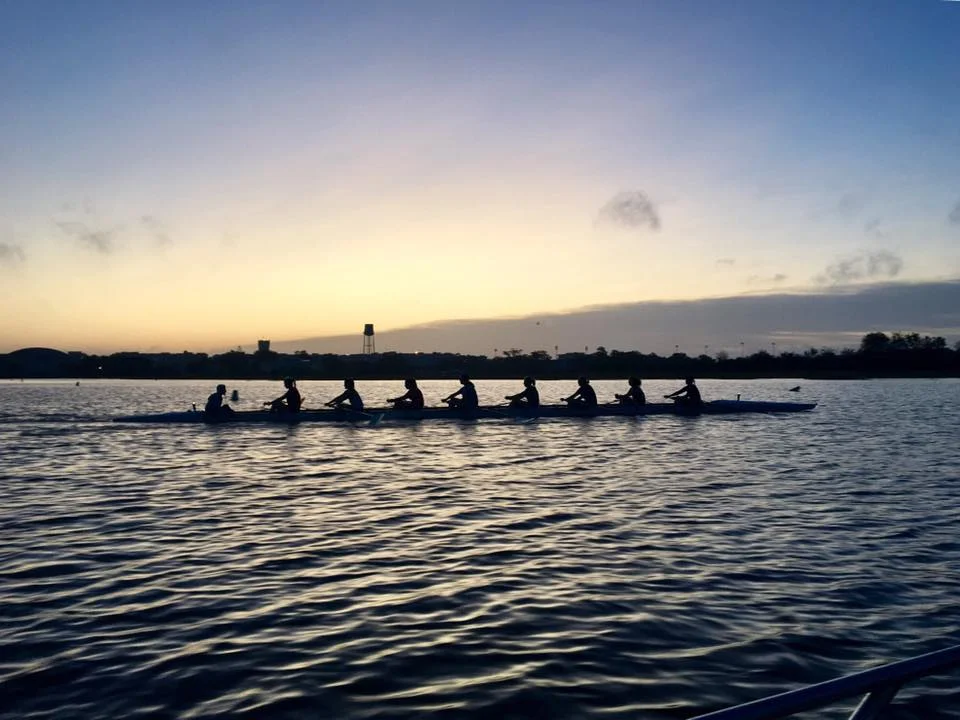
Clemson Sprints Weekend
Coverage and results from the team's trip to Clemson Sprints on Lake Hartwell.
Read More
A non-profit rowing team at the College of Charleston in Charleston, South Carolina.
A 2K rowing race is short enough to demand speed and long enough to punish poor pacing. For a college crew athlete, preparation combines steady aerobic work, technical drills, strength training and carefully measured intervals on the ergometer.
This sample plan reflects the rhythm of a collegiate rowing week: early starts, lectures or work commitments, water sessions when conditions allow, and recovery that is treated as part of training. It suits experienced rowers and can be scaled for beginners joining a club squad.
The College of Charleston Crew Team provides a useful example of how a student programme can balance competition, coaching and team life. Its crew team resources show the broader setting around regular practices and regattas, while the plan below focuses on the individual rower preparing for a 2K test.
Monday begins with 45 to 60 minutes of easy rowing at a conversational intensity. On a rowing machine, the stroke rate may sit around 18 to 20 strokes per minute, with attention on relaxed recovery, stable posture and a strong connection through the legs.
The purpose is to clear fatigue from the weekend while maintaining useful volume. A short mobility routine follows: hip flexor stretches, thoracic rotations, calf work and gentle shoulder movements. An Australian rower training before a busy day in Sydney or Melbourne may find an early session easier to protect than an evening slot affected by study, commuting or summer heat.
Tuesday is the key interval session. A practical set is four repetitions of 1,000 metres at around 2K pace, with five minutes of light paddling between efforts. Beginners can use three repetitions or reduce the intensity while preserving technical control.
The first interval should feel controlled rather than heroic. Each repetition should feature consistent split times, a firm leg drive and a composed finish. Recording stroke rate, average split and heart rate helps reveal whether the final interval was earned through discipline or reached through an unsustainable opening sprint.
A water session develops skills that an ergometer cannot fully reproduce. Crews practise blade placement, balance, rhythm and moving together, often using technical drills before completing several steady pieces. The session should feel moderate, allowing athletes to absorb the demanding work from Tuesday.
Weather and access shape rowing in every location. Sydney crews may work around tidal flow, Brisbane athletes manage humidity, and Melbourne squads often prepare for sudden changes in wind and temperature. Checking the forecast, carrying a spare layer and keeping a water bottle in the boat area are ordinary habits that protect consistency.
Thursday is suited to strength training, provided the athlete is recovering well. A 45-minute session might include squats or split squats, Romanian deadlifts, pull-ups or rows, bench-supported pressing, and trunk exercises. Two to four controlled sets are sufficient; the goal is force production and resilience rather than bodybuilding fatigue.
Technique comes before load. A coach or qualified trainer should check lifting form, particularly when a rower is new to resistance training. Australian facilities operate under state and territory work health and safety requirements, so safe equipment use, clear walkways and appropriate supervision matter in a university gym as much as they do in a commercial training centre.
Friday uses shorter, faster repetitions to improve speed under pressure. One option is eight rounds of 250 metres at faster than 2K pace, with equal-time recovery. Another is six 500-metre efforts with three minutes of easy rowing. The selected session should complement Tuesday rather than turn the week into repeated maximal testing.
The final 100 metres of a 2K often exposes technical weakness. Athletes should keep the handle path level, avoid shortening the stroke and raise the rate gradually. A controlled finish is more useful than a dramatic collapse, especially when the goal is to repeat the performance at a regatta.
Saturday can feature a longer water row, race simulation or crew session. A useful progression is 20 minutes steady, three minutes at race rhythm, then a 1,000-metre piece followed by technical rowing. Teams preparing for interstate competition can check their upcoming events through the regatta schedule and shape this session around travel and racing demands.
Nutrition should be practical and familiar. Oats, toast, yoghurt, fruit and rice-based meals are affordable staples in the Australian grocery market, while a rower should avoid experimenting with unfamiliar supplements before a hard session. Sport Integrity Australia rules apply to athletes subject to anti-doping policies, so supplements require careful label checking and sensible caution.
Sunday is generally a rest or active-recovery day. An easy walk, gentle cycle or short mobility session can support circulation without adding meaningful training stress. Sleep is the priority, with regular bedtimes helping the nervous system recover from early mornings and high-intensity work.
A rower can also review the week by comparing planned and completed sessions, noting unusual soreness, mood, sleep and ergometer results. Training should be adjusted when illness, academic pressure or persistent fatigue appears. The aim is consistent preparation, not proving fitness in every workout.
During the final seven days before a 2K, volume falls while brief touches of intensity remain. A rower might complete three 500-metre pieces early in the week, an easy technical row later, and several short bursts two days before testing. Heavy lifting and exhausting long rows are removed.
The team’s competitive history can provide motivation without replacing sound preparation; the Hall of Champions reflects the standards that successful crews have built over time. On test day, a clear warm-up, familiar breakfast, measured opening 500 metres and committed final 500 create the best chance of a strong result. Each stroke should serve the plan.
College of Charleston Crew fields competitive eights and fours in both Fall head races and Spring sprint regattas across the Southeast.
Learn MoreRecent news, recaps, and announcements from the team.
Coverage and results from the team's trip to Clemson Sprints on Lake Hartwell.
Read More
Spring lineup including Clemson Sprints, SIRA, Dad Vail, and ACRA National Championship.
Read More
Previews and recap of past Head of the Charles appearances, including the 50th annual regatta in 2014.
Read MoreTeam practice, regatta dates, and meetings are listed on the team calendar. Coaches post weekly schedules and travel details for upcoming race weekends.
Charleston Crew / CCAA
PO Box 12941
Charleston, SC 29422
Email: info@cofccrew.org
Phone: 843.513.5900
Phone: 843.276.4241
Interested in joining the team? Fill out the recruitment form and the coaches will follow up.