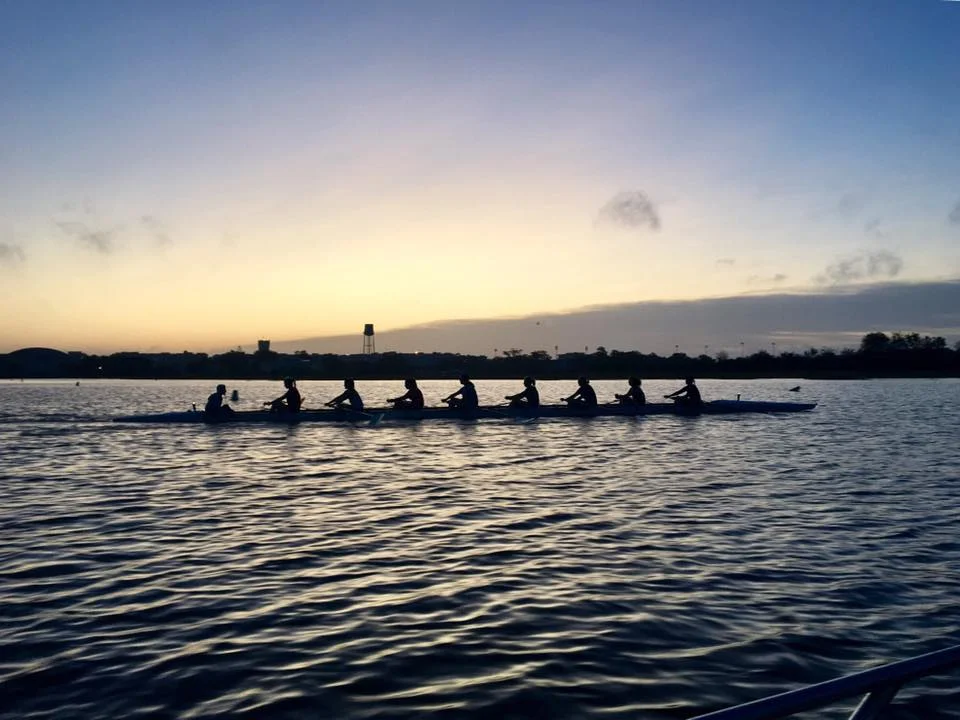
Clemson Sprints Weekend
Coverage and results from the team's trip to Clemson Sprints on Lake Hartwell.
Read More
A non-profit rowing team at the College of Charleston in Charleston, South Carolina.
The Head of the Chattahoochee returns to Atlanta each autumn as one of the Southeast's most respected head races, drawing collegiate programs from across the region to the waters west of the city. For the College of Charleston Crew Team, the regatta marks a meaningful checkpoint in the fall season, a chance to measure progress against a deep field while preparing for the championship stretch ahead. Australian followers of collegiate rowing will recognise the structure straight away, since head races down under follow a similar time-trial format on courses such as the Yarra River in Melbourne or the Nepean near Penrith.
Conditions on the Chattahoochee tend to reward crews who have trained patiently through the southern summer. Cool mornings, variable current, and a five-kilometre stretch that twists beneath old oak canopies all shape how the race unfolds. Anyone who has lined up for Head of the Yarra or rowed the Torrens in Adelaide during their spring carnival will understand how river personality influences pacing decisions, and that parallel gives Australian supporters an easy entry point into previewing this American fixture.
The Chattahoochee course begins near Powers Island and finishes downstream at the boathouse area, tracing a path that mixes straightaways with gentle bends that demand consistent steering. Crews launch in ten-second intervals, and the rolling start lets smaller clubs like College of Charleston chase faster opponents if their rhythm holds from the first five hundred metres. Compared with shorter sprint regattas, head races reward sustained aerobic output and clean technical execution, which is why coaches use these events as diagnostics for the heavier spring season.
Wakes from powerboats and the occasional stiff crosswind off the river's wider sections can complicate an otherwise orderly row. Coxswains in particular need to manage the rhythm at the start, where energy is high and technique often slips. The College of Charleston crew has historically sent both novice and varsity eights to this regatta, giving newer athletes a chance to absorb the pace of a multi-lane time trial before the more pressured championship calendar arrives.
Race morning for a Charleston athlete typically begins well before sunrise, with boat rigging the night before and a quiet breakfast at the team house. Athletes load oars, cox boxes, and bow numbers, then drive north in vans for a few hours, a routine familiar to anyone who has travelled from Penrith to Lake Barrington for Tasmania's Head of the River. The team website carries the full travel schedule, including departure times and launch assignments, which families and alumni use to follow along on race weekend.
The actual warm-up window at the Chattahoochee is short, so captains map out inefficiencies as clusters of crew attention rather than scatter them across the boat. Quick drills on the water, a short piece at race pace, and a focused walk-through of the starting sequence tend to make up the bulk of pre-race preparation. Coaches often sit with each crew after the paddle to talk about race plan and to reinforce technical cues before crews queue for the start.
The three weeks leading into Atlanta tend to look different from the early-season mileage blocks that build the engine. Volume drops slightly, and intensity rises, with more attention to race-pace pieces and technical sharpening on the water. Anyone who has trained through an Australian winter at Lake Wendouree will recognise the value of sharpening work after a long aerobic base, and the same principle guides how the Cougars structure their final pre-regatta camp.
Stroke mechanics get extra focus during this window, and the coaching staff often pulls drills from the team's published training resources to reinforce habits that fatigue tends to break down. Drills like those described in the team's recent technical write-up on rowing drills that improve your stroke on the water anchor this sharpening phase. Cross-training, including erg sessions and mobility work, also peaks in importance because athletes need to arrive fresh yet sharp. Recovery practices, including hydration protocols and proper cool-down routines, become non-negotiable as the team edges closer to competition.
Coxswain selection at a head race often comes down to race plan communication and the ability to hold a straight line through the bends. Charleston typically runs a coxswain meeting the evening before, where each pair runs through calls for the opening minute, the middle bridge, and the final sprint. Australian clubs handle this similarly, often pulling their coxswains aside after a main training session on the Maribyrnong in Melbourne or at Champion Lakes near Perth.
The varsity eight for Atlanta usually reflects late-season seat race results, while the second varsity and novice boats offer the chance to experiment with lineup combinations. Rowers who have spent the fall rotating through the boat often find their most consistent seat during these final regattas, and the lessons learned tend to carry forward into winter training. Coaches will likely use this race as a final data point before locking down the early-spring selection matrix.
After the Head of the Chattahoochee, the College of Charleston crew turns attention toward the Head of the Charles in Boston and the remaining fall calendar that stretches along the East Coast. Each regatta provides feedback that shapes winter training, and the Atlanta race offers an early benchmark for crews aiming at spring qualifiers. Fans who track the program through the official schedule often use these fall results to project how the spring boats might stack up.
There is also a quieter benefit to the trip, one that builds team identity across van rides and shared meals in Atlanta's boathouse district. Australian university crews speak fondly of similar bonding moments, whether they come from a long bus ride to Nagambie for the Victorian Head of the River or a cold camp at Lake Barrington on the Tasmanian plateau. The crew returns to Charleston with sharper strokes, cleaner race plans, and a deeper sense of what the season can hold.
College of Charleston Crew fields competitive eights and fours in both Fall head races and Spring sprint regattas across the Southeast.
Learn MoreRecent news, recaps, and announcements from the team.
Coverage and results from the team's trip to Clemson Sprints on Lake Hartwell.
Read More
Spring lineup including Clemson Sprints, SIRA, Dad Vail, and ACRA National Championship.
Read More
Previews and recap of past Head of the Charles appearances, including the 50th annual regatta in 2014.
Read MoreTeam practice, regatta dates, and meetings are listed on the team calendar. Coaches post weekly schedules and travel details for upcoming race weekends.
Charleston Crew / CCAA
PO Box 12941
Charleston, SC 29422
Email: info@cofccrew.org
Phone: 843.513.5900
Phone: 843.276.4241
Interested in joining the team? Fill out the recruitment form and the coaches will follow up.