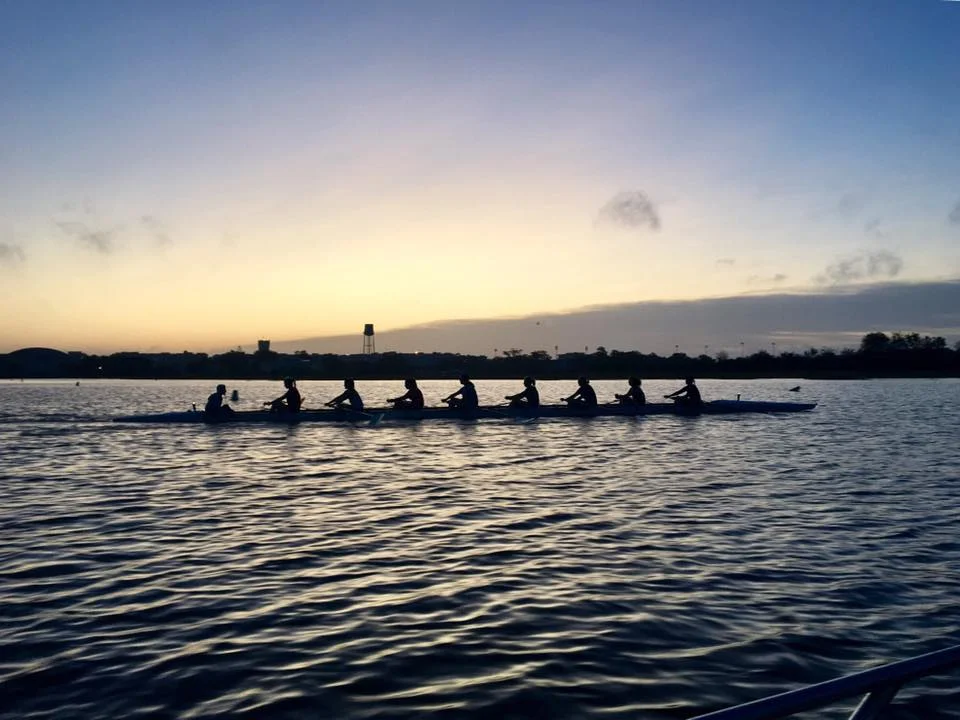
Clemson Sprints Weekend
Coverage and results from the team's trip to Clemson Sprints on Lake Hartwell.
Read More
A non-profit rowing team at the College of Charleston in Charleston, South Carolina.
Rowing has a language of its own, and learning it makes every training session easier to follow. Terms such as catch, drive, finish and release describe precise moments in the stroke, while words such as shell, blade and coxswain identify the equipment and people around the boat.
For Australian beginners, the vocabulary applies whether you are training on the Yarra River in Melbourne, the Swan River in Perth or Sydney Harbour. Water conditions change, but the fundamentals remain consistent across sweep rowing, sculling, ergometer sessions and regattas.
A collegiate crew also has its own rhythm. Early alarms, university lectures, shared equipment and weekend travel are part of the routine. The College of Charleston Crew Team welcomes experienced athletes and newcomers, making its rowing terminology useful for anyone considering a club programme.
Understanding the language also helps rowers communicate safely. Clear calls matter when boats are leaving a pontoon, crews are moving through a busy stretch of water or a coxswain is managing a race start.
A rowing boat is commonly called a shell. Each rower sits on a sliding seat and pushes against a foot stretcher while moving an oar through the water. In sweep rowing, each athlete uses one oar; in sculling, each person holds two.
The coxswain, or cox, steers the boat, sets the rhythm and gives instructions. The bow is the front of the shell, while the stern is the back. Seat numbers usually run from bow to stern, with the athlete closest to the stern often called the stroke.
The catch is the instant when the blade enters the water. Before it, the rower is at the front of the slide with the knees bent, arms extended and body prepared. The blade should enter cleanly rather than slap or dig into the water.
The drive begins as the legs push against the foot stretcher. The body then opens from the hips before the arms draw the handle towards the lower ribs. At the finish, the handle moves away, the hands turn the blade flat and the rower begins the recovery towards the catch.
A strong catch depends on timing. If the blade enters too late, the rower misses the first part of the drive; if it enters too early, the boat can check and lose speed. Coaches may ask for a sharper catch, lighter hands or a longer reach.
During the drive, the legs provide much of the power. The finish, sometimes called the extraction, is where the blade leaves the water. A clean finish avoids excessive splashing and prepares the crew for a controlled recovery.
The release is the movement that takes the blade out of the water at the end of the stroke. Rowers tap the handle down slightly, extract the blade and feather it so the flat surface turns parallel to the water.
The recovery follows the release: arms extend, the body pivots forward and the knees rise as the seat rolls towards the stern. Stroke rate describes the number of strokes per minute. A crew may row at a steady rate during a long piece and lift the rate for a race start.
The blade is the rowing oar, while the handle is the part held by the athlete. The loom is the shaft between the handle and the spoon-shaped blade. In sweep rowing, blades may be named by their side: port is generally the left side facing the bow, and starboard is the right.
Set refers to the boat’s balance from side to side. When a shell leans, rowers may be told to square earlier, relax the outside hand or keep their bodies level. On busy Australian waterways such as Brisbane River, maintaining balance and following the coxswain’s directions is essential.
A piece is a planned effort, such as a 500-metre interval or a ten-minute row. Crews may complete several pieces with rest between them. An erg is short for rowing ergometer, the indoor machine used for fitness and technical work.
Calls vary between clubs, but “hands away”, “body over” and “slide” describe stages of the recovery. “Ready all, row” begins an effort, while “easy” usually means stop rowing and let the blades rest flat on the water. New rowers should learn the local calls before joining a race crew.
Students balancing lectures, work and training can find the routine demanding; this account of balancing study and training gives useful context for collegiate rowing life.
A regatta is a rowing competition, while a heat, semi-final and final are stages of racing. Crews may discuss their start sequence, settle, sprint and rate changes before launching. Australian regattas often begin early, so sunscreen, hydration and a reliable breakfast are practical parts of race preparation.
Rules differ by waterway and state. Clubs in New South Wales, Victoria and Queensland must follow local maritime requirements, including applicable lifejacket and boating rules. Junior programmes also need to manage child-safety obligations such as Working With Children Checks, which vary between states. Clubs collecting member information should handle it carefully under the Privacy Act 1988.
| Term | Meaning | What A Beginner Should Notice |
|---|---|---|
| Catch | Blade enters the water | Quiet, connected entry |
| Drive | Push from the catch to the finish | Legs start the movement |
| Finish | End of the powered stroke | Hands draw in before extraction |
| Release | Blade leaves the water | Tap down and feather |
| Recovery | Movement back to the catch | Arms, body, then slide |
| Rate | Strokes per minute | Higher is not always faster |
The fastest way to learn is to connect each word with a movement. Watch an experienced crew, practise the sequence on an erg and repeat the calls aloud until the timing feels natural. Video review can reveal whether the blade is catching late or the body is opening too early.
Club membership also introduces terms that are specific to a crew’s equipment, schedule and race plans. A current crew roster shows how athletes, officers and coaches fit into a collegiate programme.
College of Charleston Crew fields competitive eights and fours in both Fall head races and Spring sprint regattas across the Southeast.
Learn MoreRecent news, recaps, and announcements from the team.
Coverage and results from the team's trip to Clemson Sprints on Lake Hartwell.
Read More
Spring lineup including Clemson Sprints, SIRA, Dad Vail, and ACRA National Championship.
Read More
Previews and recap of past Head of the Charles appearances, including the 50th annual regatta in 2014.
Read MoreTeam practice, regatta dates, and meetings are listed on the team calendar. Coaches post weekly schedules and travel details for upcoming race weekends.
Charleston Crew / CCAA
PO Box 12941
Charleston, SC 29422
Email: info@cofccrew.org
Phone: 843.513.5900
Phone: 843.276.4241
Interested in joining the team? Fill out the recruitment form and the coaches will follow up.