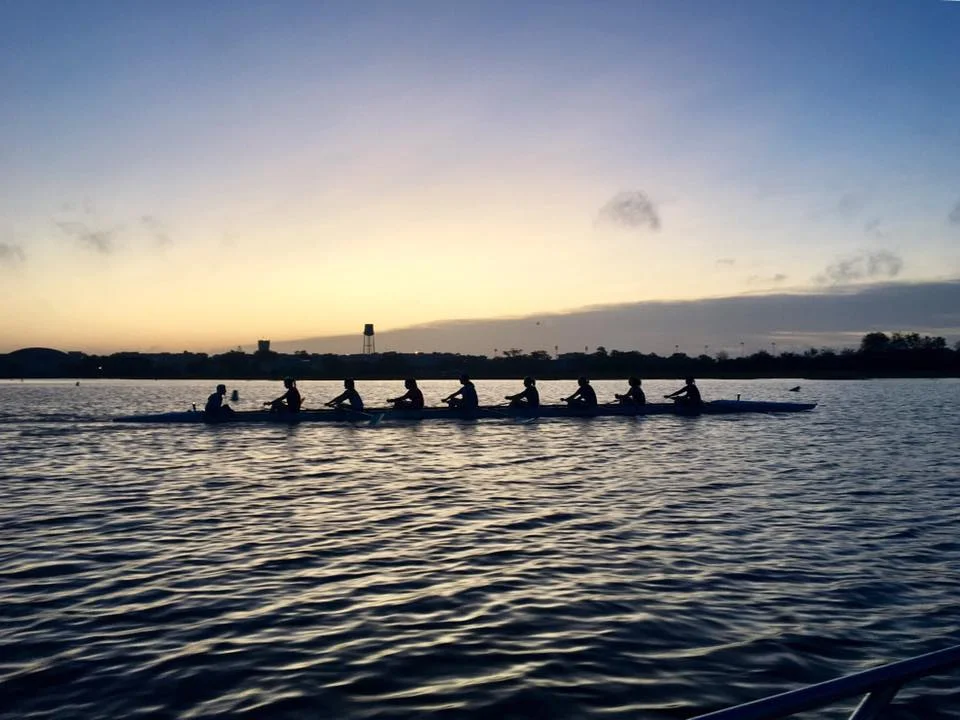
Clemson Sprints Weekend
Coverage and results from the team's trip to Clemson Sprints on Lake Hartwell.
Read More
A non-profit rowing team at the College of Charleston in Charleston, South Carolina.
Rowing rewards athletes who can produce power repeatedly while staying technically efficient. A strong cross-training programme develops the lungs, legs, trunk and shoulders without turning every session into another hard erg test. For university crews, this balance can make early-morning water sessions more productive and reduce the risk of overuse injuries.
Australian rowers also need to train around practical conditions: hot summers, high UV levels, crowded campus gyms and long travel to regattas. Whether your crew rows on the Yarra, the Brisbane River, the Swan or a coastal course, a varied programme can build fitness that transfers directly to boat speed.
Steady running, cycling and swimming are useful ways to improve cardiovascular endurance while giving rowing-specific muscles a break. Aim for 30 to 60 minutes at a conversational intensity, where breathing is controlled and you could manage a short sentence. A bike is especially valuable after a demanding rowing session because it creates less impact than running.
Australian athletes should schedule outdoor work around the heat. An early arvo ride may sound convenient, but morning sessions are usually safer during summer, particularly in Queensland or Western Australia. Carry water, use sun protection and choose shaded paths when possible. A stationary bike or treadmill is a sensible fallback when temperatures or air quality make outdoor training unpleasant.
For variety, include one longer low-intensity session each week and one shorter interval workout. A practical interval set is six rounds of three minutes hard followed by two minutes easy on a bike, treadmill or cross-trainer. The aim is strong, repeatable effort rather than sprinting until technique falls apart.
Rowers need force from the legs, a stable trunk and coordinated upper-body movement. Two weekly resistance sessions can cover these needs with squats, Romanian deadlifts, split squats, pull-ups, rows, presses and loaded carries. Begin with controlled sets of six to 12 repetitions, leaving a little capacity in reserve.
Exercises should support rowing mechanics rather than compete with water training. A single-leg movement can correct side-to-side weaknesses, while deadlift variations develop posterior-chain strength for the drive phase. Anti-rotation exercises, such as a Pallof press, teach the torso to resist unwanted movement as the legs and arms work together.
A simple gym menu can keep student athletes focused:
Progress gradually by adding a small amount of weight, one repetition or an extra set, rather than chasing maximum lifts every week. Good technique matters more than impressive numbers, especially during a busy university term.
Mobility work should target the hips, ankles, thoracic spine and shoulders. Five to 10 minutes before training can include walking lunges, glute bridges, thoracic rotations and controlled shoulder circles. Longer static stretches are better placed after training or in a separate recovery session.
Pilates and yoga can add useful body awareness, balance and breathing control. A weekly class may suit crews with access to campus facilities, while a short home routine works during regatta travel. This type of training is particularly helpful for athletes who sit through long lectures or spend hours driving to events.
The goal is a comfortable catch position and a stable finish, not extreme flexibility. Rowers should avoid forcing range of motion into painful areas. Consistent mobility practice is more valuable than an occasional exhausting session.
As competition approaches, cross-training should become more closely linked to race demands. Short bike or running intervals can replicate repeated high-output efforts, while circuits can combine strength endurance with quick recovery. Try five rounds of 500 metres on an erg, 12 kettlebell swings and 10 push-ups, resting two minutes between rounds.
Training beside teammates can build the shared rhythm needed for racing. A crew might complete a circuit together at a university gym, then finish with technical rowing on the water. For teams connected with the College of Charleston, learning about Charleston regatta weekends can also help Australian supporters understand how racing, travel and event preparation fit together.
Reduce volume during the final week before a major regatta. Keep a little intensity to maintain sharpness, but avoid hard leg sessions that leave soreness behind. This is especially important when travelling from Melbourne to Sydney or across the country for a championship weekend.
Recovery is part of performance, not an optional extra. Easy swimming, walking and gentle cycling can increase circulation without adding significant fatigue. Sleep, regular meals and sufficient carbohydrate intake matter just as much as another workout, particularly for athletes combining study, work and training.
A useful weekly pattern might include two rowing sessions, two strength sessions, one aerobic workout and one mobility or recovery day. Adjust the mix when water sessions become more frequent. Keep at least one genuinely easy day, even if that means a relaxed walk along the river rather than another fitness challenge.
Teams can also use their identity and history to maintain motivation through a long season. Reading about the team’s champions or the story behind the crew logo can remind newer athletes that progress comes from consistent group effort.
A practical week can be organised like this:
Beginners should start with fewer sessions and master movement quality before increasing workload. Experienced rowers can add intensity carefully, monitoring resting fatigue, soreness and rowing technique. The best programme is the one that supports consistent training, keeps athletes healthy and leaves the crew ready to perform when race day arrives.
College of Charleston Crew fields competitive eights and fours in both Fall head races and Spring sprint regattas across the Southeast.
Learn MoreRecent news, recaps, and announcements from the team.
Coverage and results from the team's trip to Clemson Sprints on Lake Hartwell.
Read More
Spring lineup including Clemson Sprints, SIRA, Dad Vail, and ACRA National Championship.
Read More
Previews and recap of past Head of the Charles appearances, including the 50th annual regatta in 2014.
Read MoreTeam practice, regatta dates, and meetings are listed on the team calendar. Coaches post weekly schedules and travel details for upcoming race weekends.
Charleston Crew / CCAA
PO Box 12941
Charleston, SC 29422
Email: info@cofccrew.org
Phone: 843.513.5900
Phone: 843.276.4241
Interested in joining the team? Fill out the recruitment form and the coaches will follow up.