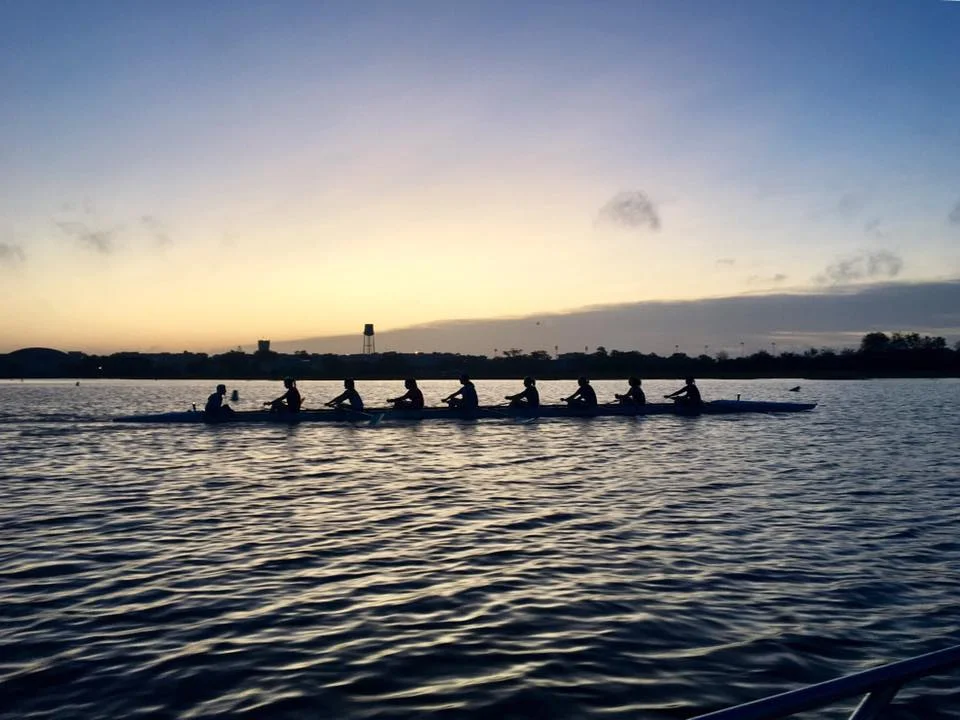
Clemson Sprints Weekend
Coverage and results from the team's trip to Clemson Sprints on Lake Hartwell.
Read More
A non-profit rowing team at the College of Charleston in Charleston, South Carolina.
Rowing demands repeated hip flexion, powerful leg drive and controlled rotation through the catch and finish. After a long session, the hip flexors, glutes, adductors and deep rotators may feel shortened or stiff, especially when training includes heavy erg work, technical drills or racing starts.
A sensible cool-down can restore comfortable movement without turning recovery into another hard workout. These stretches suit collegiate rowers, recreational crews and athletes training in Australia, where early starts, warm weather and long travel between regattas can add to post-practice tightness.
During the drive, the hips help transfer force from the legs through the trunk and into the handle. The repeated slide forward brings the knees towards the chest, placing the hip flexors in a shortened position. Holding a strong posture for several kilometres can also make the glutes and lower back feel guarded.
The sensation may be stronger after sitting in a car or on a flight home from a regatta. A crew travelling from Melbourne to the Yarra River, Brisbane to the Queensland State Rowing Centre or Perth to the Swan River may spend hours seated before stretching. That combination of training and travel can reduce hip mobility temporarily.
Stretching is usually more comfortable once breathing and body temperature have settled. Spend five minutes walking, taking an easy spin on a bike or performing relaxed leg swings. If practice finishes in the heat around Sydney Harbour or Adelaide, move into shade and replace fluids before beginning floor exercises.
Use slow breathing throughout the session. A mild pulling sensation is acceptable, but sharp pain, tingling or pinching at the front of the hip is a reason to stop. The aim is to encourage range of motion, not force the body into an impressive position for a photo.
Kneel with the right knee on a mat and the left foot in front. Keep the ribs stacked over the pelvis, gently draw the lower abdomen in and shift the hips forward by a small amount. You should feel the stretch along the front of the right hip and upper thigh rather than in the lower back.
Hold for 20 to 30 seconds, breathe calmly and repeat two or three times per side. To add a little more length, reach the arm on the kneeling side overhead and lean slightly away. Keep the movement modest, particularly after intense pieces on the erg or a demanding head race.
A figure-four stretch targets the gluteal muscles and outer hip, which can become tense after repeated drive cycles. Lie on your back with both knees bent, place the right ankle over the left thigh and draw the left leg towards you. Keep the neck relaxed and avoid pulling aggressively behind the knee.
For a seated version, sit tall on a bench or mat, cross one ankle over the opposite thigh and hinge forward from the hips. This option works well beside the boat shed when the crew is packing away. Hold each side for 20 to 30 seconds, keeping the stretch steady rather than bouncing.
The butterfly stretch can ease tension through the adductors and inner thighs. Sit with the soles of the feet together, allow the knees to drop naturally and hold the ankles or feet. Lengthen through the spine before leaning forward slightly. Do not press the knees down with your hands.
A half-kneeling adductor stretch offers a more active alternative. Place one knee under the hip, extend the other leg sideways with the foot flat, then shift the hips gently backwards while keeping the extended leg long. This can be useful after sessions involving high-rate work, when the inner thighs have helped stabilise every stroke.
Hip mobility is closely linked with the pelvis and upper back, so gentle rotation can make the whole recovery position feel easier. Try a lying windscreen wiper: bend both knees, keep the feet wide and slowly lower the knees from side to side. Move only through a comfortable range.
A 90/90 seated position is another useful drill. Place one leg in front with the knee bent and the other leg behind, then sit evenly before leaning slightly towards the front shin. Switch sides without forcing the knees. Rowers checking the regatta calendar can use this drill during travel breaks between events.
Keep the sequence short enough to repeat after every long practice. The following plan takes roughly eight to ten minutes and can be completed at home, in a gym or beside the trailer after an Australian regatta:
Keep the next day’s training demands in mind. If the training schedule includes another hard row, a short mobility routine may be better than prolonged, intense stretching. Light movement, adequate food and sleep will support recovery more effectively than trying to force every joint to its maximum range.
Normal post-practice stiffness should gradually improve with walking and gentle movement. Persistent pain at the front of the hip, swelling, weakness, reduced power on one side or discomfort that changes your rowing technique deserves assessment from a physiotherapist or sports doctor.
Australian rowers can seek help through a local sports physiotherapy clinic, university health service or a GP familiar with athletic injuries. Early advice is particularly valuable during a busy racing block, when ignoring a small hip problem can alter the catch, overload the back and affect the rest of the crew.
College of Charleston Crew fields competitive eights and fours in both Fall head races and Spring sprint regattas across the Southeast.
Learn MoreRecent news, recaps, and announcements from the team.
Coverage and results from the team's trip to Clemson Sprints on Lake Hartwell.
Read More
Spring lineup including Clemson Sprints, SIRA, Dad Vail, and ACRA National Championship.
Read More
Previews and recap of past Head of the Charles appearances, including the 50th annual regatta in 2014.
Read MoreTeam practice, regatta dates, and meetings are listed on the team calendar. Coaches post weekly schedules and travel details for upcoming race weekends.
Charleston Crew / CCAA
PO Box 12941
Charleston, SC 29422
Email: info@cofccrew.org
Phone: 843.513.5900
Phone: 843.276.4241
Interested in joining the team? Fill out the recruitment form and the coaches will follow up.