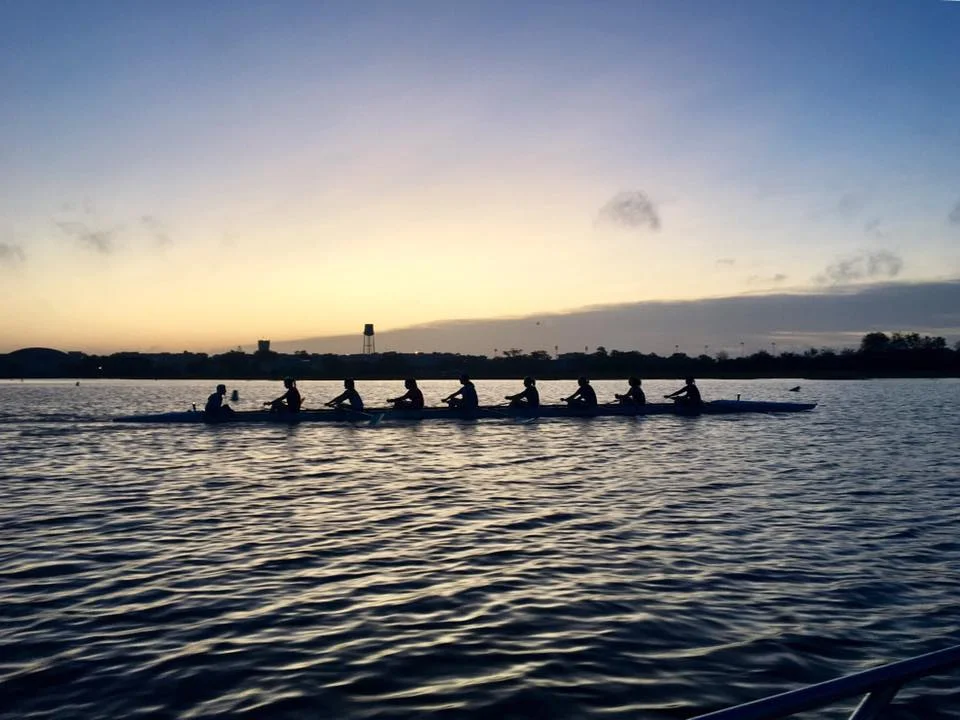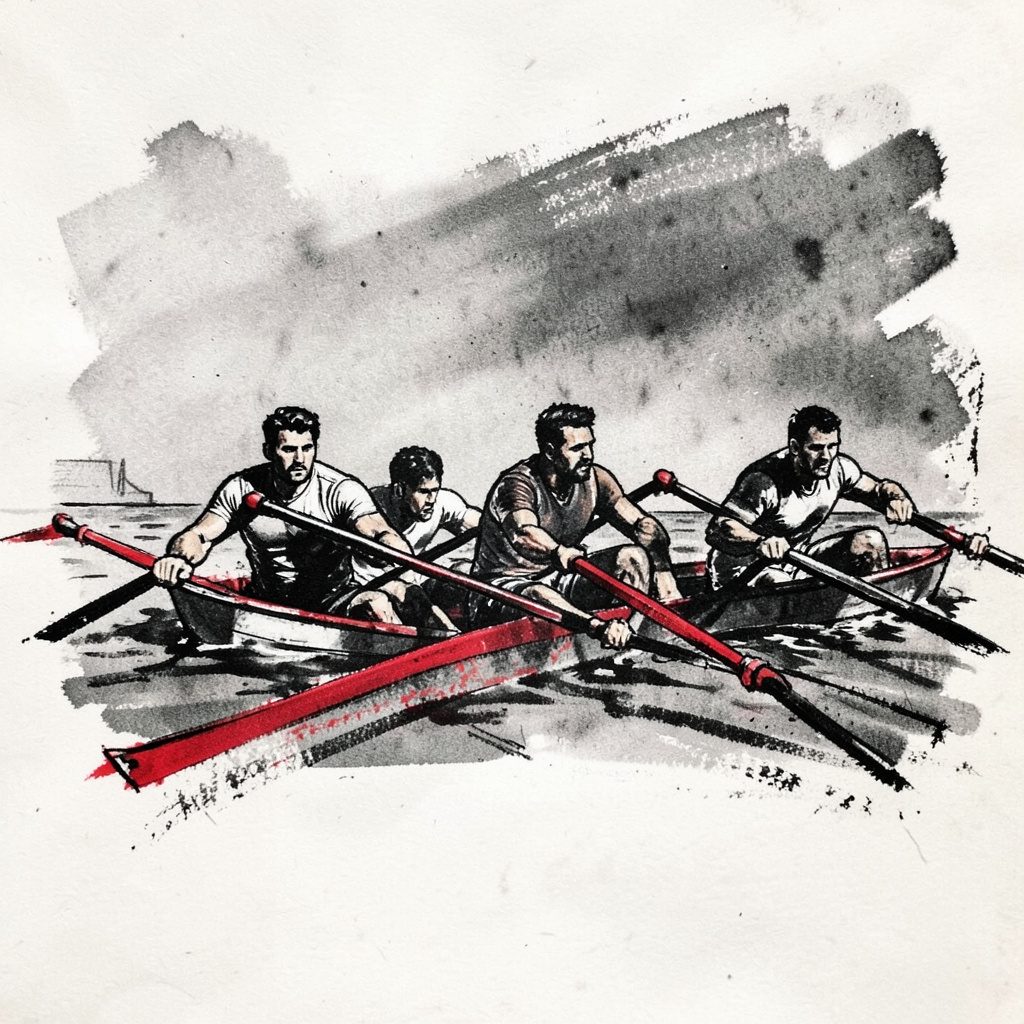
Clemson Sprints Weekend
Coverage and results from the team's trip to Clemson Sprints on Lake Hartwell.
Read More
A non-profit rowing team at the College of Charleston in Charleston, South Carolina.
The history of the CofC Crew rowing blades design begins with a student club established in Charleston in 2003 and its first racing season in 2004. The programme has grown alongside the College of Charleston, founded in 1770, turning a practical piece of rowing equipment into a visible statement of collegiate identity.
A blade is the broad end of an oar, and its shape affects how cleanly a crew can move through the water. Its paintwork can also be seen across a regatta venue, making every stroke carry the name, colours and remembered history of the crew behind it. For rowers accustomed to Sydney Harbour or the Yarra River, that combination of sporting purpose and club symbolism is immediately recognisable.
CofC Crew developed from the College’s strong student culture and Charleston’s close relationship with the waterfront. Training around the Ashley River gave members an early opportunity to develop their skills, organise crews and establish traditions that would carry into intercollegiate competition.
The programme’s first blades had to perform two roles: provide dependable equipment for training and represent a young club without an established sporting reputation. Basic team colours and identifying marks established that foundation. As the crew gained results, experience and alumni support, its visual identity became richer and more closely connected to College history.
Rowing blades are generally made from laminated timber or composite materials chosen for stiffness, weight and durability. Their dimensions must match the crew’s rig: sweep-rowing boats use long oars with blades suited to the demands of eight or four, while sculling boats use shorter pairs of oars. Port and starboard blades may also need mirrored lettering so their designs read correctly from the water.
Paint protects the blade while giving the crew a public identity. Fine detail matters because chips, cracks or poorly balanced decoration can affect a blade’s condition and appearance over repeated use. Guidance from the coaching staff helps connect equipment preparation with safe training and competitive performance.
Australian rowers can also see similarities with the local equipment market. Brisbane-based WinTech is among the manufacturers producing composite sweep and sculling oars for clubs, while Australian boat sheds and rowing retailers supply replacement blades, handles and rigging for both novice and competitive programmes.
Across changing designs, a recognisable core gives a CofC blade its connection to the College and its city.
As the programme matured, individual blade sets could add commemorative details without abandoning that underlying identity.
These additions reflect a wider collegiate blade tradition, in which seniors often use equipment as a legacy for future teams. Even when the artwork changes, the consistent palette and symbols allow an older blade to be recognised as belonging to CofC Crew.
The strongest blade designs connect competition with memory. A pair finished by a graduating senior can mark the end of a College career, while a crew’s championship is preserved through shared colour, names and commemorative details. These objects remain connected to the people who used them long after the final race.
That sporting history is also reflected in the club’s Hall of Champions, which records successful crews and important competitive moments. A painted blade offers a more intimate version of that archive: it carries the identity of one crew into future regattas and into the shared history of the boathouse.
Finished blades can also become meaningful fundraising pieces, gifts for supporters or symbols for alumni. Their value comes from both their connection with the crew and their place in the wider visual story of College rowing.
Australian rowing clubs often become important parts of a neighbourhood as well as a sporting community. A morning session may begin with coffee beside the boathouse, followed by training on Sydney Harbour, Melbourne’s Yarra River or another local waterway and a shared breakfast afterwards. Public transport and suburban clubhouses make it possible for university students, working adults and former rowers to train together.
CofC Crew follows a comparable community model while carrying a single collegiate identity across its programme. Its regattas throughout the Southeast and along the United States East Coast place those local traditions within a much broader circuit, comparable with Australian crews travelling between interstate and international events.
Safety regulation is another shared reality. Australian clubs operate under state water-safety legislation, including New South Wales’s Water Safety Act 2018 and Victoria’s Marine Safety Act 1988. Navigation, emergency planning, participant risk assessments and safety equipment must be addressed alongside training, much as College crews account for local boating conditions and regatta safety requirements.
A rowing blade must continue to function under load, but it also represents the people responsible for it. Its colours identify the programme, its artwork records an era and its shape belongs to the mechanics of the stroke. Design therefore joins engineering, memory and the public face of the crew.
The history of the CofC Crew rowing blades design reflects the club’s own development: a practical beginning, a stronger collegiate identity and an expanding tradition of commemorative artwork. Seen beside Australian club blades, it demonstrates how rowers in different environments use the same small surface to express belonging, achievement and continuity.
College of Charleston Crew fields competitive eights and fours in both Fall head races and Spring sprint regattas across the Southeast.
Learn MoreRecent news, recaps, and announcements from the team.
Coverage and results from the team's trip to Clemson Sprints on Lake Hartwell.
Read More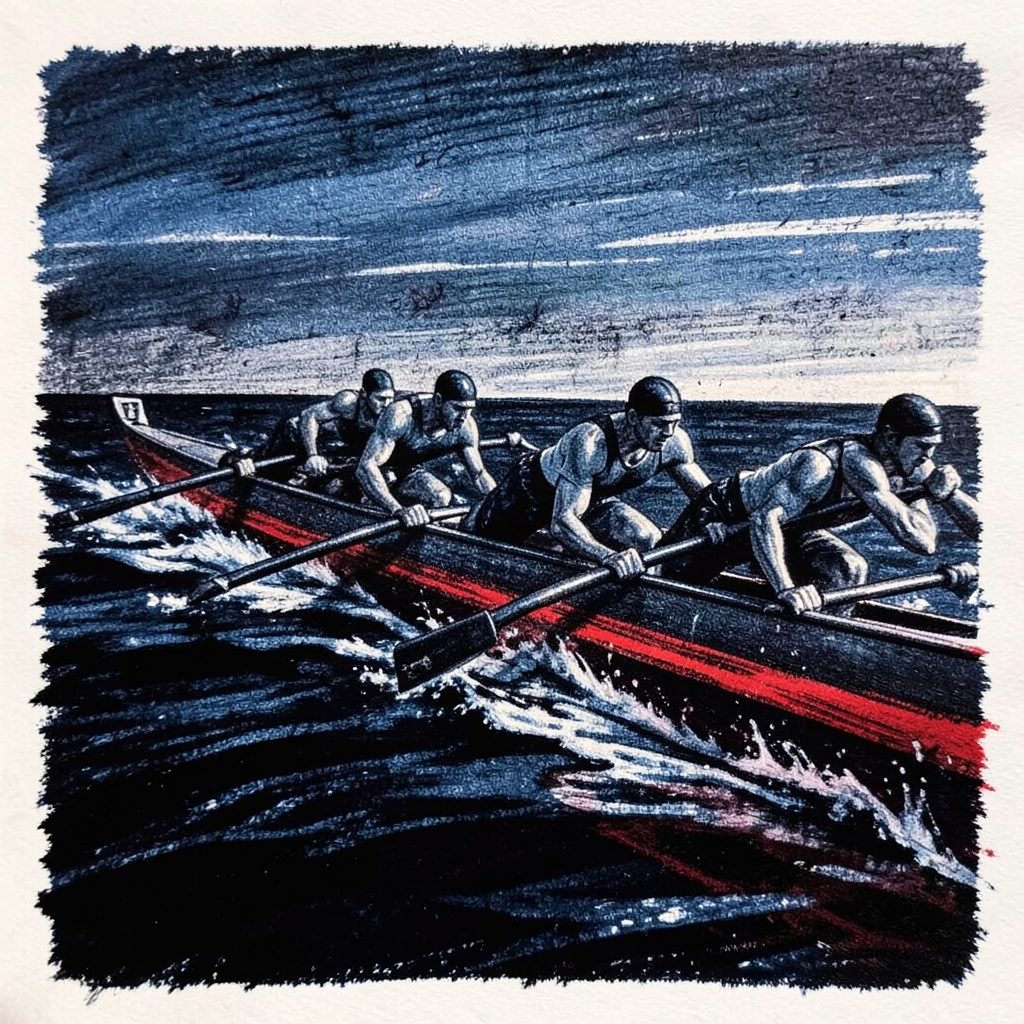
Spring lineup including Clemson Sprints, SIRA, Dad Vail, and ACRA National Championship.
Read More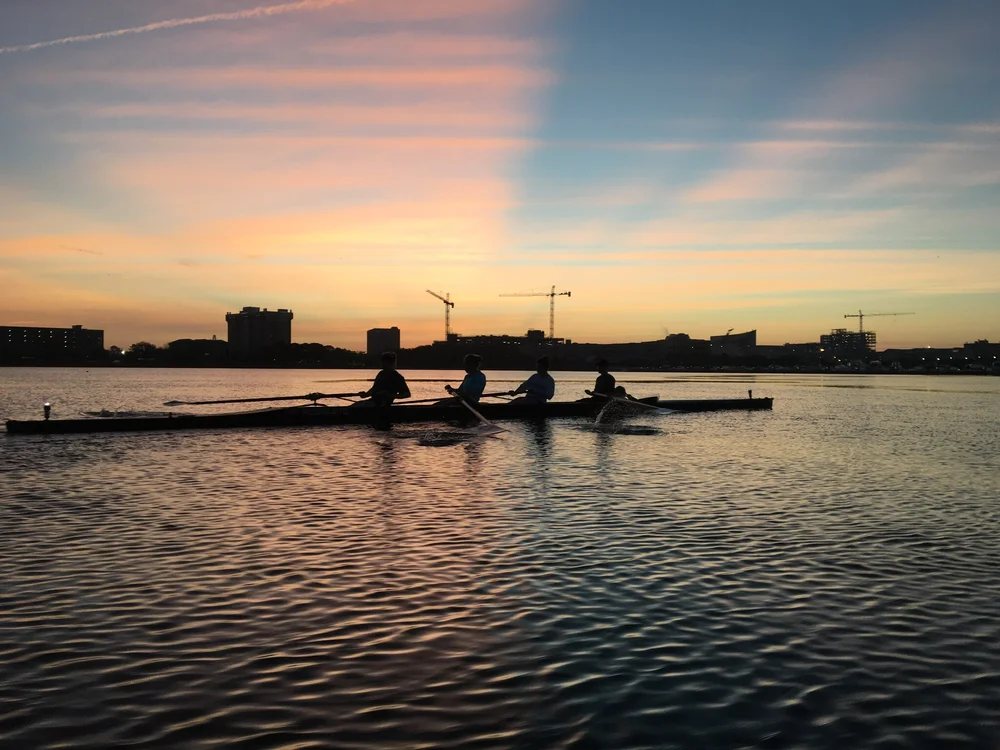
Previews and recap of past Head of the Charles appearances, including the 50th annual regatta in 2014.
Read MoreTeam practice, regatta dates, and meetings are listed on the team calendar. Coaches post weekly schedules and travel details for upcoming race weekends.
Charleston Crew / CCAA
PO Box 12941
Charleston, SC 29422
Email: info@cofccrew.org
Phone: 843.513.5900
Phone: 843.276.4241
Interested in joining the team? Fill out the recruitment form and the coaches will follow up.