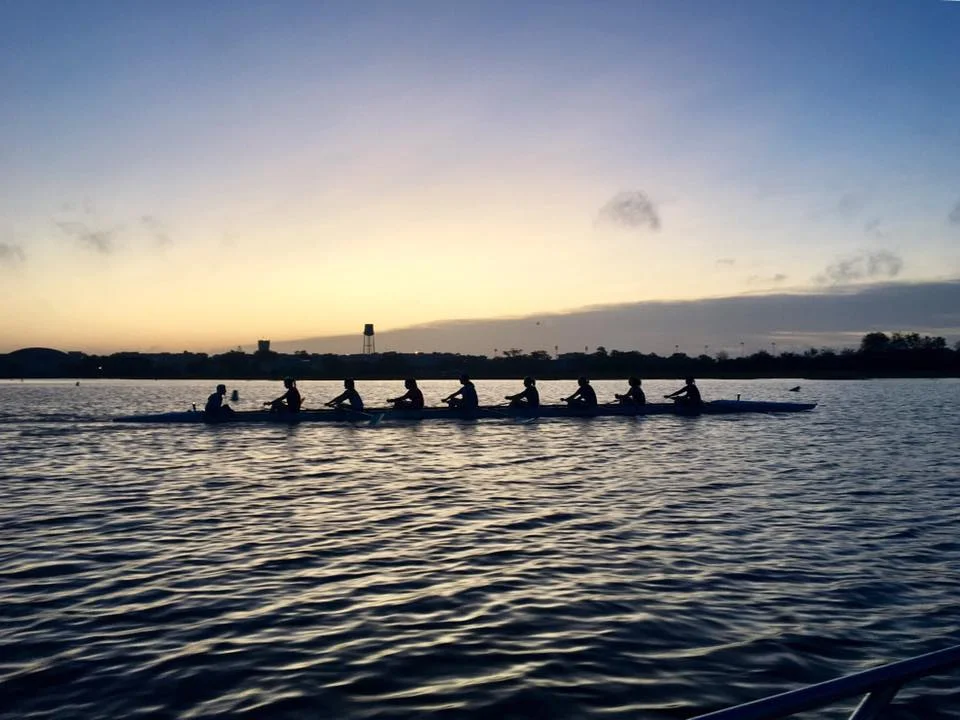
Clemson Sprints Weekend
Coverage and results from the team's trip to Clemson Sprints on Lake Hartwell.
Read More
A non-profit rowing team at the College of Charleston in Charleston, South Carolina.
Rowing asks the mind to remain organised while the body is sending urgent signals to slow down. As fatigue builds, technique can unravel, attention narrows and small mistakes begin to feel larger than they are. The ability to stay composed becomes a practical racing skill.
For College of Charleston Crew athletes, that skill matters across long training pieces, demanding water sessions and regattas held throughout the Southeast and along the U.S. East Coast. A crew that can think clearly under pressure has a stronger chance of holding rhythm when conditions change.
Australian rowers will recognise the same challenge in an early-morning session on the Yarra, a hot afternoon on the Brisbane River or a long day at a regatta near Sydney. Heat, glare, headwinds and crowded waterways can drain concentration well before the finish.
Mental preparation is not about pretending that exhaustion does not exist. It is about noticing fatigue without allowing it to dictate every stroke, decision or word in the boat.
Focus usually becomes easier when it is practised before training starts. A short routine might include checking equipment, visualising the first few minutes and choosing one technical cue, such as relaxed shoulders or connected leg drive. Repeating the same sequence gives the mind a familiar entry point.
The routine should be simple enough to use on a rushed regatta morning. Australian crews often face an early start, a cool change or a long drive to the course, so a dependable process is more useful than an elaborate motivational speech. Preparation reduces unnecessary decisions and preserves mental energy.
A tired rower can struggle when thinking about an entire six- or eight-kilometre effort. Breaking the work into short sections makes the challenge more manageable. Attention can move from one landmark to the next, or from one set of strokes to the next technical checkpoint.
Useful cues are brief and physical: “long through the finish”, “quiet hands” or “push together”. The aim is to direct attention towards controllable actions rather than predicting how much pain remains. This approach also helps a crew keep a shared rhythm when individual confidence fluctuates.
Fatigue often produces dramatic thoughts: the pace is collapsing, the legs are finished or the boat is falling apart. These thoughts may feel convincing, yet they are not always accurate. A rower can acknowledge the sensation, take one controlled breath and return to the next stroke.
Breathing provides a useful reset. A steady exhale can release excess tension in the jaw, shoulders and grip. On a warm Australian day, when dehydration and heat may add to perceived effort, sensible hydration and sun protection support clear thinking as well as physical performance.
Racing requires constant choices about pace, positioning and response to other crews. When tired, athletes can rush those decisions or react emotionally to a boat moving nearby. A simple decision rule helps: identify what is happening, choose the next useful action and commit to it for several strokes.
This pattern of pausing before acting is valuable in any uncertain environment. Even discussions of probability and attention, such as this reel slots strategy guide, show how quickly impulsive choices can replace deliberate thinking. In a boat, a measured response protects rhythm and keeps the crew connected.
A crew does not need constant conversation, but it does need clear information. Calls should be brief, specific and timed so that they support rather than disturb concentration. A coxswain or designated leader can provide a steady external focus when rowers are struggling to interpret their own fatigue.
Trust also reduces mental load. When athletes know that teammates will maintain their responsibilities, they can concentrate on timing and technique instead of monitoring every movement around them. That shared confidence is especially important for a club program welcoming both experienced rowers and beginners.
Mental resilience develops through recovery, not through endless exposure to exhaustion. After a hard piece, athletes benefit from identifying what they noticed, which cue worked and where attention drifted. This turns a difficult session into information that can guide the next one.
Rest, food and sleep also influence concentration. University athletes balancing study, training and travel need realistic routines rather than heroic promises. Learning about the team’s crew history and activities can reinforce the wider purpose behind daily work: building dependable habits, representing the College of Charleston and developing as part of a crew.
The strongest mental performances rarely look dramatic. They appear as one calm breath, one clean catch and one useful decision after another, even when the body is tired.
College of Charleston Crew fields competitive eights and fours in both Fall head races and Spring sprint regattas across the Southeast.
Learn MoreRecent news, recaps, and announcements from the team.
Coverage and results from the team's trip to Clemson Sprints on Lake Hartwell.
Read More
Spring lineup including Clemson Sprints, SIRA, Dad Vail, and ACRA National Championship.
Read More
Previews and recap of past Head of the Charles appearances, including the 50th annual regatta in 2014.
Read MoreTeam practice, regatta dates, and meetings are listed on the team calendar. Coaches post weekly schedules and travel details for upcoming race weekends.
Charleston Crew / CCAA
PO Box 12941
Charleston, SC 29422
Email: info@cofccrew.org
Phone: 843.513.5900
Phone: 843.276.4241
Interested in joining the team? Fill out the recruitment form and the coaches will follow up.