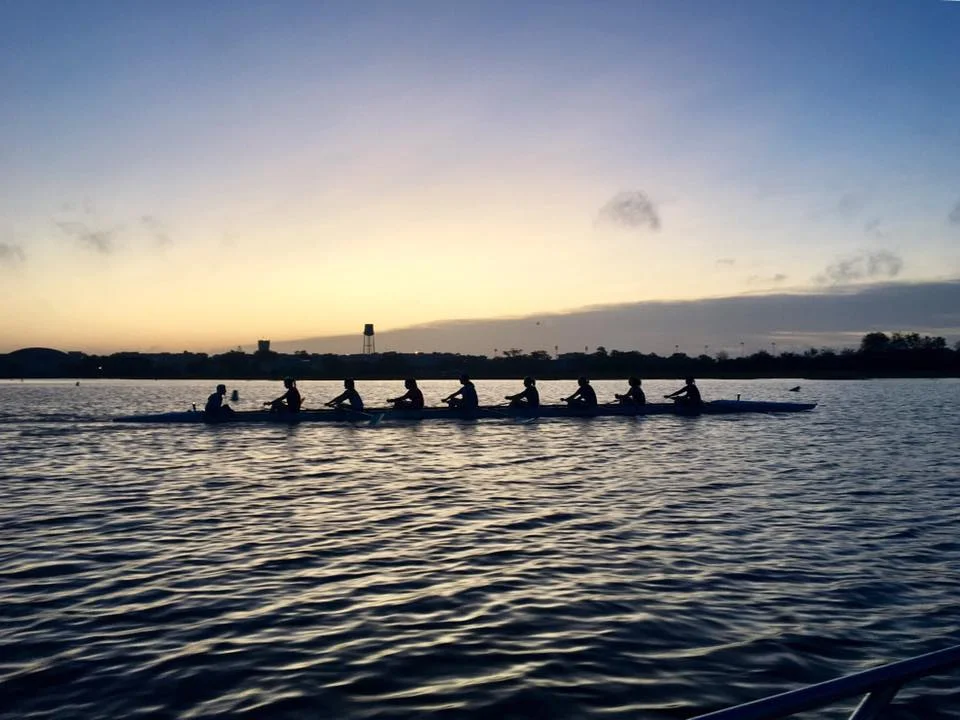
Clemson Sprints Weekend
Coverage and results from the team's trip to Clemson Sprints on Lake Hartwell.
Read More
A non-profit rowing team at the College of Charleston in Charleston, South Carolina.
Rowing can look deceptively easy: a long boat gliding across calm water. Yet every stroke loads the lower back, shoulders, knees and hands. The most common rowing injuries are usually overuse problems shaped by technique, training load, strength and recovery rather than a single dramatic collision.
Novices often feel muscular soreness after their first outing, while experienced rowers may ignore warning signs during a crowded collegiate season. Ergometer sessions, gym work, running to the water and lifting boats all contribute, so injury prevention must cover the entire training week.
Australian rowers may train through cold winter rain on Sydney Harbour or Melbourne’s Yarra River, then face intense ultraviolet exposure and dehydration in summer. Club conversation regularly includes a “hard session”, “gym work” and “sweeps”, practical shorthand for training, strength work and safety roles. Many local regattas are volunteer-run, so community networks support race organisation, equipment funding and access to physiotherapy.
Repeated hip hinging and trunk movement can irritate the lumbar spine, sacrum and pelvic joints. A rushed catch, excessive layback or twisting under load may contribute, as can weak hips and trunk muscles. Lower-back or pelvic pain during or after rowing deserves attention, especially when it changes your stroke or makes sitting and sleeping uncomfortable.
Preventive work includes trunk and hip strengthening, gradual mileage increases and coaching that keeps the catch, drive and finish smooth. A college programme such as College of Charleston Crew needs individual instruction rather than an expectation that novices copy a stronger crew’s pace. Pelvic-floor or persistent pelvic pain may benefit from assessment by a pelvic-health physiotherapist.
Shoulder impingement, rotator-cuff irritation and elbow tendon problems often appear when a rower pulls hard with a stiff torso or reaches excessively across the body. Gripping the handle also stresses the wrists, while repeated friction causes blisters and painful calluses. These problems can often be reduced through preparation and suitable equipment.
Check oar length, foot-stretcher height and handle width with a coach, and replace worn grips before they tear. Build shoulder-blade and arm strength with controlled rows and presses, and avoid treating shoulder pain with extra ergometer volume. Clean and cover blisters; infected skin, persistent wrist pain or weakness needs medical review rather than another demanding workout.
Patellofemoral pain and patellar-tendon irritation can develop when the knees are overloaded during the drive or when the quads and hips lack capacity. Rowers who run regularly may also develop shin splints, particularly when mileage increases suddenly. Such pain should not be accepted as a normal part of training, especially when hopping, squatting or sleeping is affected.
Gradual running volume, supportive footwear and strength work for the legs and hips help manage these loads. For skin, use anti-chafe products where needed, dry the hands before gripping and keep nails suitable for the handle. Australian crews should expect intense UV exposure: broad-spectrum SPF 50+ sunscreen, a hat and shade at the boat ramp are useful even in winter.
Sudden spikes in distance, intensity or frequency are a leading cause of overuse injury. Alternate demanding pieces with easier rowing and increase one part of the load at a time. A hard Friday session followed by another full-effort outing on Saturday may leave insufficient time for tissues to adapt.
Begin with an easy ergometer warm-up and dynamic mobility rather than immediately sprinting. Twice-weekly strength sessions can include side planks, dead bugs, controlled rows and split squats, adapted to current capacity. Fuel longer sessions with food and fluid, protect sleep after night sessions, and allow sore muscles easier recovery. Persistent fatigue, declining performance and unusual soreness can signal excessive load.
Travel, coaching and equipment all cost money. The club’s fundraising efforts show how community support helps meet those costs. Safer boats, suitable gym kit and qualified coaching can all reduce avoidable risk for student-athletes.
Check the regatta schedule before making travel plans and build acclimatisation time into the trip. For Australian athletes heading to competitions on the US East Coast, jet lag, unfamiliar equipment and time-zone changes can disrupt sleep and technique. Race-week sessions should stay familiar, with travel treated as part of the training load.
Do not ignore pain that changes the stroke, causes swelling or persists into ordinary walking. Early assessment by a GP or sports physiotherapist can keep a minor irritation from becoming a longer absence. Chest pain, fainting, severe breathing difficulty or sudden neurological symptoms require urgent medical care. Continuing to row with loss of control also puts the crew at risk.
After racing, refuel, rehydrate and cool down appropriately; avoid heavy loading the next day. GPs, sports physiotherapists and multidisciplinary clinics are widely available in Australia, while clubs and insurers may cover treatment under different policies. Check coverage before travelling and follow the crew’s medical and return-to-training guidance.
College of Charleston Crew fields competitive eights and fours in both Fall head races and Spring sprint regattas across the Southeast.
Learn MoreRecent news, recaps, and announcements from the team.
Coverage and results from the team's trip to Clemson Sprints on Lake Hartwell.
Read More
Spring lineup including Clemson Sprints, SIRA, Dad Vail, and ACRA National Championship.
Read More
Previews and recap of past Head of the Charles appearances, including the 50th annual regatta in 2014.
Read MoreTeam practice, regatta dates, and meetings are listed on the team calendar. Coaches post weekly schedules and travel details for upcoming race weekends.
Charleston Crew / CCAA
PO Box 12941
Charleston, SC 29422
Email: info@cofccrew.org
Phone: 843.513.5900
Phone: 843.276.4241
Interested in joining the team? Fill out the recruitment form and the coaches will follow up.