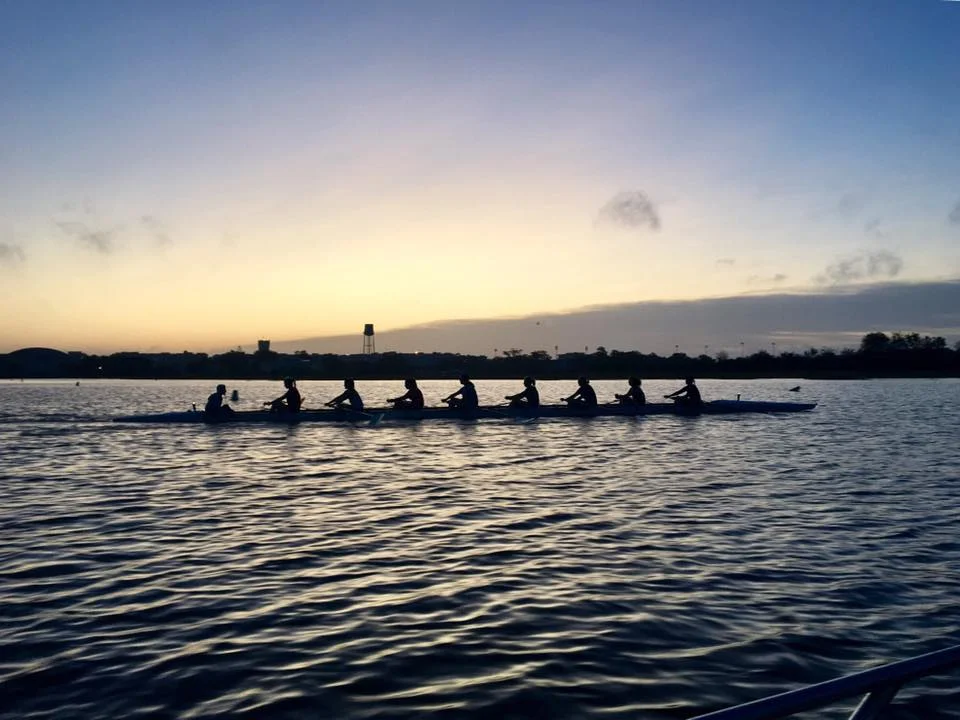
Clemson Sprints Weekend
Coverage and results from the team's trip to Clemson Sprints on Lake Hartwell.
Read More
A non-profit rowing team at the College of Charleston in Charleston, South Carolina.
Flying from Sydney, Melbourne or Brisbane to Charleston for a week of training and racing is no small undertaking, and the difference between a smooth arrival and a frantic repack at the airport usually comes down to the list you made the night before. Whether you are a veteran sweep rower heading into your third season or a novice trying out the sport for the first time, a spring break rowing trip to South Carolina combines serious seat-time on the water with all the laid-back charm of the Lowcountry.
Australian crews have a long tradition of crossing hemispheres for training camps, and the College of Charleston program welcomes visitors with open arms. The team trains on the Ashley River and competes across the Southeast, so packing for the climate, the equipment, and the travel itself takes a bit of forethought. Below is a practical rundown of what to bring, organised by category, so you can focus on your stroke rather than your suitcase.
Rowers live in their team kit, but the smartest packers keep a clear divide between practice clothes, travel clothes, and competition whites. Pack at least two pairs of unisuits or unitards if you own them, plus a rotation of moisture-wicking training tops, spandex shorts, and thick athletic socks. A pair of well-broken-in rowing shoes or sneakers with a secure heel matters more than brand-new spikes that have not seen an erg since you bought them.
If you are still building out your kit, the College of Charleston coaching staff have put together a useful primer on what new athletes should bring when meeting the CoFC rowing leadership, and it is worth a read before you zip up your bag. If you have access to a private single or a club boat at home, slip a small toolkit, a spare spoke wrench, and a roll of athletic tape into your luggage so you can lend a hand if something goes wrong on the dock.
The sport punishes poorly chosen fabric, so leave the heavy cotton at home. Lightweight singlets, lycra tights, and grippy socks will see you through both steady-state rows and the harder pieces that leave you soaked. Bring at least one warm layer for cool Charleston mornings on the Ashley, since river mist tends to linger until mid-morning even in spring.
Footwear deserves special attention. You will want closed-toe training shoes for the boatyard and slides or sandals for the locker room. A small towel, a cap, and a pair of polarised sunglasses are easy to forget but impossible to replace once you are halfway across the country. If you fancy some inspiration before you depart, browse the program's Hall of Champions page for a reminder of what the kit is actually for.
Charleston in March and April is mild by Australian standards, with daytime temperatures usually sitting between 16 and 24 degrees. Mornings on the water can feel brisk once the wind picks up, so a soft-shell jacket or a fleece that packs down small earns its spot in your bag. A light rain jacket is non-negotiable, because Lowcountry showers arrive without much warning and can sit over the river for an hour at a stretch.
Sun protection is a separate category altogether. Even on grey days, the river reflects UV back at you for hours, and Australian athletes are used to being more cautious than most. Bring a broad-spectrum sunscreen rated at least SPF 50, a zinc stick for your nose and cheekbones, and a hat you can wear under a helmet or cap. You can pick up Cancer Council or Ego Sunsense tubes at any Chemist Warehouse before you fly out, or grab American brands like Banana Boat once you land at Charleston International.
A small medical kit pays for itself the first time someone skins a knuckle on a rigger or wakes up with a blister the size of a five-cent piece. Pack athletic tape, blister plasters, ibuprofen, electrolyte sachets, and any personal prescriptions in their original packaging with a copy of the script. If you use an EpiPen or rely on a specific inhaler, keep it in your hand luggage so it survives a delayed connection through Los Angeles.
For paperwork, you will need a valid Australian passport, an approved ESTA for the United States, and a printed copy of your flight and accommodation details. Travel insurance that explicitly covers sporting injuries is worth the spend, particularly if you plan to race. The team will sort your regatta entries, but double-check the schedule in advance so you know which days to bring your full racing kit and which days you can pack light for a recovery row on the river.
The Australian dollar rarely stretches as far as we would like in the United States, so set a realistic daily budget before you leave and switch on a travel-friendly debit card to avoid foreign transaction fees. Most places around Charleston take tap-to-pay cards, but a small amount of USD cash is useful for regatta entry fees, parking at venues like the Charlie Junkins Boathouse, and the occasional food truck stop.
Before you board your Qantas or Virgin Australia flight, download offline maps, the regatta schedule, and your streaming apps so you are not relying on patchy boat-shed Wi-Fi. A spare phone charger, an Australian adaptor with a US plug adaptor, and a sturdy waterproof pouch for your phone during on-water sessions round out the tech kit. Anyone interested in the program itself can read up on row on the Ashley so they arrive mentally prepared as well.
A day or two before you fly, weigh your bag and leave a couple of kilograms of room for souvenirs or any kit you pick up in Charleston. Photograph your passport, your ESTA, and your insurance details, and email them to yourself in case the originals go missing. Charge every device, drain your water bottles, and double-check that your rowing shoes and any fragile electronics sit in the centre of your suitcase rather than at the edges.
Once you touch down, message the team to confirm your pickup, and head straight to bed. Jet lag from a sixteen-hour flight via Los Angeles catches up with everyone, and the fastest cure is sunlight, water, and an early night. By the time you arrive at the boathouse the next morning, your kit will be sorted, your paperwork will be in order, and the only thing left to think about will be your catch at the finish.
College of Charleston Crew fields competitive eights and fours in both Fall head races and Spring sprint regattas across the Southeast.
Learn MoreRecent news, recaps, and announcements from the team.
Coverage and results from the team's trip to Clemson Sprints on Lake Hartwell.
Read More
Spring lineup including Clemson Sprints, SIRA, Dad Vail, and ACRA National Championship.
Read More
Previews and recap of past Head of the Charles appearances, including the 50th annual regatta in 2014.
Read MoreTeam practice, regatta dates, and meetings are listed on the team calendar. Coaches post weekly schedules and travel details for upcoming race weekends.
Charleston Crew / CCAA
PO Box 12941
Charleston, SC 29422
Email: info@cofccrew.org
Phone: 843.513.5900
Phone: 843.276.4241
Interested in joining the team? Fill out the recruitment form and the coaches will follow up.