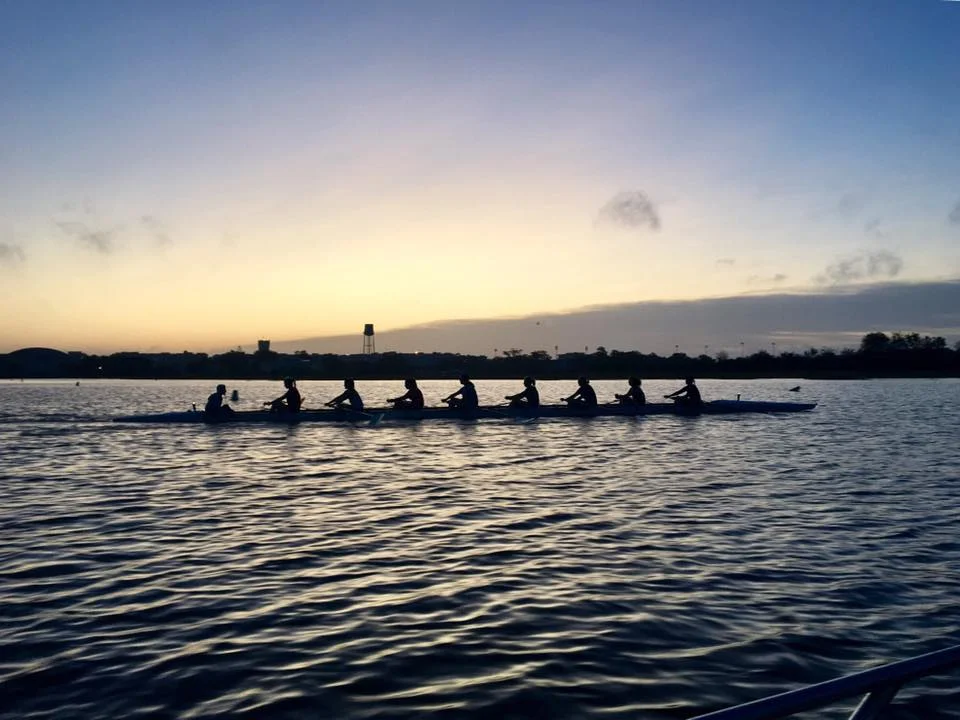
Clemson Sprints Weekend
Coverage and results from the team's trip to Clemson Sprints on Lake Hartwell.
Read More
A non-profit rowing team at the College of Charleston in Charleston, South Carolina.
Charleston in July feels like Brisbane in February. Both cities sit close to a wide river mouth, both stew under a heavy summer sky, and both turn a morning erg session into a serious sweat test. Anyone who has dragged a shell off the pontoon at Penrith or pushed off from the Yarra in January will recognise the particular misery of rowing through thick, wet air. For crews visiting or training in the Lowcountry, the kit you pack matters as much as your stroke rate.
The College of Charleston Crew Team trains year-round on the Cooper River, and the summer months bring heat indexes that regularly push past 38°C. Before you check the regatta schedule and book your flights, it pays to think carefully about what actually goes in your race-day bag.
The first rule of rowing in humidity is simple: cotton is your enemy. A heavy cotton t-shirt holds sweat against your skin, gains weight through a 2k piece, and stays damp long after you have finished cooling down. Synthetic rowing tops, singlets, and unisuits made from polyester or polyamide blends wick moisture away from the body and dry between pieces. Many Australian rowers already swear by this approach, having trained through Brisbane's summer regatta season on the same principle.
Look for flatlock seams to reduce chafing under the arms and across the inner thigh during long steady states. A looser cut around the torso helps air circulate, while a slightly compressive fit through the shoulders stops fabric from catching on your catch. Pack two singlets per day of racing so you can rotate through a clean, dry one.
A one-piece unisuit is the standard kit for most U.S. collegiate regattas, including the summer calendar organised by the coaching staff at Charleston. The right unisuit for humid conditions has mesh panels behind the knees and along the spine, a higher cut at the back to keep your lower back covered through the recovery, and a drawcord waist so it stays put when you are soaked through.
For those arriving from Australian club rowing, the cut can feel a touch higher in the leg than what you might wear at the Head of the Yarra or a Sydney Harbour race. That is a small adjustment, but worth knowing before you pack. Try yours on after a hot shower to mimic how the fabric will feel when you are warm and clammy on the water.
SPF 50 is non-negotiable on the Cooper, but it should sit alongside other defences. A long-sleeve technical rowers' top in a light colour shields the forearms and shoulders during long outing pieces without trapping heat. Zinc on the nose, cheeks, and ears stays put through sweat far better than a chemical sunscreen alone.
Australian crews have long used zinc in this way, and it carries over neatly to the South Carolina sun. Polarised sunglasses are another must; the glare off the river at sunrise is fierce, and you will be looking down the lane for two thousand metres. A retainer strap is worth the few dollars because sunglasses dropped in the water during a race are gone for good.
Most rowers wear lightweight trainers or boat shoes while carrying the shell down to the dock, then swap into socks and heel ties inside the boat. In Charleston humidity, you want socks with a breathable mesh upper and a reinforced heel and toe so they do not wear through from repeated foot-stretcher adjustments. Merino-blend running socks are popular with Australian endurance athletes and work well here too, keeping feet cooler than a thick cotton pair.
Grip matters as well. A small piece of chamois or sports tape wrapped around the handle before a hot piece stops the wood from slipping when your palms go soft with sweat. Keep a spare in your kit bag, because the difference between a secure grip and a fumbled finish is often just a few degrees of palm temperature.
A wide-brim hat or a moisture-wicking visor earns its place on the dock between pieces. Caps trap heat on top of the head, while a visor keeps the sun off your face without sealing in warmth. Pair it with a light, packable rain jacket for the sudden Charleston thunderstorms that roll in off the Atlantic in late afternoon.
For after-practice, throw a dry microfibre towel and a spare tee into your bag. Changing out of wet kit quickly helps your body regulate temperature and reduces the risk of chafing turning into something nastier by the next morning.
Carry only what you need for the outing. A small ziplock bag with a phone, car keys, and a credit card stays safe in a bow-loader compartment, while a separate soft flask or two of electrolyte mix sits within reach of the coxswain or the stroke seat. Tap water in Charleston is safe to refill, which is just as well because a single 2k piece can cost a rower well over a litre of fluid.
A thin pair of rowing gloves helps athletes with sensitive hands or anyone prone to blisters through a heavy training block. They also add a layer of grip when the wood gets slippery, which it will.
When you are heading across for a weekend of racing or to trial with the team, a bit of planning saves a lot of wardrobe stress. If you have questions about specific kit expectations, the team's contact page is a good place to start before you fly.
Kit worth bringing for a regatta weekend in Charleston:
Common items best left at home:
College of Charleston Crew fields competitive eights and fours in both Fall head races and Spring sprint regattas across the Southeast.
Learn MoreRecent news, recaps, and announcements from the team.
Coverage and results from the team's trip to Clemson Sprints on Lake Hartwell.
Read More
Spring lineup including Clemson Sprints, SIRA, Dad Vail, and ACRA National Championship.
Read More
Previews and recap of past Head of the Charles appearances, including the 50th annual regatta in 2014.
Read MoreTeam practice, regatta dates, and meetings are listed on the team calendar. Coaches post weekly schedules and travel details for upcoming race weekends.
Charleston Crew / CCAA
PO Box 12941
Charleston, SC 29422
Email: info@cofccrew.org
Phone: 843.513.5900
Phone: 843.276.4241
Interested in joining the team? Fill out the recruitment form and the coaches will follow up.