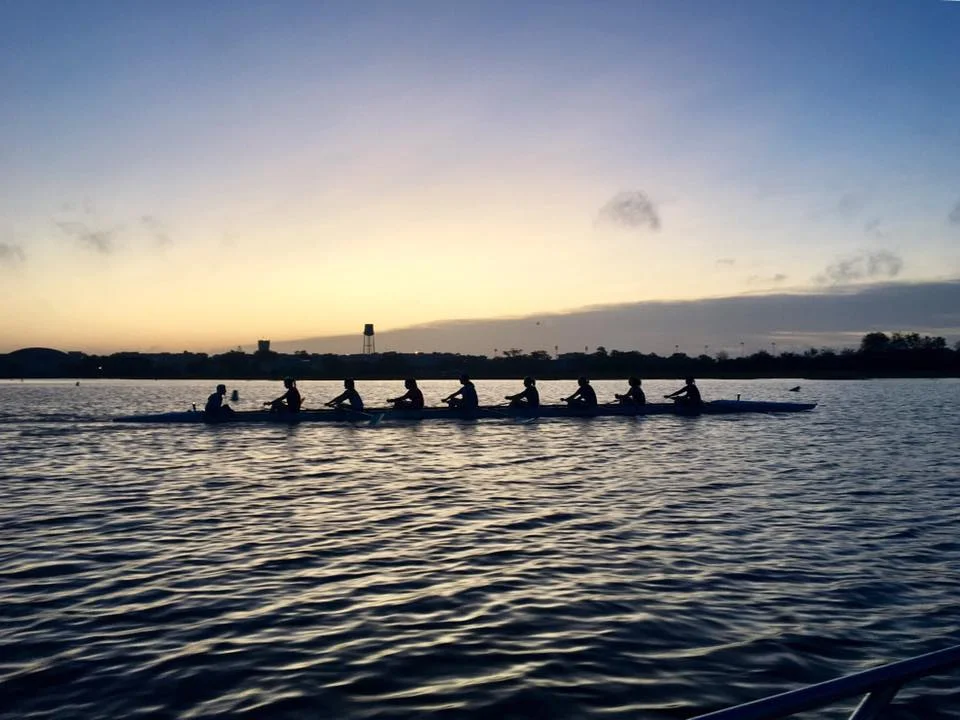
Clemson Sprints Weekend
Coverage and results from the team's trip to Clemson Sprints on Lake Hartwell.
Read More
A non-profit rowing team at the College of Charleston in Charleston, South Carolina.
The College of Charleston Crew Team is a student-led rowing club in Charleston, South Carolina. It welcomes experienced rowers and beginners while competing across the Southeast and along the East Coast.
Selecting the crew for each shell is one of the team’s most important responsibilities. Speed matters, but a fast individual may not suit the rhythm, steering or communication required by a particular boat.
Australian rowers will recognise the club model: strong rowing cultures in Melbourne, Sydney and Brisbane, early training sessions, family regattas and crews chosen through formal trials. Local clubs often describe these trials as lineup selections.
A seat race offers a repeatable comparison before coaches commit names to the water. Combined with technical coaching and previous results, it makes the final decision more transparent, balanced and defensible.
A seat race normally compares small crews over an agreed course, often in pairs, fours or boats with similar equipment. Timed results reveal who can produce power, maintain stroke length and hold effective pace under competition pressure.
| Measure | Timed seat race | Coach and crew assessment |
|---|---|---|
| Power | Captures race-pace output | Identifies where force comes from |
| Technique | Shows efficiency in motion | Detects technical faults in detail |
| Boat fit | Exposes mismatched combinations | Tests communication and balance |
| Consistency | Repeated runs reveal reliability | Confirms fitness and adaptability |
A timed result is therefore evidence, not a complete verdict. Coaches still examine steering, co-ordination, decision-making and the ability to respond to changing conditions during a race.
A consistent selection process protects athletes from impressionistic decisions and gives the whole squad a clear target. Rowers understand which qualities are being assessed and can prepare for the standard expected in competition.
Fairness also depends on controlling variables. Coaches can rotate crews between runs, provide equivalent warm-ups, check equipment and use multiple performances. This reduces the effect of one unusual start, unexpected current or small equipment difference.
Raw power must be balanced with boat feel. Rhythm, endurance, steering, communication and coachability can determine whether two quick rowers produce a fast crew together. Current side pairings and athlete details appear in the College of Charleston roster, giving selectors and rowers a shared starting point.
At home, Australian clubs work under the Commonwealth Privacy Act 1988 where it applies, alongside state and territory privacy and work health and safety rules. These laws do not govern a South Carolina programme, but they provide a useful benchmark: collect only relevant performance information, protect sensitive details and keep selection practices safe and non-discriminatory.
Once results are available, coaches map athletes to the positions that suit the shell. In an eight, the bow pair controls balance, the middle seats translate force and the stroke pair establishes rhythm. A coxed four requires an equally deliberate combination.
No single set of rankings should decide every crew. Coaches may combine seat-race times with split times, skills observations, fitness data and short trials in the full boat. A later run, illness or venue conditions can also justify changing the lineup when circumstances change.
Preparation makes the process more meaningful because every athlete arrives ready to demonstrate the qualities being assessed.
Rower preparation
Coach and crew review
The aim is to identify the crew that performs best together, not simply the individual with the fastest single result. Preparation, observation and open communication allow the strongest combination to emerge without relying on reputation alone.
A seat race is only useful when it prepares a crew for the events ahead. Coordinators can align these decisions with the race schedule, matching lineups to the distance, venue and expected conditions.
Australian crews in Melbourne, Sydney and Brisbane also plan around early sessions and rail travel to regattas, where late arrivals or changed race times can disrupt preparation. Charleston faces similar pressures as the team travels to regional competitions and regattas along the East Coast.
In the Australian community-sport market, clubs commonly combine memberships, fundraising, sponsorship and social gatherings. The College of Charleston Crew Team follows a similar model, using its website to connect rowing information, fundraising opportunities and direct contact channels with students, families and alumni.
Experienced athletes can compete alongside teammates learning the basics, while coaches and student officers help the programme remain welcoming and organised. Clear selection standards, useful feedback and a pathway for new rowers allow the crew team to grow without losing its competitive identity.
College of Charleston Crew fields competitive eights and fours in both Fall head races and Spring sprint regattas across the Southeast.
Learn MoreRecent news, recaps, and announcements from the team.
Coverage and results from the team's trip to Clemson Sprints on Lake Hartwell.
Read More
Spring lineup including Clemson Sprints, SIRA, Dad Vail, and ACRA National Championship.
Read More
Previews and recap of past Head of the Charles appearances, including the 50th annual regatta in 2014.
Read MoreTeam practice, regatta dates, and meetings are listed on the team calendar. Coaches post weekly schedules and travel details for upcoming race weekends.
Charleston Crew / CCAA
PO Box 12941
Charleston, SC 29422
Email: info@cofccrew.org
Phone: 843.513.5900
Phone: 843.276.4241
Interested in joining the team? Fill out the recruitment form and the coaches will follow up.