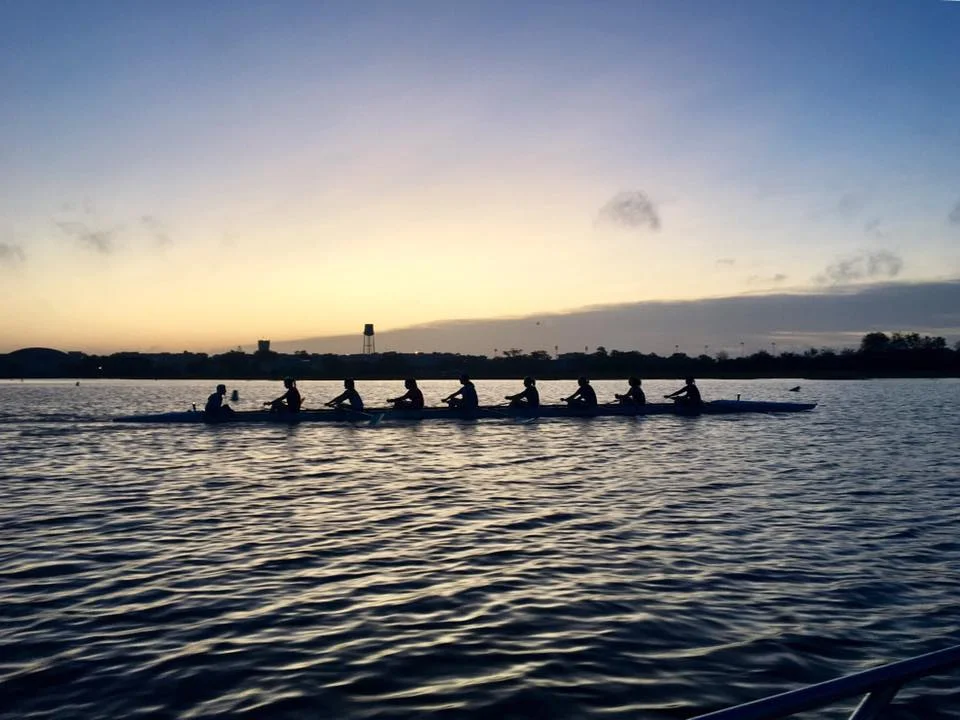
Clemson Sprints Weekend
Coverage and results from the team's trip to Clemson Sprints on Lake Hartwell.
Read More
A non-profit rowing team at the College of Charleston in Charleston, South Carolina.
Distance training turns the river into a testing ground for pacing, strength and trust. The College of Charleston crew team’s challenge gives members a clear choice: cover 3K for a sharper test of speed and rhythm, or tackle 5K for an endurance-focused effort. Experienced rowers can compare times, while beginners can build confidence without chasing an elite standard.
The decision is about more than extra metres. A 3K row demands controlled intensity and a strong finish; a 5K requires an economical stroke, patient pacing and the ability to stay together when fatigue arrives. Australian rowers will recognise the metric framing, while crews racing around Sydney Harbour, Melbourne’s Yarra or Adelaide’s Torrens face comparable questions about water, weather and racecraft.
Choose according to the athlete’s current base, available time and appetite for discomfort. A 3K can serve a developing crew as a bridge between shorter head-to-head racing and sustained training. A 5K suits rowers who already handle longer aerobic work comfortably, though the final kilometre will expose pacing errors that a quick start can hide.
Selection should remain flexible. A crew can nominate a primary distance, then use the alternate as a benchmark later in the block. Charleston’s tidal, often wind-exposed water adds another variable: what feels controlled on a flat ergometer can become tactical on the Cooper River. The best target is the course that produces useful data rather than the one that merely looks demanding.
A sound plan begins with an honest baseline, then adds volume gradually. Races at either distance are built on repeated quality pieces, not a single hard effort, so ergometer rows, water sessions and recovery days all need to fit around classes and the academic calendar.
Coaches should scale targets for novice and experienced athletes, while experienced members can mentor newer rowers through the first race-pace blocks. The resulting plan is demanding but personal, and it gives every participant visible progression to follow.
On the water, the shorter course encourages aggression. Rowers can settle quickly, hold a clean rate and press when the field compresses. Over 5K, technique becomes an energy-saving tool: long reaches invite slow recovery, broken connection wastes force, and a shortening finish can unravel an otherwise disciplined crew.
The ergometer develops repeatable power, but the boat demands balance, navigation and adaptation. A crew may feel powerful at a high stroke rate yet lose efficiency when a crosswind pushes the bow toward another lane. Video review, paired lines and deliberate starts teach athletes to translate indoor strength into controlled boat speed.
Charleston weather can shift quickly, so race preparation needs more than a clean split plan. Coaches should rehearse several pace bands, a conservative opening and a contingency for headwinds or confused water. The coxswain or rower calling the rhythm should give clear instructions without turning every adjustment into a debate.
For Australian competitors, the contrast of seasons is useful. Southern Australian racing is usually concentrated from spring into autumn, opposite Charleston’s main collegiate cycle, so training diaries must be adapted rather than copied. Long-course events such as Melbourne’s Head of the Bourbong also show that club crews value a decisive test beyond the standard shorter race.
Cross-training gives the challenge another dimension. Runners bring endurance, gym users bring force, and rowers arriving from team sports bring an understanding of competition and recovery. That wider base supports the multi-sport rower benefits explored by College of Charleston crew members, while still requiring each athlete to learn the particular demands of sweep or sculling.
Australian club culture offers a ready parallel: athletes often move between rowing, swimming, cricket, netball and team AFL. For our crew, shared warm-ups, coxswain practice and race reviews build the same social confidence. Beginners gain a clearer route into the boat, and veterans refresh their technique by explaining what they notice in each stroke.
Progress is visible throughout the crew photo gallery, which captures the people behind each split: first-time rowers, experienced competitors, coaches and student leaders. It also makes development tangible. A crew can celebrate a polished start, a stronger finish or an athlete who completed the distance after months of steady training.
Fundraising and competition then connect those personal gains to the wider program. The team competes across the Southeast and along the East Coast, and Australian supporters may recognise the communal spirit of a local rowing shed, market stall or sausage sizzle. By sharing the work through the team’s schedule, social channels and donation options, the challenge becomes proof that disciplined training can produce both individual fitness and a cohesive crew.
College of Charleston Crew fields competitive eights and fours in both Fall head races and Spring sprint regattas across the Southeast.
Learn MoreRecent news, recaps, and announcements from the team.
Coverage and results from the team's trip to Clemson Sprints on Lake Hartwell.
Read More
Spring lineup including Clemson Sprints, SIRA, Dad Vail, and ACRA National Championship.
Read More
Previews and recap of past Head of the Charles appearances, including the 50th annual regatta in 2014.
Read MoreTeam practice, regatta dates, and meetings are listed on the team calendar. Coaches post weekly schedules and travel details for upcoming race weekends.
Charleston Crew / CCAA
PO Box 12941
Charleston, SC 29422
Email: info@cofccrew.org
Phone: 843.513.5900
Phone: 843.276.4241
Interested in joining the team? Fill out the recruitment form and the coaches will follow up.