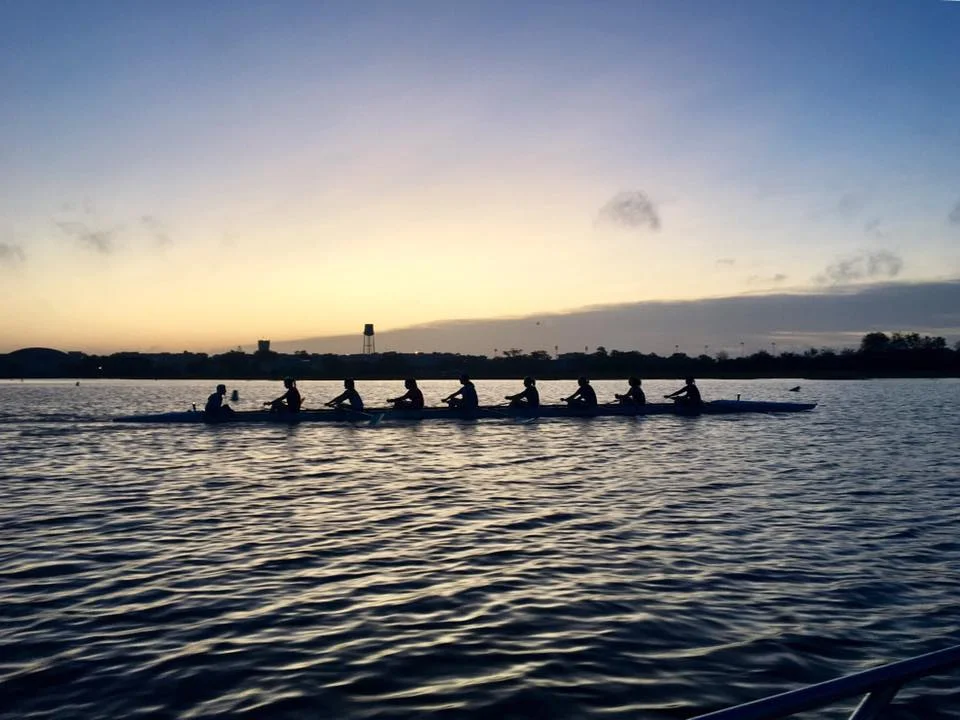
Clemson Sprints Weekend
Coverage and results from the team's trip to Clemson Sprints on Lake Hartwell.
Read More
A non-profit rowing team at the College of Charleston in Charleston, South Carolina.
The benefits of being a multi-sport rower at CofC extend beyond fitness and competition. Rowing demands technical precision, physical strength and clear communication, making it a valuable companion to almost any field, court or water sport. For students at the College of Charleston, the result is a broader sporting experience and a stronger set of transferable skills.
A multi-sport rower splits their attention between crew and another activity, often navigating demanding training schedules alongside classes. That balance can be challenging, but it also develops discipline, adaptability and an appreciation of high-performance preparation. Teammates become more reliable because they understand what it takes to perform under fatigue and pressure.
Charleston’s warm waters and active rowing community provide an ideal setting for this development. Australian athletes, accustomed to the intensity of Sydney Harbour racing or winter training on Melbourne’s Yarra, will recognise many of the same demands: early starts, close crew bonds and the satisfaction of moving a boat as one.
Learning to row develops balance, coordination and an understanding of power distribution. Sweep rowers and scullers must control the oar or both sculls while maintaining a smooth rhythm, and every correction from a coach immediately changes the boat’s movement. Those lessons translate naturally into other sports where positioning, timing and efficient technique determine the outcome.
Multi-sport athletes also gain useful strength away from their primary discipline. Rowing builds the upper back, shoulders, legs and core, while the repeated pulling action supports explosive movements in sports such as rugby, soccer, hockey and lacrosse. Carefully managed cross-training can improve overall athleticism without requiring an entirely separate conditioning programme.
The culture of Australian rowing clubs offers a familiar model. Sessions at clubs around Brisbane, Adelaide and Perth often combine technical drills with strength work and plenty of banter, while squad training is informally called “squadies”. The language is casual, but the standards inside the boat remain exacting.
Rowing supplies exceptional aerobic conditioning because each stroke demands coordinated power from the entire crew. A multi-sport rower can use that endurance base to sustain longer periods of high-intensity effort in another sport. Faster recovery between efforts also supports practice quality, particularly during a busy collegiate season.
Weather plays a major part in any rowing programme. Charleston rowing weather can change quickly, forcing crews to adjust clothing, routes and session plans. Australian rowers know the value of reading conditions on the water; the same adaptability helps athletes make training decisions intelligently.
Scheduling is another important skill. Balancing crew practice with another team’s sessions, travel and competition teaches prioritisation. Rest becomes part of the plan rather than an afterthought, and athletes learn when to push through discomfort and when to protect their body for the next event.
Few sports reveal poor communication as clearly as rowing. A cox must relay instructions, rowers must trust one another’s timing and the whole crew must respond to changing water. Multi-sport rowers bring that awareness into their other activities, where reading teammates and adjusting under pressure are equally valuable.
Leadership does not always mean calling the loudest encouragement. It can mean completing a difficult repetition, encouraging a younger athlete or remaining composed after a mistake. These quieter qualities often emerge through the repeated close contact of a rowing programme.
The programme’s Hall of Champions celebrates the results built through this combination of commitment and teamwork. Australian rowing clubs also recognise that success extends beyond race results, valuing determination, club spirit and the willingness to contribute during fundraising and community events.
CofC competes throughout the Southeast and along the United States East Coast, giving multi-sport athletes exposure to varied courses, rivalries and race formats. That variety tests a crew’s ability to adapt, whether the venue is a sheltered river, a tidal channel or a long-distance championship course.
Australian rowers can compare this circuit with events on Sydney Harbour, Melbourne’s Yarra or the Gold Coast’s broad river reaches. The venues differ, but the central challenge remains the same: convert individual effort into boat speed. Racing alongside athletes from different sports can also sharpen tactical thinking and broaden a student’s competitive identity.
Regular competition builds confidence that carries into other fields. A rower who has handled a tight finish, a delayed start or a difficult course can approach pressure in another sport with greater familiarity. The sporting resume gains another dimension, while the athlete gains a wider community.
The strongest benefit may be the network surrounding the programme. Rowing connects students with alumni, coaches, officers and volunteers who often remain influential well beyond their competitive years. Those relationships create practical advice, professional opportunities and a lasting sense of belonging.
Current contacts, coaching information, officer roles, regatta details and fundraising links are brought together through the CofC crew team website. Prospective members and experienced rowers can find the information they need, while supporters can follow the season and contribute to the programme’s community.
Multi-sport rowers leave CofC with more than race times. They carry stronger technique, deeper discipline and proven experience of working towards a shared goal. In a sporting culture that values toughness and teamwork, that combination makes them more complete competitors and more capable students.
College of Charleston Crew fields competitive eights and fours in both Fall head races and Spring sprint regattas across the Southeast.
Learn MoreRecent news, recaps, and announcements from the team.
Coverage and results from the team's trip to Clemson Sprints on Lake Hartwell.
Read More
Spring lineup including Clemson Sprints, SIRA, Dad Vail, and ACRA National Championship.
Read More
Previews and recap of past Head of the Charles appearances, including the 50th annual regatta in 2014.
Read MoreTeam practice, regatta dates, and meetings are listed on the team calendar. Coaches post weekly schedules and travel details for upcoming race weekends.
Charleston Crew / CCAA
PO Box 12941
Charleston, SC 29422
Email: info@cofccrew.org
Phone: 843.513.5900
Phone: 843.276.4241
Interested in joining the team? Fill out the recruitment form and the coaches will follow up.