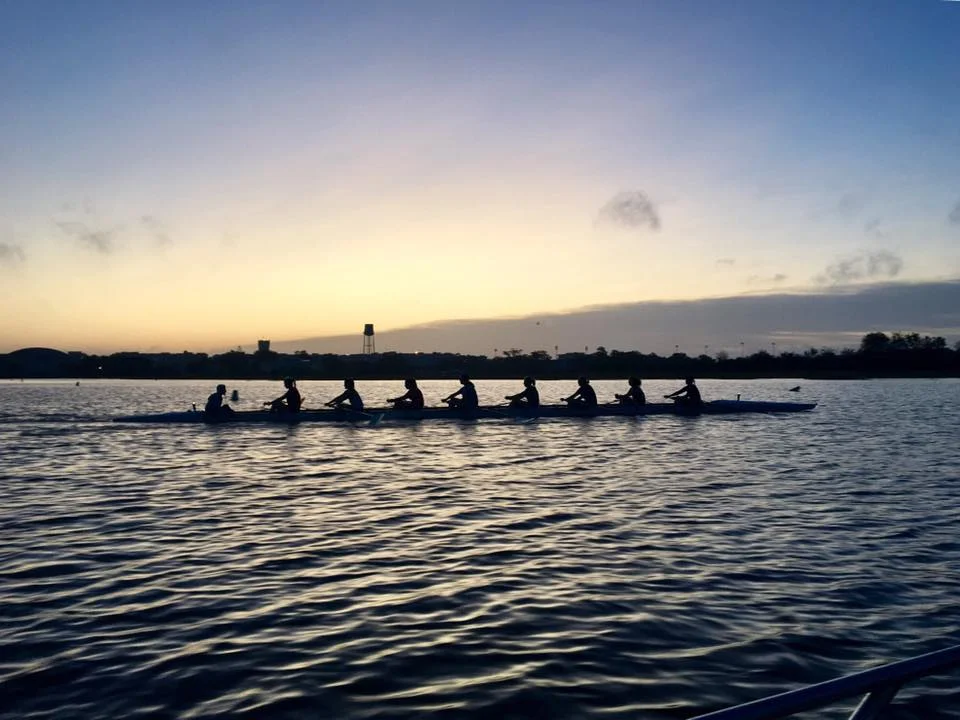
Clemson Sprints Weekend
Coverage and results from the team's trip to Clemson Sprints on Lake Hartwell.
Read More
A non-profit rowing team at the College of Charleston in Charleston, South Carolina.
The College of Charleston Crew Team sits in a strange and exciting corner of American collegiate sport. It is neither a varsity-funded NCAA program nor a loosely organised pickup group; it is a fully student-run club sport with its own budget, leadership elections, and competitive calendar. That positioning shapes everything from how athletes are recruited to how the boathouse is paid for, and it is the reason so many rowers, both local and international, end up pulling an oar on the Ashley River.
For Australians especially, the club rowing pathway feels familiar. Back home, the sport runs almost entirely through schools, state associations, and historic clubs like Melbourne University Boat Club or Sydney Rowing Club, with very few paid scholarships on offer at the university level. The same amateur, athlete-led ethos that defines a regatta at Lake Wendouree in Ballarat shows up in how CofC Crew trains, travels, and funds itself.
The program competes across the Southeast and up the East Coast, welcomes walk-ons with no prior sweep experience, and has built a culture that prizes accessibility over athletic elitism. The choice to remain a club rather than chase varsity status was deliberate, and the reasons behind it reveal a lot about what modern collegiate rowing can look like when students stay in the driver's seat.
A collegiate club rowing team in the United States operates under the umbrella of a university's recreational sports department, but functions as a semi-independent organisation with elected officers, a coaching staff, and a dedicated treasury. Dues cover launch fees, trailer maintenance, ergometer rentals, and entry costs for regattas, and most members pay the same rate regardless of ability. The structure is closer to a private rowing club than to a scholarship-funded NCAA squad.
At CofC, the student officers handle logistics that varsity programs would otherwise employ full-time administrators to manage. They book buses to Head of the Charles, coordinate hotel blocks for the Head of the Schuylkill, and run fundraising campaigns through alumni networks and local Charleston businesses. Coaches are hired as independent contractors, and the team's relationship with the university is one of partnership rather than employment.
That flat hierarchy means an experienced novice from a Charleston high school crews alongside a former Australian U23 lightweight who learned the sport on the Yarra. It also means accountability runs through the athletes themselves, which tends to produce rowers who plan their own seasons rather than waiting for a coach to hand them a calendar. New members often start by reading through the first row guide before they even touch an oar.
Charleston is not Boston or Sacramento, the traditional American rowing capitals, but the harbor and tidal creeks offer something those cities cannot. Practising on the Ashley River means reading current, wind, and salt tide, a skill set that translates directly to coastal regattas from Head of the Charles to the San Diego Crew Classic. The mild winter climate also means the team rows outdoors nearly year-round, which is a luxury for anyone who has spent a July training in a heated ergo room in Melbourne.
The cultural pull is real too. Charleston has a growing international student population, a food scene that keeps hungry athletes well fed, and a downtown that is genuinely walkable from the boathouse. Many members cite the lifestyle as much as the training when explaining why they chose CofC over larger programs. The combination of serious daily water sessions and a livable Southern city is rare in American collegiate sport.
The team's regatta schedule includes stops in Savannah, Gainesville, and Philadelphia, which keeps the travel footprint manageable for students juggling coursework. For prospective rowers weighing options, the spring break packing list gives a clear sense of what life on the road with the team actually looks like.
The varsity pathway promises athletic scholarships, dedicated training facilities, and a clearer route to national team selection. It also demands year-round single-sport commitment from athletes who are often sixteen or seventeen when they commit. Many talented Australian school leavers chase that route through American universities, but a surprising number discover the club model suits them better once they arrive.
Club programs accept students who want a full university experience, including other clubs, part-time work, study abroad, and a social life that does not revolve around a single sport. Athletes can still race at high-level regattas, including selection events, but they do so without the pressure of a coach-controlled scholarship review. For someone balancing a hospitality job at a Sydney cafe during school holidays, that flexibility is the whole point.
The training volume is lower than at a Division I varsity program, but the quality of coaching and competition is often comparable at the conference level. Club crews regularly place athletes on U23 and senior national teams, and the relaxed environment tends to produce rowers who stay in the sport for decades rather than burning out at twenty-two.
Australian rowing culture is built on clubs, not colleges, and that background fits the CofC model perfectly. Most Australians who pick up an oar do so through school programs affiliated with GPS associations in Brisbane, AAGPS schools in Sydney, or the strong club scene in Melbourne, Perth, and Adelaide. By the time they finish Year 12, they have usually raced at state championships, Australian Rowing Championships, and possibly a underage national team trial.
Walking into a club environment in Charleston therefore feels less like a culture shock and more like a continuation. The same respect for the boat, the same emphasis on crew unity, and the same casual dress code at training are all present. Even small speech patterns cross over, with phrases like "no worries" and "see you at the boatshed" landing naturally in the CofC boathouse.
Several current and former members have come from Australian clubs, and their presence reinforces the international flavour of the roster. For any Antipodean rower weighing up a U.S. university, the club route offers the closest possible analogue to the amateur, athlete-run system they already know.
CofC Crew travels primarily by van and trailer, and the schedule clusters around Southeast regattas in the fall and early spring. Typical destinations include Head of the Charles in Boston, the Head of the Hooch in Chattanooga, and the Occoquan Memorial Sprints in Virginia. Each trip is funded through a mix of dues, fundraising, and small grants from the university's club sports council.
The logistics are handled almost entirely by the athletes themselves, which teaches practical skills no varsity program can offer. Members learn to book accommodation, plan meal budgets, navigate interstate travel, and manage boat repairs on the road. A recent spring trip involved driving a borrowed eight up the I-95 corridor, stopping overnight in Savannah and again outside D.C.
That kind of ownership is part of the appeal. Rowers leave CofC with a CV that includes event management, budgeting, and team leadership, not just race results. For Australians used to running their own boatshed at Mercantile or Banks Rowing Club, the model feels recognisable and refreshingly hands-on.
The roster includes former high school rowers, Division I transfers, complete beginners, and a steady stream of international students from the UK, Germany, and Australia. There is no athletic scholarship on offer, which means the team is built on genuine enthusiasm rather than recruited talent. That mix creates a culture where a first-year novice can find themselves in a senior boat within a season.
The decision to remain a club rather than chase varsity status comes down to values. The team wants to stay accessible to walk-ons, keep dues affordable, and preserve the student-led governance that makes the program unique. It also wants to keep racing at a high level, and the results on the water show that the two goals are not mutually exclusive.
Choosing the right seat in a boat is part of the journey for every new member, and the team's choosing the right seat guide walks newcomers through the trade-offs between bow and stroke. It is exactly the kind of resource a club program produces when athletes, rather than administrators, are writing the playbook.
| Feature | Club rowing (CofC Crew) | Varsity rowing (NCAA D1) |
|---|---|---|
| Scholarships | None | Full and partial athletic scholarships available |
| Governance | Student officers and elected committee | University athletic department |
| Dues | Paid by all members, fund boathouse and travel | Covered by athletic department budget |
| Coaching | Hired independent contractors | Full-time university staff |
| Time commitment | 10-15 hours per week, flexible around study | 25-30 hours per week, single-sport focused |
| Recruitment | Open tryouts, walk-ons welcome | Coach-led recruitment, often years in advance |
| Travel | Self-organised van trips, fundraising supported | Department-funded flights and hotels |
| Post-college pipeline | Strong retention, lifelong club involvement | National team and Olympic pathways |
Both pathways can produce excellent rowers, but they suit different personalities and priorities. For athletes who want a balanced university experience and a say in how their team runs, the club model is hard to beat.
College of Charleston Crew fields competitive eights and fours in both Fall head races and Spring sprint regattas across the Southeast.
Learn MoreRecent news, recaps, and announcements from the team.
Coverage and results from the team's trip to Clemson Sprints on Lake Hartwell.
Read More
Spring lineup including Clemson Sprints, SIRA, Dad Vail, and ACRA National Championship.
Read More
Previews and recap of past Head of the Charles appearances, including the 50th annual regatta in 2014.
Read MoreTeam practice, regatta dates, and meetings are listed on the team calendar. Coaches post weekly schedules and travel details for upcoming race weekends.
Charleston Crew / CCAA
PO Box 12941
Charleston, SC 29422
Email: info@cofccrew.org
Phone: 843.513.5900
Phone: 843.276.4241
Interested in joining the team? Fill out the recruitment form and the coaches will follow up.