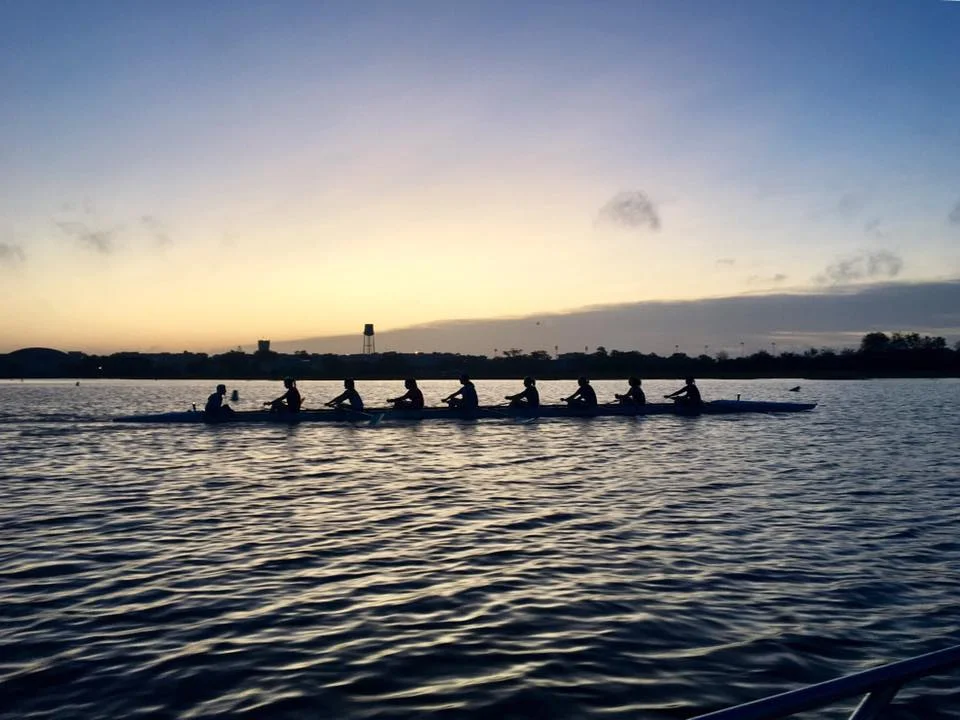
Clemson Sprints Weekend
Coverage and results from the team's trip to Clemson Sprints on Lake Hartwell.
Read More
A non-profit rowing team at the College of Charleston in Charleston, South Carolina.
Communication in a rowing boat is a shared language of short calls, agreed meanings, and quick response. The coxswain or stroke gives the next instruction, and every rower turns it into pressure on the oar. A useful call is heard once, understood by all, and produces one coordinated movement in the shell.
A shell is narrow, wet, and often faster than a beginner expects. Wind, chop, traffic, and fatigue can swallow an instruction, while rower feedback travels through the seat, handles, and balance. Listen, look toward the middle, and respond immediately so the boat’s condition is easier to read.
Calls are usually requests or information, such as a rate change or longer strokes. Commands are direct instructions: settle the crew, begin the start, or reduce pressure. The distinction keeps language calm and clear, helping experienced athletes and new rowers share the same rhythm.
Learning the system is practical. Rehearse a few phrases on land, use them during steady rowing, then add calls for starts and safety. Repetition creates a shared tempo that can change with conditions and boat speed, turning sound into coordinated action.
A call answers one immediate question: what should the crew do next? “Easy there” asks for less pressure, “pick up the rate” asks for more strokes per minute, and “lengthen” asks for more slide. Give the instruction once, then let the crew execute it; repeated calls can interrupt the rhythm they are creating.
A call-and-response drill makes this reliable. The coxswain gives a call, every rower acknowledges it, and the stroke confirms that the crew has made the change. Test the sequence at easy pace before racing. Clear pronunciation matters as much as volume, especially in the bow seat facing away from the speaker.
The stroke seat sets the crew’s timing reference. Its rate, length, and pressure give others a pattern, so changes must be deliberate. The College of Charleston coaching team can help rowers understand how that pattern is developed. A stroke seat should make the rhythm legible rather than chase speed alone.
The coxswain directs the crew and manages safety, navigation, and race formalities. A command tells people what action to take; a call often tells them what the boat needs. “Settle,” “out and over,” and “easy there” each need one clear response, with no competing instructions from the seats.
Cadence is strokes per minute, but speed depends on more than counting. A crew can raise its rate while shortening its slide, lose length in a headwind, or disturb its balance. Calls should describe the intended change while rowers check the result through the oar, seat, and seat-to-seat rhythm.
Feedback works best as a loop: the coxswain calls a change, the stroke models it, and the crew reports whether the boat feels longer, smoother, or more stable. Use short checkpoints, then reduce calls when the crew can sustain the rhythm. Fewer well-timed instructions often coordinate better than a stream of corrections.
Australian crews train on contrasting waterways. Sydney’s Penrith Lakes, Melbourne’s Yarra River, the Brisbane River, and Perth’s Swan River bring different wind, current, traffic, and launch practices. Cool mornings can turn to bright sun or a sea breeze, so a clear call must allow for changing conditions.
Club customs matter too. Australian regattas rely on volunteers for marshalling, timing, safety boats, and result recording, while crews often gather in clubrooms for post-race food and banter. Australia’s local market for oars, sweep blades, rowing shoes, and coxswain kit includes specialist shops and online marketplaces, so fit and delivery deserve checking before travel.
On tidal or busy waterways, the coxswain may call a course change or hold the rate while launches pass. Timed pieces and heats reward a precise start and controlled finish. Safety calls should be short, repeated, and unmistakable, allowing the crew to respond without losing balance.
Begin with land drills: rehearse the agreed words and response without an oar in the water. On the water, start with a long, easy stroke and add one rate change at a time. The coxswain can announce the next call before the end of the stroke, giving every seat time to prepare.
Record what works instead of relying on memory. Note whether a call produced a clean length change, whether the bow stayed settled, and whether the crew returned to its rhythm. A debrief beside the boathouse or at an Australian regatta turns a noisy piece into evidence for the next session.
Use a small vocabulary that covers both ordinary rowing and urgent situations. Agree on the wording during a team meeting and hear it in practice.
For steady-state rowing, practise these calls:
Before a start, finish, or safety event, use brief calls that leave no room for guesswork.
Good communication is built through review as much as through technique. A coach can compare the call sequence with the boat’s actual rhythm from the launch or boathouse. The linked article on the stroke-seat role shows how that position controls timing without making one rower the whole crew.
Feedback should identify the call, describe the boat’s response, and name one adjustment for the next outing. Stroke, coxswain, and rowers can rehearse that adjustment together. When the language becomes automatic, the crew handles wind shifts or busy river lanes with less noise and more trust.
College of Charleston Crew fields competitive eights and fours in both Fall head races and Spring sprint regattas across the Southeast.
Learn MoreRecent news, recaps, and announcements from the team.
Coverage and results from the team's trip to Clemson Sprints on Lake Hartwell.
Read More
Spring lineup including Clemson Sprints, SIRA, Dad Vail, and ACRA National Championship.
Read More
Previews and recap of past Head of the Charles appearances, including the 50th annual regatta in 2014.
Read MoreTeam practice, regatta dates, and meetings are listed on the team calendar. Coaches post weekly schedules and travel details for upcoming race weekends.
Charleston Crew / CCAA
PO Box 12941
Charleston, SC 29422
Email: info@cofccrew.org
Phone: 843.513.5900
Phone: 843.276.4241
Interested in joining the team? Fill out the recruitment form and the coaches will follow up.