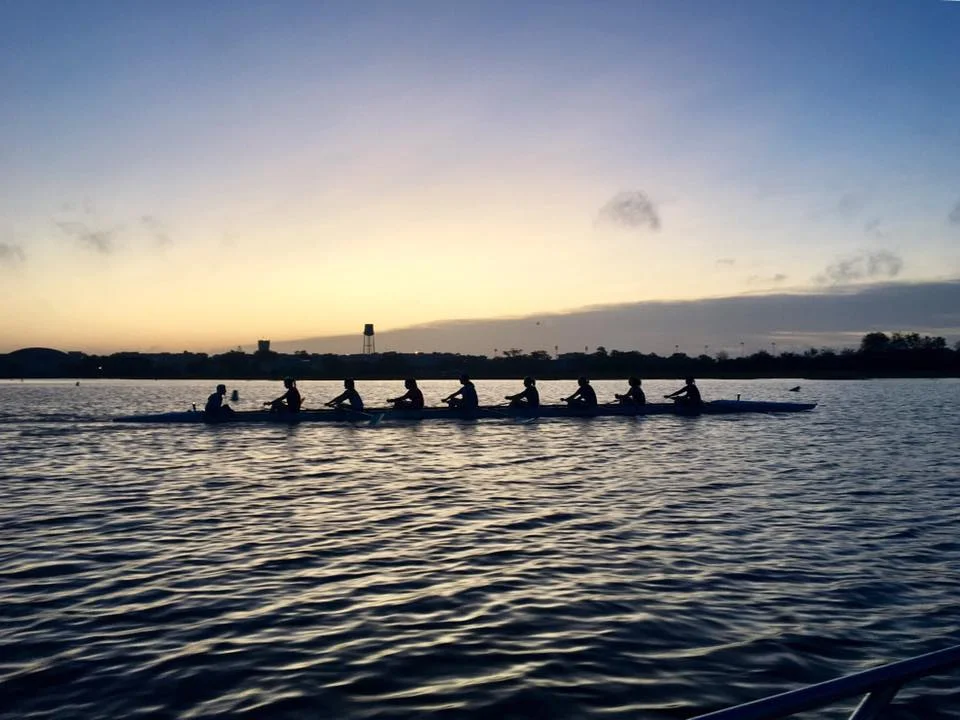
Clemson Sprints Weekend
Coverage and results from the team's trip to Clemson Sprints on Lake Hartwell.
Read More
A non-profit rowing team at the College of Charleston in Charleston, South Carolina.
Charleston’s rowing winter brings cold-water starts, grey mornings and fast-changing weather. The College of Charleston Crew Team trains through these conditions because regular work on the water builds control, confidence and fitness for spring racing. Motivation depends less on waiting to feel enthusiastic than on dependable habits around each session.
The team welcomes experienced rowers and beginners, so winter routines should challenge veterans without intimidating newcomers. Experienced athletes can refine pressure and rhythm, while first-time rowers can focus on balance, communication and consistency. A shared crew standard connects individual effort to the boat.
Australian rowers can use the Southern Hemisphere calendar as an advantage: June to August is Australian winter, whereas December to February is Charleston’s colder rowing period. Planning a Charleston block during an Australian summer allows athletes to arrive with heat tolerance, race fitness and clear technical goals.
Winter training in Charleston is often limited by daylight rather than severe cold. Frost can settle before sunrise, but a southerly change can lift temperatures quickly, while mist and squalls interrupt a calm stretch. The crew must decide when patience is safer than speed, then keep the session purposeful.
For rowers in Australia, the reversed seasons are useful context. Sydney Harbour crews face hard winter sessions in July, while athletes in Darwin enjoy a drier, warmer version. Both groups understand that consistency means adjusting clothing, departure times and goals without abandoning the planned work.
A weekly rhythm removes daily negotiation. Pair strength work with a water session, choose two technical priorities and leave a recovery day between demanding pieces. The regatta schedule sets out upcoming Southeast and East Coast events, allowing training goals to point toward a specific race rather than vague improvement.
Good rhythm includes achievable starts. Beginners might practise balance and relaxed grip, while returning athletes complete longer pieces at race pace. Sydney Harbour and Melbourne’s Yarra River crews use “flat-water” as familiar shorthand for controlled aerobic development.
Motivation grows when improvement has evidence. Record split times, stroke rates, heart rates or how smoothly the boat moves together. Small benchmarks make the weekly change visible.
Video review can be equally valuable, especially for novices learning a clean catch or veterans correcting a late finish. Crews can pair athletes with supportive partners, celebrate one technical gain per outing and review results together. Progress becomes a visible team story, not a private test of worth.
Charleston’s winter weather can shift from calm to hazardous quickly. Before launching, check forecasts, wind, water temperature and lightning warnings, and follow the club’s launch rules. The team’s storm-season safety practices provide a framework for postponing, sheltering and resuming safely.
Land alternatives such as indoor ergometer work, mobility or technique analysis keep a disrupted day productive. Australian crews know the value of contingency when summer thunderstorms develop over busy harbour and river lanes. A cancelled outing still works when the crew completes the backup session together.
Winter motivation depends on recovery as much as effort. Protect sleep, eat regularly before demanding sessions, replace fluids and change out of damp clothing promptly. Soreness should guide workload rather than drive extra training; persistent pain deserves attention from a sports clinician.
Social support sustains the routine. In Australian club rooms, a “good shout” can mean someone acknowledging a teammate’s effort or organising a shared meal. The College of Charleston crew can apply that spirit through team meals, peer check-ins and encouragement from coaches and student leaders.
Individual plans work best alongside team standards. Personal routines make preparation automatic, while shared goals turn solitary effort into collective momentum. Both checklists can suit novice, returning and competitive rowers without inviting unfair comparison.
Australian rowing clubs often combine membership fees with sponsorship, raffles and community events, making fundraising part of club life. The College of Charleston crew can mirror that habit by linking small team efforts to visible club support.
Personal routines
Crew routines
Different athletes respond to different structures. A checklist suits someone who needs clarity, whereas a flexible goal may suit an experienced rower. The best system produces repeatable effort, honest recovery and willingness to train in imperfect weather.
| Method | Best for | Measure | Benefit |
|---|---|---|---|
| Solo target | New or returning rower | Four weekly goals | Daily direction |
| Crew benchmark | Competitive squad | One shared standard | Team identity |
| Technique review | Novice or veteran | One correction per outing | Skill growth |
| Weather backup | Any athlete | Backup session ready | Fewer cancellations |
Regular review keeps the structure useful. After several weeks, compare attendance, perceived effort, technical progress and mood. Keep what strengthens performance, then change one variable at a time. For rowers at the College of Charleston and their Australian counterparts, winter motivation comes from a clear purpose, a supportive crew and flexibility to train smart when conditions change.
College of Charleston Crew fields competitive eights and fours in both Fall head races and Spring sprint regattas across the Southeast.
Learn MoreRecent news, recaps, and announcements from the team.
Coverage and results from the team's trip to Clemson Sprints on Lake Hartwell.
Read More
Spring lineup including Clemson Sprints, SIRA, Dad Vail, and ACRA National Championship.
Read More
Previews and recap of past Head of the Charles appearances, including the 50th annual regatta in 2014.
Read MoreTeam practice, regatta dates, and meetings are listed on the team calendar. Coaches post weekly schedules and travel details for upcoming race weekends.
Charleston Crew / CCAA
PO Box 12941
Charleston, SC 29422
Email: info@cofccrew.org
Phone: 843.513.5900
Phone: 843.276.4241
Interested in joining the team? Fill out the recruitment form and the coaches will follow up.