Clemson Sprints Weekend
Coverage and results from the team's trip to Clemson Sprints on Lake Hartwell.
Read More
A non-profit rowing team at the College of Charleston in Charleston, South Carolina.
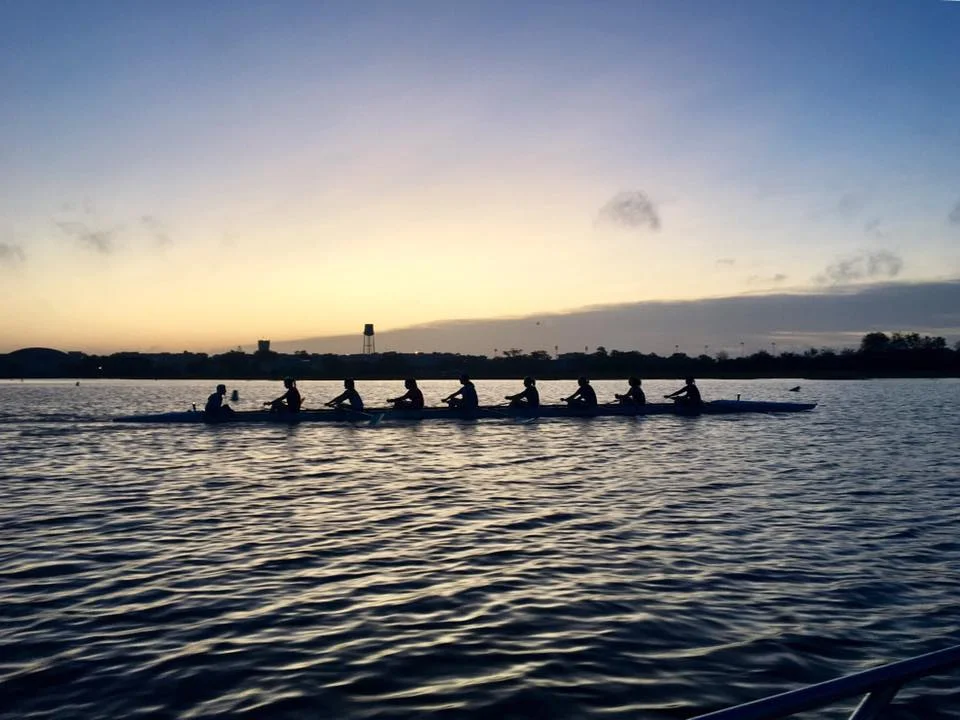
Rowing at dawn or dusk can feel wonderfully quiet: crews launch while traffic is light, the water appears glassy, and the day’s racing or training pressure has not yet begun. The trade-off is reduced visibility, fewer bystanders and less help if something goes wrong. Low-light sessions deserve a deliberate plan rather than an improvised one.
Light changes quickly near the water, and conditions can differ sharply between the outgoing and return. A clear horizon may still conceal glare, mist, debris or an unlit boat. Darkness also hides shallow patches, current seams and sudden weather. A confident crew treats darkness as another variable to manage, not a reason to relax.
For Australian rowers, the context is familiar in cities such as Sydney, Melbourne, Brisbane and Perth, where early training overlaps commuter traffic, coffee runs, dog walking and school drop-offs. On harbour, river and estuarial paths, rowers share space with ferries, fishing craft, kayaks and recreational traffic. Melbourne’s cool starts, Brisbane’s humidity and Perth’s strong morning light each demand different preparation.
A safe routine begins before the shell leaves the boathouse and continues until every athlete is back ashore. Route choice, clothing, weather checks, flotation decisions and check-ins all matter. The same principles apply whether a crew rows before work, studies after class or trains beside the College of Charleston program’s competitive schedule.
Start with official sunrise, sunset and twilight times rather than a rough clock check. Daylight-saving changes in Sydney, Melbourne, Adelaide, Hobart and Canberra can shift those times, while a cloudy horizon can make twilight seem even shorter. Check wind, water temperature, rain and lightning forecasts, and plan a route with several accessible landing points.
Time the session around local traffic patterns. Fishing boats often head out near first light, commuter craft cross at peak pace, and leisure traffic may increase as daylight fades. If visibility deteriorates, shorten the route, move to open water only if it remains safe, and keep the launch and return within easy reach of assistance.
Families balancing school runs, travel and training can also use the head race season guide for practical background on the college rowing calendar. That same attention to timing is useful before a dawn or dusk outing, particularly when athletes must arrive back for classes, work or transport connections.
Visibility should be built into the kit, not left to chance. Choose a light-coloured or high-visibility layer with reflective details, and attach any light securely so it cannot obstruct the coxswain or interfere with other craft. Keep hair, straps, clothing and loose equipment away from the oarlocks. A compact torch is useful for checking the boat and landing area, but it is not a substitute for a sound emergency plan.
Australian conditions make weather-ready clothing especially important. Low-angle sun can still cause ultraviolet exposure, while glare off water increases the need for eye protection. Australian sporting-goods and outdoor markets offer UPF rash vests, water-resistant sunscreen and breathable layers; broad-spectrum SPF 30 or higher, a hat and water-resistant lip balm belong in the bag. In Melbourne or Canberra, add a warm layer; in Brisbane, plan for humidity and sudden downpours.
The useful comparison is not simply daylight against darkness. Each session has a distinct mix of natural light, traffic, weather and available assistance.
| Factor | Dawn session | Dusk session |
|---|---|---|
| Visibility | Improving light may reveal a clear horizon, but mist can remain | Glare and fading contrast can hide boats and debris |
| Traffic | Fishing and commuter craft may be active early | Leisure craft may increase as work and school end |
| Main discomfort | Cold water, damp clothing and cold hands | Heat, fatigue and reduced contrast |
| Emergency access | Facilities and roads may be quiet | More bystanders may be present, but visibility can worsen |
| Essential preparation | Layers, torch and an early weather check | Visible clothing, secured light and a firm return time |
Water-safety legislation is not uniform across Australia. State and territory rules differ for personal flotation devices, vessel equipment, speed and navigation, particularly around ports and ferry routes. New South Wales, for example, requires children under 12 to wear a lifejacket when on a vessel and specifies additional requirements for certain high-risk activities. Rowers should check the rules for their state, the type of craft and the body of water.
A lifejacket carrying the relevant Australian Standard marking is a sensible choice in low visibility, cold water, remote channels and crowded waterways, even where an exemption may apply. It must be fitted correctly before launch. Any lights or signals must also comply with local navigation requirements rather than creating another hazard for approaching drivers.
Use a buddy system. Row together, remain within sight or voice contact, and set a rule for what happens if the shell separates or one athlete becomes ill. Before launch, agree on the route, hazards, return time and check-in method. Carry a charged phone in a waterproof pouch, a whistle and a basic first-aid kit, but do not depend on a phone to remain reachable in every location.
A briefing should assign responsibility for counting athletes, meeting emergency services and helping anyone in the water. Because the College of Charleston Crew welcomes both experienced rowers and beginners, safety instructions should be clear enough for every level of athlete to follow. The coxswain or session lead can reinforce them aloud before the boat leaves the dock.
Before every low-light launch, the coxswain or session lead can work through this short checklist:
For crew-specific contacts, regatta details or guidance about joining a session, contact the team. A documented route, visible crew and agreed check-in system provide the strongest protection when light, traffic and weather change together.
College of Charleston Crew fields competitive eights and fours in both Fall head races and Spring sprint regattas across the Southeast.
Learn MoreRecent news, recaps, and announcements from the team.
Coverage and results from the team's trip to Clemson Sprints on Lake Hartwell.
Read More
Spring lineup including Clemson Sprints, SIRA, Dad Vail, and ACRA National Championship.
Read More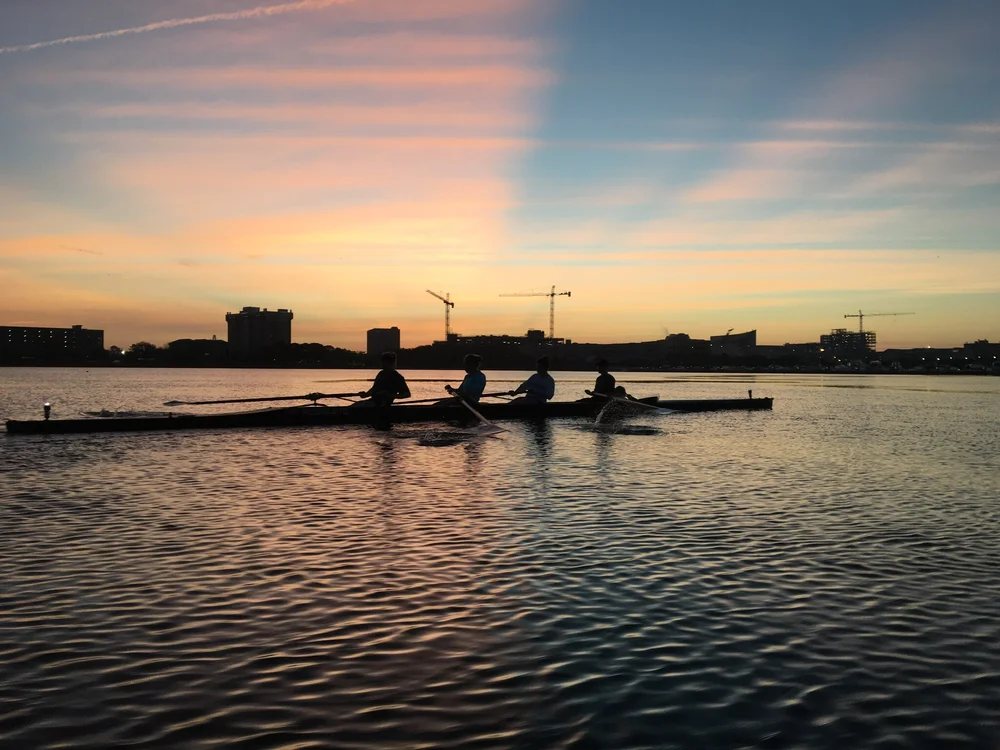
Previews and recap of past Head of the Charles appearances, including the 50th annual regatta in 2014.
Read MoreTeam practice, regatta dates, and meetings are listed on the team calendar. Coaches post weekly schedules and travel details for upcoming race weekends.
Charleston Crew / CCAA
PO Box 12941
Charleston, SC 29422
Email: info@cofccrew.org
Phone: 843.513.5900
Phone: 843.276.4241
Interested in joining the team? Fill out the recruitment form and the coaches will follow up.