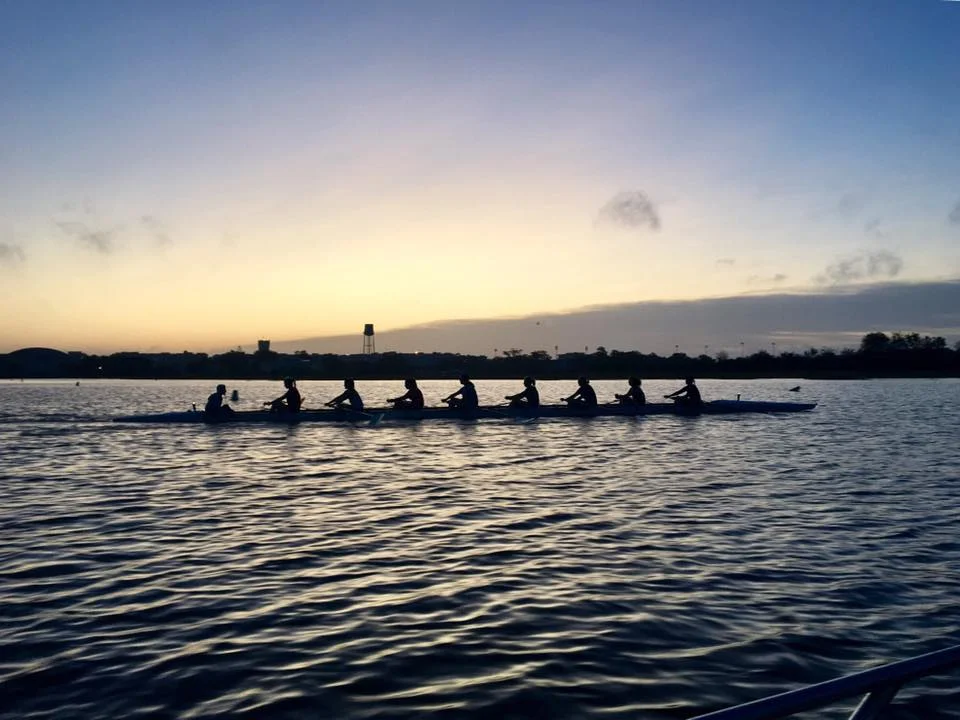
Clemson Sprints Weekend
Coverage and results from the team's trip to Clemson Sprints on Lake Hartwell.
Read More
A non-profit rowing team at the College of Charleston in Charleston, South Carolina.
Starting university rowing in another country can feel like a major step for the whole family. For a new College of Charleston Crew parent, the autumn head race season is the first chance to see how training, travel, study and team life fit together.
Head races differ from the shorter, side-by-side regattas many Australian families know from school rowing. Crews race against the clock over a longer, winding course, with boats released at intervals. Steering, rhythm and composure matter as much as raw speed.
Charleston’s setting adds its own character. Early-season sessions can still be warm and humid, while later racing brings cooler mornings and changing conditions. A student who has rowed on the Yarra or prepared for a Head of the River campaign may recognise the discipline, though the American collegiate club system has a different rhythm.
Parents are usually supporting from a distance, often across a large time difference. Charleston is generally 14 to 16 hours behind Australian Eastern time, depending on daylight saving, so a race that takes place on a Sunday morning in South Carolina may be watched late on Sunday night or early Monday in Sydney or Melbourne.
A head race follows a time-trial format. Boats launch in a set order, pass through bridges and bends, and are ranked by elapsed time. Crews may be separated by seconds, so a clean start, efficient course line and strong finish can have a meaningful effect on the result.
For a new rower, the first race is often as much about learning the event routine as chasing a fast time. Athletes need to arrive early, prepare equipment, listen for calls from coaches and stay focused while waiting near the launch area. Parents may see only a few minutes of racing, but the regatta day can occupy most of the day.
The CofC team welcomes experienced athletes and beginners, so early-season goals can vary. Some students are refining technique after years in a boat; others are learning racing language, seat roles and how to manage nerves. The current team roster can help families understand who is involved and how the programme is organised.
The head race season usually sits within the first semester, when students are settling into classes and building fitness. Training commonly includes steady endurance work, technical sessions, strength training and practice starts. The exact schedule depends on water access, academic commitments, weather and the regattas selected by the officers and coaching staff.
Travel is a normal part of collegiate rowing. A crew may race in Charleston or travel elsewhere in the Southeast and along the East Coast. That can mean early departures, shared accommodation, equipment logistics and long days at the course. It is quite different from driving to a local Australian regatta in a club trailer, particularly when several university teams gather at one venue.
Parents should expect plans to shift. Water conditions, storms, transport delays and entries can all affect a weekend. Keeping an eye on official team updates is more useful than relying on a fixed itinerary arranged weeks in advance.
The most useful support is often practical and calm. Encourage your student to protect sleep, eat consistently, carry suitable layers and communicate early when coursework or illness affects training. Charleston can feel surprisingly sticky in the first weeks of the semester, so hydration and sun protection matter even when the calendar says autumn.
Australian parents may also need to account for currency conversion. Accommodation, flights and spending money are charged in US dollars, and exchange rates can make a planned budget move quickly. International transfers, card fees and travel insurance deserve attention before the busiest competition period.
A student’s experience becomes clearer over time. Reading this senior rower interview gives families a useful sense of how friendships, responsibility and racing can develop across four years, rather than judging the programme by one result.
College of Charleston Crew is a student-led collegiate club programme. That means athletes are part of a serious competitive team while also contributing to the practical work that keeps the organisation running. Student officers, fundraising, communication and travel planning are all part of the broader experience.
This structure can be unfamiliar to Australian families used to school rowing programmes with dedicated staff, established boathouse systems and parent committees. A club team may ask students to take more ownership of equipment, events and administration. That responsibility is valuable, though first-year students may need time to learn how decisions are made.
The team’s own explanation of choosing collegiate club rowing helps place the programme in context. It also explains why students may choose a club environment rather than a varsity pathway, particularly when they want competitive rowing alongside a broad university life.
The best approach is to support consistency without trying to manage the season from another continent. Ask about how training is going, rather than focusing only on race times. A difficult result can still reflect improved technique, better communication or a successful first experience on a demanding course.
Before the season becomes busy, agree on a simple communication routine that works across AEST and US Eastern time. A short message after training may be more realistic than expecting a live call on race morning. These small arrangements help students feel supported without adding pressure.
For families in Brisbane, Sydney, Melbourne, Adelaide or Perth, the distance can make every update feel important. A steady interest in the student’s health, studies and friendships will usually matter more than knowing every split or technical term. The head race season is an opportunity to watch a young athlete become more independent while finding a place within the CofC rowing community.
College of Charleston Crew fields competitive eights and fours in both Fall head races and Spring sprint regattas across the Southeast.
Learn MoreRecent news, recaps, and announcements from the team.
Coverage and results from the team's trip to Clemson Sprints on Lake Hartwell.
Read More
Spring lineup including Clemson Sprints, SIRA, Dad Vail, and ACRA National Championship.
Read More
Previews and recap of past Head of the Charles appearances, including the 50th annual regatta in 2014.
Read MoreTeam practice, regatta dates, and meetings are listed on the team calendar. Coaches post weekly schedules and travel details for upcoming race weekends.
Charleston Crew / CCAA
PO Box 12941
Charleston, SC 29422
Email: info@cofccrew.org
Phone: 843.513.5900
Phone: 843.276.4241
Interested in joining the team? Fill out the recruitment form and the coaches will follow up.