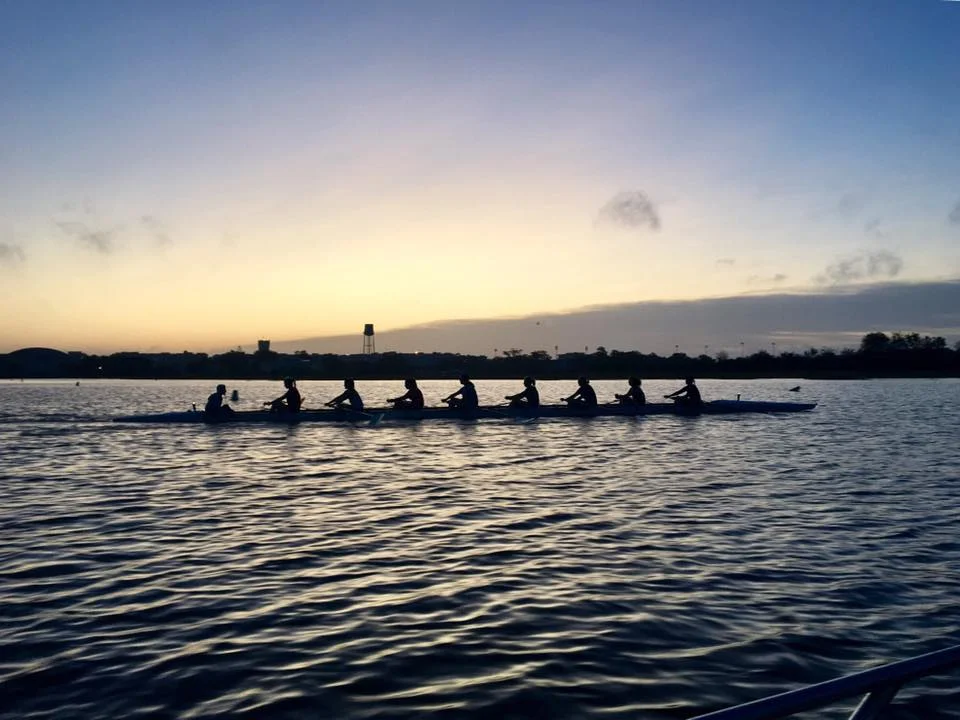
Clemson Sprints Weekend
Coverage and results from the team's trip to Clemson Sprints on Lake Hartwell.
Read More
A non-profit rowing team at the College of Charleston in Charleston, South Carolina.
For a new rower, the first weeks with the College of Charleston Crew Team can feel like a blur of early alarms, unfamiliar terminology and aching legs. Four years later, those same details become part of a much larger story: friendships formed before sunrise, long road trips, close races and the quiet confidence that comes from learning to trust a crew.
This interview with a senior member of CofC Crew looks back on the ordinary moments that shaped a memorable university experience. From beginner sessions to major regattas, the conversation reveals how a club rowing programme can become a place to belong, compete and grow.
Charleston’s waterways offer a distinctive setting for collegiate rowing. The warm climate, tidal conditions and busy student calendar create a rhythm that is different from the experience of rowing on Sydney Harbour or training along Melbourne’s Yarra River, yet the fundamentals remain familiar: preparation, timing and shared effort.
For Australian readers, the appeal is easy to recognise. The commitment resembles an early-morning uni sport session in Brisbane, where heat and humidity arrive quickly, while the team spirit recalls the close community found at local rowing clubs around Adelaide, Perth or Canberra. CofC Crew combines that club culture with the excitement of racing across the Southeast and the U.S. East Coast.
“During my first semester, I thought the hardest part would be learning the stroke,” the senior rower recalls. “It turned out to be getting out of bed consistently. Once I made it to practice, the coaches and returning athletes made everything feel manageable.”
Beginners quickly learn that rowing is built from small corrections. Catch placement, body position and recovery speed may seem technical at first, but repetition turns them into instinct. The crew’s early-morning routine also creates a shared ritual, much like a squad meeting at dawn before a Sydney regatta or a winter training session on the Yarra.
The friendships develop alongside the technique. New members share equipment, carry boats, compare notes after training and discover that the strongest encouragement often comes from a teammate in the next seat. “You start by knowing people because you row together,” the senior says. “Soon you are studying together, eating together and planning your weekends around the team.”
The first regatta can be intimidating. There are unfamiliar courses, boat traffic, marshalling instructions and the pressure of performing in front of other university clubs. A rower who is comfortable during practice may suddenly become aware of every movement when the start marshal calls the crews forward.
Over four seasons, that nervous energy becomes focus. The senior remembers learning to treat racing as a conversation between every seat: a clean start, a controlled rhythm and a final push that belongs to the whole boat. The experience has parallels with Australian events such as Henley-on-Yarra, where atmosphere and tradition sit alongside intense preparation.
Travel adds another layer to the season. Road trips bring early departures, shared playlists, packed meals and conversations that continue long after the boats are unloaded. For an Australian student, the distances may recall travelling between Melbourne and regional regattas or flying from Perth for an intervarsity event, although American collegiate racing creates its own scale and character.
A senior year makes the hidden work easier to appreciate. Before a medal, a personal breakthrough or a successful race plan, there are weeks of conditioning, technical drills and ordinary practices when progress feels almost invisible. “The best lesson was that consistency matters more than one brilliant session,” the rower says.
That lesson extends beyond the river. Balancing lectures, assignments, work and training requires practical planning. The team’s latest updates can help members follow announcements and activities, while regular communication keeps everyone aware of changes to sessions, travel and club responsibilities. The system is familiar to anyone involved in Australian university sport, where classes, casual employment and training often compete for the same hours.
The senior also learned that leadership is less about giving speeches than noticing what teammates need. Sometimes that means helping a novice adjust a foot stretcher; sometimes it means encouraging someone through a difficult ergometer workout. By the final year, the role has shifted from receiving guidance to preserving the standards and culture that first made the club welcoming.
Not every memory is attached to a podium. A missed rhythm, an equipment problem or a race that falls short of expectations can be frustrating, especially after months of preparation. Yet setbacks often reveal the value of the group more clearly than victories do.
“One of the most important moments was coming back to the boathouse after a disappointing race,” the senior explains. “No one pretended it was perfect, but no one disappeared either. We talked through it, helped pack the equipment and came back ready to train.”
That resilience is central to club rowing. The programme welcomes experienced athletes and beginners, so each season includes people at different stages of development. A first-year novice may be learning how to hold an oar while a senior rower is refining race strategy, but both contribute to the crew’s progress.
The final year brings a strange mixture of pride and reluctance. Familiar details become significant: the sound of oars being set down, the walk to the water before sunrise and the last team meal after a long regatta weekend. Checking the regatta schedule starts to feel less like planning and more like revisiting a personal timeline.
The senior hopes to keep rowing after university, perhaps through a community club or masters programme. That pathway will feel familiar to Australian graduates who move from university crews into clubs along the Yarra, Brisbane River or Swan River, where rowing remains a social and competitive sport well beyond campus.
Looking back, the greatest achievement is not a single race result. It is the accumulated habit of showing up, listening carefully and contributing to something larger than an individual performance. Four years with CofC Crew leaves a rower with technical skills, lasting friendships and a set of memories that continue long after the boat has reached the dock.
College of Charleston Crew fields competitive eights and fours in both Fall head races and Spring sprint regattas across the Southeast.
Learn MoreRecent news, recaps, and announcements from the team.
Coverage and results from the team's trip to Clemson Sprints on Lake Hartwell.
Read More
Spring lineup including Clemson Sprints, SIRA, Dad Vail, and ACRA National Championship.
Read More
Previews and recap of past Head of the Charles appearances, including the 50th annual regatta in 2014.
Read MoreTeam practice, regatta dates, and meetings are listed on the team calendar. Coaches post weekly schedules and travel details for upcoming race weekends.
Charleston Crew / CCAA
PO Box 12941
Charleston, SC 29422
Email: info@cofccrew.org
Phone: 843.513.5900
Phone: 843.276.4241
Interested in joining the team? Fill out the recruitment form and the coaches will follow up.