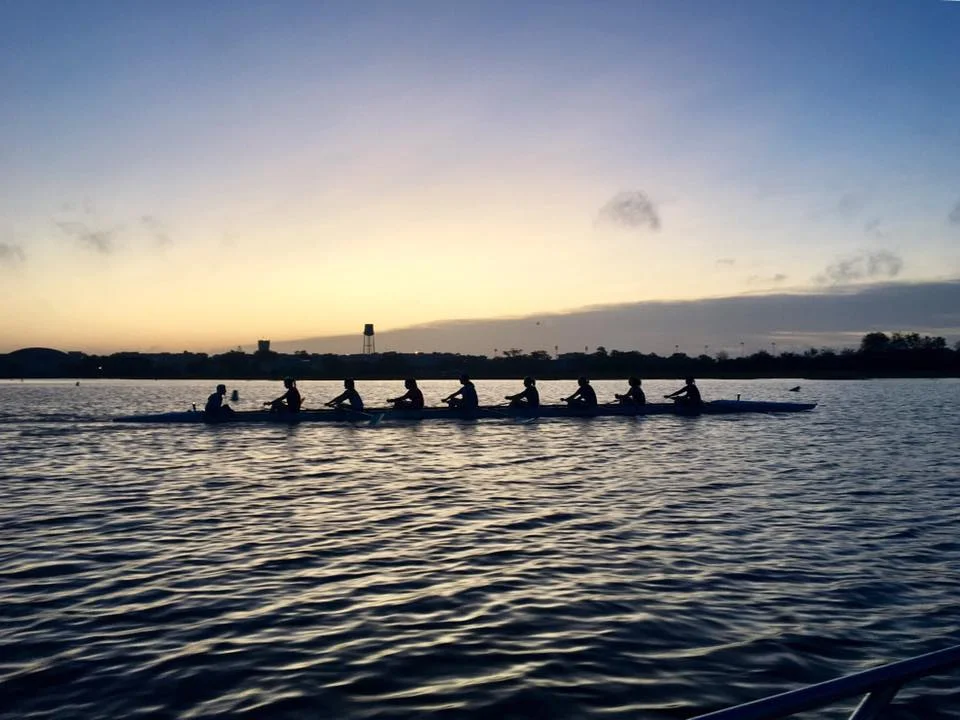
Clemson Sprints Weekend
Coverage and results from the team's trip to Clemson Sprints on Lake Hartwell.
Read More
A non-profit rowing team at the College of Charleston in Charleston, South Carolina.
Lower back discomfort can arrive after a long rowing session, an early start or a day spent sitting at a desk. It does not mean failure, and it is not an inevitable part of collegiate rowing. Many cases develop when a routine becomes suddenly heavier, technique changes or recovery is neglected.
Stretches can help maintain comfortable movement, but they work best alongside suitable strength, sensible training loads and attention to boat setup. A ten-minute routine cannot compensate for repeatedly rowing through severe pain or racing at maximum intensity every day.
Australian rowers may manage the same demands while commuting through Sydney, Melbourne or Brisbane, carrying gear across car parks and balancing club training with study or work. Hot spells, long drives and hours in a chair can all affect how the lower back feels between sessions.
Persistent symptoms deserve assessment rather than repeated self-treatment. A general practitioner can coordinate care, while an AHPRA-registered physiotherapist can assess movement and load management. The aim is comfortable rowing now and fewer interruptions later.
Rowing repeatedly moves the pelvis and spine while the arms, trunk and legs transmit force through the oar. The lower back must tolerate that pattern, particularly during the catch and drive. A sudden increase in mileage, an inadequately supported seat or poor timing can expose tissues that were previously comfortable.
Fatigue matters as much as fitness. When technique breaks down late in a piece, the back may compensate for weakening legs or an early release. Rising stress can also cause the trunk to stiffen, turning ordinary movement into a source of pain.
Lower back pain is not a diagnosis, so the exact cause needs consideration if symptoms develop. Some people respond well to a gradual change in routine; others need clinical assessment before continuing to train.
A short preparation routine should raise body temperature, practise the movement pattern and identify obvious restrictions. It should not force the spine into painful positions. Breath matters throughout: let the ribs and abdomen move rather than holding the breath to create stiffness.
Check the training conditions before arriving at the landing. The current regatta schedule can help crews plan around travel, back-to-back races and recovery time. Racing on consecutive days without an easy day or strength session may leave little opportunity to adapt.
Australian summers also bring strong sun and rapid changes in weather. Warm-up clothing can be removed after the session, but water and an electrolyte drink should be available. Heat can increase fatigue, which in turn affects trunk control and stroke consistency.
The cat-cow exercise gently alternates flexion and extension of the spine. Begin on hands and knees, move slowly and keep discomfort within a mild range. It suits rowers who stiffen during the catch, although it should not aggravate symptoms that travel into the legs.
A supported child’s pose can provide a useful break for the hips and lower back. The knees stay apart, the feet remain grounded and the chest rests on a bolster or the boat dock when balance is limited. Hips should not be forced downward.
Hamstring and hip-flexor stretches may help when tight legs pull on pelvic position. A straight-leg stretch can load the sciatic nerve, so bend the knee if the back of the leg becomes tense or painful. Stopping at tension rather than pain is a reliable rule.
Glute bridges, bird dogs, side planks and controlled trunk rotation train the capacity to maintain alignment under load. These exercises should support rowing technique rather than imitate it at high speed. Slow reps, steady breathing and a stable trunk are more valuable than exhausting fatigue holds.
Australian rowing shops and online marketplaces offer resistance bands, light medicine balls, yoga blocks and foam rollers. Start with equipment already available at the club, and choose resistance that permits controlled movement. Buying more equipment is less useful than progressing one exercise consistently.
Strength sessions do not need to last an hour. Two short sessions each week can provide a useful baseline alongside the crew schedule. Beginners should learn movement under coaching, while experienced rowers can adjust volume after accounting for races and travel.
Before heading out, complete the first list after a general body warm-up. Each movement should take about thirty seconds to a minute, with breathing kept relaxed.
Before training
After training
The lists are prompts, not tests. Adapt them to the session rather than rushing through every item. Missing a day is preferable to treating sharp pain as a normal training milestone. If discomfort returns during the next row, reduce intensity, change the movement and seek advice if it persists.
Boat position influences the load reaching the lower back. Athletes, coaches and coxswains should watch for a collapsed lower back at the finish, crowding near the catch or swinging handles that create repeated side-to-side movement. Small technical changes should be tested without suddenly increasing training volume.
Learning to steer and communicate also affects body position. The team’s newcomer’s coxing guide explains the coordination required in an eight. A steady seat, useful calls and awareness of crew rhythm can reduce the need for abrupt trunk movement.
Seek prompt medical care after a collision or if back pain comes with leg weakness, numbness around the groin, difficulty controlling bladder or bowel, or unexplained weight loss. Fever, severe night pain and escalating symptoms also warrant attention.
Routine pain that lasts more than a week or regularly disrupts training deserves review. In Australia, workplace injuries may involve different state workers’ compensation requirements, so early documentation and medical guidance can matter. Comfortable movement, targeted strength and a measured return to the water are stronger foundations than stretching through worsening pain.
College of Charleston Crew fields competitive eights and fours in both Fall head races and Spring sprint regattas across the Southeast.
Learn MoreRecent news, recaps, and announcements from the team.
Coverage and results from the team's trip to Clemson Sprints on Lake Hartwell.
Read More
Spring lineup including Clemson Sprints, SIRA, Dad Vail, and ACRA National Championship.
Read More
Previews and recap of past Head of the Charles appearances, including the 50th annual regatta in 2014.
Read MoreTeam practice, regatta dates, and meetings are listed on the team calendar. Coaches post weekly schedules and travel details for upcoming race weekends.
Charleston Crew / CCAA
PO Box 12941
Charleston, SC 29422
Email: info@cofccrew.org
Phone: 843.513.5900
Phone: 843.276.4241
Interested in joining the team? Fill out the recruitment form and the coaches will follow up.