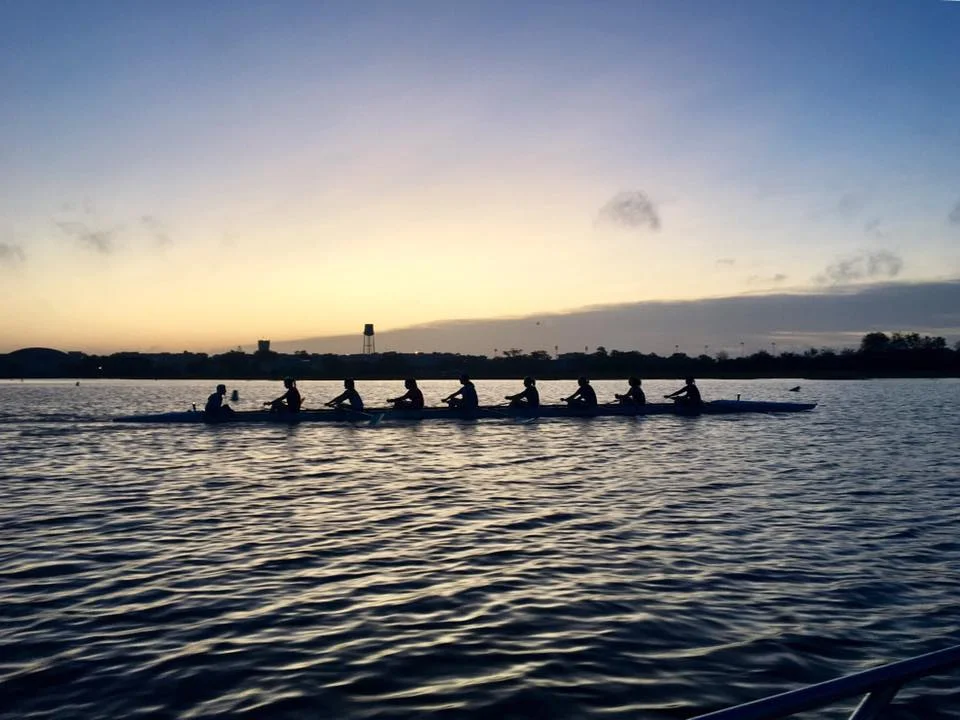
Clemson Sprints Weekend
Coverage and results from the team's trip to Clemson Sprints on Lake Hartwell.
Read More
A non-profit rowing team at the College of Charleston in Charleston, South Carolina.
Running is a useful complement to rowing at the College of Charleston. It builds aerobic capacity, strengthens the legs and hips, and gives athletes a simple way to train when the river is busy or the crew schedule changes. Charleston also offers varied terrain, from flat waterfront paths to shaded neighbourhood streets.
For Australian students and visiting families, the city’s running culture may feel familiar in places. Early starts resemble a parkrun morning, while the heat, humidity and sudden weather shifts call for the same practical planning used for a summer run in Brisbane or Sydney. A hat, sunscreen and water bottle are essentials rather than extras.
The best running routes for CofC rowers are those that fit around water sessions and recovery. A steady loop can support endurance, while shorter efforts on bridges or quiet roads can develop strength without leaving the legs too tired for the next practice.
The Battery and White Point Garden create one of Charleston’s most recognisable running settings. The broad path along the Ashley and Cooper rivers is generally flat, making it suitable for an easy aerobic run, a recovery jog or a longer continuous effort. Historic homes, live oaks and views across the water provide plenty of visual variety.
A useful route begins near White Point Garden, follows the waterfront north, and returns through the surrounding streets. Runners should watch for tourists, uneven paving and cyclists, particularly during busy weekend mornings. An early start is wise in warmer months, when the UV can become intense well before midday, much as it does on a summer morning in Perth.
This route works well after a demanding rowing session because the pace can remain conversational. It is also a practical place to meet teammates before class, with several nearby streets offering access to cafés and refill points.
Across the Cooper River, Mount Pleasant provides a mix of waterfront scenery and quieter suburban roads. The Shem Creek area is attractive for an easy outing, although runners should expect walkers, cyclists and restaurant traffic around the busiest sections. Extending the run through nearby residential streets can create a smoother, more consistent loop.
The Ravenel Bridge is another local landmark for developing strength and controlled effort. Its incline is challenging without being a long mountain climb, so it can be used for short repetitions rather than an all-out test. Rowers should keep the workload measured, especially before an important regatta.
Shem Creek is particularly enjoyable in the late afternoon, or “arvo” in Australian terms, when the light softens. Mosquitoes can be active near the water, so lightweight clothing and repellent are sensible additions to a training kit.
James Island County Park offers a more natural setting for athletes who want softer surfaces and a break from city pavements. Its trails and surrounding roads allow runners to vary distance, although surfaces may become muddy after heavy rain. That makes the area a good choice for an easy long run rather than precise speed work.
West Ashley also has useful multi-use paths and quieter residential stretches. These routes can be linked into a steady endurance session with fewer traffic interruptions than downtown. Runners should remain alert at crossings and avoid assuming that every path will have the same lighting or shoulder width.
The route choice can reflect a rower’s training phase. Flat paths suit longer aerobic work, while short inclines and controlled surges can add leg strength during periods without racing. The team’s current roster can also help athletes connect with teammates who know which local loops suit different abilities.
A solo run is valuable, but shared sessions often make consistency easier. Experienced athletes can lead a relaxed pace, while beginners can build confidence without feeling pressured to match a varsity-style running standard. Keeping the group together is especially important on unfamiliar streets or poorly lit paths.
Rowing already develops strong cardiovascular fitness, yet running places different demands on the calves, shins and feet. New runners should increase distance gradually and avoid adding hills, intervals and long runs in the same week. A ten-minute easy warm-up, dynamic mobility and a gentle cool-down can reduce unnecessary soreness.
The team’s champions archive reflects the competitive history that motivates many athletes, but daily progress is usually built through ordinary sessions. A consistent 25-minute run can be more useful than an occasional exhausting workout.
Australian university athletes will recognise the value of fitting training around lectures, work and club commitments. Like many community sports clubs in Australia, a collegiate crew benefits from clear meeting points, reliable communication and a plan that works for both committed racers and first-time participants.
A balanced week might include one easy run, one quality session and one optional recovery outing:
Hydration deserves particular attention for visitors from cooler Australian cities. Charleston’s humidity can make a familiar pace feel surprisingly difficult, so effort should be judged by breathing and control rather than speed alone. Athletes looking for practical ideas on handling early sessions can use this motivation guide, then adapt the advice to their own sleep and study schedule.
With sensible pacing, suitable footwear and respect for heat and traffic, Charleston’s waterfronts, parks and bridges provide a strong running network for rowers throughout the season.
College of Charleston Crew fields competitive eights and fours in both Fall head races and Spring sprint regattas across the Southeast.
Learn MoreRecent news, recaps, and announcements from the team.
Coverage and results from the team's trip to Clemson Sprints on Lake Hartwell.
Read More
Spring lineup including Clemson Sprints, SIRA, Dad Vail, and ACRA National Championship.
Read More
Previews and recap of past Head of the Charles appearances, including the 50th annual regatta in 2014.
Read MoreTeam practice, regatta dates, and meetings are listed on the team calendar. Coaches post weekly schedules and travel details for upcoming race weekends.
Charleston Crew / CCAA
PO Box 12941
Charleston, SC 29422
Email: info@cofccrew.org
Phone: 843.513.5900
Phone: 843.276.4241
Interested in joining the team? Fill out the recruitment form and the coaches will follow up.