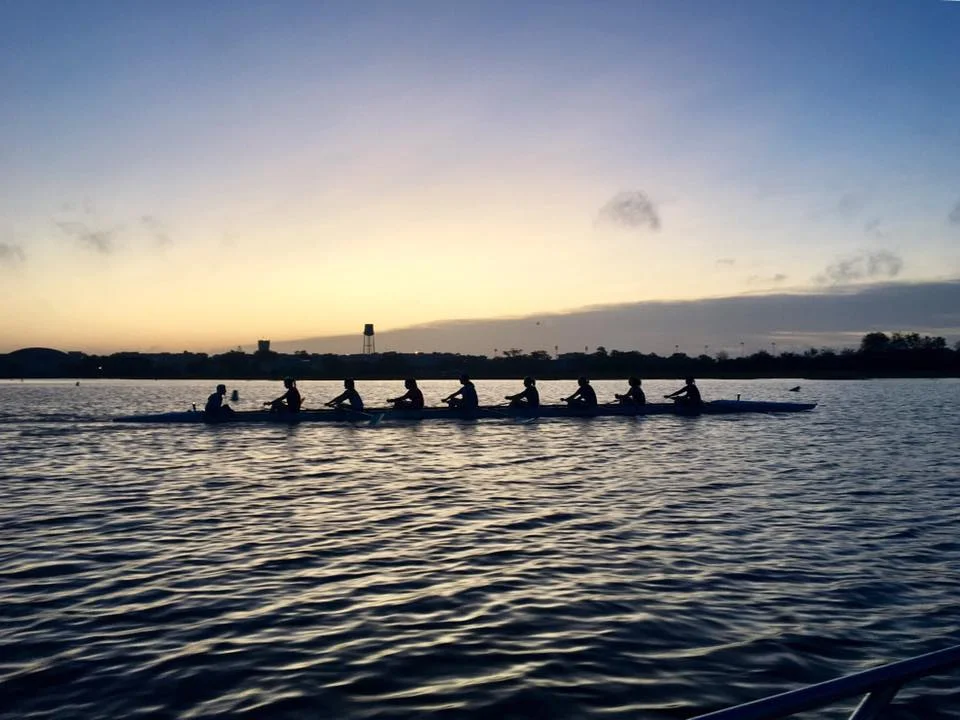
Clemson Sprints Weekend
Coverage and results from the team's trip to Clemson Sprints on Lake Hartwell.
Read More
A non-profit rowing team at the College of Charleston in Charleston, South Carolina.
The history of the CofC Crew boathouse is a story of a student club becoming a durable riverside institution. From early reliance on borrowed equipment, the Ashley River base gave rowers a dependable place to store shells, launch boats, repair gear and gather. Its importance lies in that daily work as much as in race-day medals.
For Australian readers, the scene will feel recognisable. Sydney Harbour crews and clubs on Melbourne’s Yarra turn quiet early mornings into shared civic rituals, and both cities have made boathouses symbols of training, friendship and public access to the water. Charleston’s version has its own Lowcountry character while sharing that waterfront culture.
College of Charleston rowing grew from student initiative rather than an inherited elite tradition. Early rowers learned in small groups, drawing on experienced athletes while introducing newcomers to sweep rowing, pacing and boat handling. The Ashley’s tide, current and changing weather gave the first sessions a strong sense of place.
That mixture shaped the team’s culture. Beginners trained beside experienced rowers and learned the value of consistency. As participation grew, regular access to boats and reliable storage became harder to ignore, moving the programme from an improvised club activity towards a permanent home.
A dedicated boathouse changed the programme’s rhythm. Racks and work benches made maintenance routine, while launch space let coaches plan sessions around river conditions. A club room also made the building a social centre for novice instruction, race analysis and the informal exchanges that bind a crew together.
The building’s history is therefore less about one ceremonial opening than steady institutional growth. Fundraising, donors and volunteers supported upkeep, while improvements followed needs such as safer storage, athlete welfare and better training space. Each change let the waterfront base serve a larger squad.
Training begins before the waterfront fully wakes. Crews check the forecast and water, prepare boats and oars, then move from land-based work to the river. Coaches balance technique, strength and endurance, but also teach habits that prevent fatigue from becoming carelessness.
Safety has a particular texture in rowing because a small mishap can affect an entire boat. Even veteran athletes can catch a blade, a hazard the team’s crab safety tips explain with practical advice from experience. Such knowledge passes easily between older and newer rowers.
The after-session routine has an Australian parallel: a shared thermos, bacon sandwich, or coffee from a drive-through before work. Melbourne’s drive-through coffee habit makes that comparison immediate, although Charleston crews have their own post-training favourites.
As the programme matured, its regatta calendar reached across the Southeast and East Coast. The broader SIRA history shows how the Southern Intercollegiate Rowing Association connected college crews through competition, shared standards and regional rivalries, giving Charleston a place in a durable network.
Every race made the boathouse visible. Crews returned carrying faster boats, new expectations and stories about the course. Success attracted recruits, while difficult results prompted changes in preparation. The building supported that cycle with a consistent base from which athletes could train and rebuild.
The programme’s Hall of Champions records its competitive story, while the physical building preserves a less formal legacy of milestones and routines.
Milestones in the boathouse story
Generations remember the place differently: some recall first erg sessions or winter launches, others remember coaching, travel and race weekends. The same racks, river approach and strip of morning light hold those memories together.
Traditions that continue
These milestones show how the building’s purpose endured: secure boats, teach skills, support squads and create continuity from one season to the next.
Today the boathouse remains a working home for a programme welcoming experienced rowers and beginners. It links College of Charleston students, Charleston’s river and the wider rowing community, offering a tangible place where the team’s history remains active.
An Australian comparison adds another layer. A race-day fundraiser might use produce from a farmers’ market and pantry staples from Woolworths or Coles, echoing how community food drives rely on familiar shopping habits. The scale changes, but practical community support remains the same.
Regulation would differ. Australian boathouses operate under state and territory work health and safety laws, national guidance from Safe Work Australia, and maritime and navigation rules; South Carolina instead follows United States boating and workplace frameworks. Legal details vary, but sound safety practice remains universal.
College of Charleston Crew fields competitive eights and fours in both Fall head races and Spring sprint regattas across the Southeast.
Learn MoreRecent news, recaps, and announcements from the team.
Coverage and results from the team's trip to Clemson Sprints on Lake Hartwell.
Read More
Spring lineup including Clemson Sprints, SIRA, Dad Vail, and ACRA National Championship.
Read More
Previews and recap of past Head of the Charles appearances, including the 50th annual regatta in 2014.
Read MoreTeam practice, regatta dates, and meetings are listed on the team calendar. Coaches post weekly schedules and travel details for upcoming race weekends.
Charleston Crew / CCAA
PO Box 12941
Charleston, SC 29422
Email: info@cofccrew.org
Phone: 843.513.5900
Phone: 843.276.4241
Interested in joining the team? Fill out the recruitment form and the coaches will follow up.