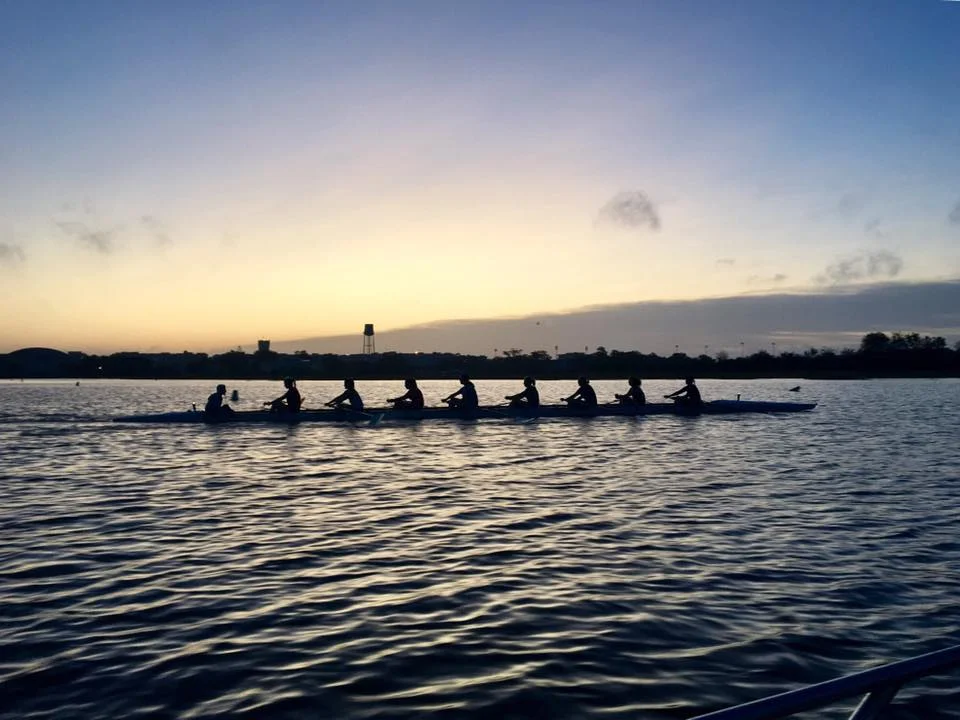
Clemson Sprints Weekend
Coverage and results from the team's trip to Clemson Sprints on Lake Hartwell.
Read More
A non-profit rowing team at the College of Charleston in Charleston, South Carolina.
Most athletes will tell you that the hardest part of any sport happens long before the starting gun. It is the quiet discipline of returning to the boat each morning, the willingness to trust a crewmate when the water looks rough, and the steady refusal to call it quits when progress feels glacial. Rowing, perhaps more than any other discipline, compresses those qualities into a single race.
For students joining a collegiate club like the College of Charleston Crew Team, the sport becomes a classroom with no walls. You learn to push through the chill of a Charleston winter morning, to read the river, and to discover what your body and mind can really handle when they are asked to give a little more. That education, intangible though it is, often outlasts any medal.
Cold settles over the Cooper River before sunrise, and Australian rowers know a similar chill drifting off Penrith Lakes or up the Yarra in Melbourne, where training crews gather in winter while the fog still hangs low. Discipline is built in those unglamorous hours. As any veteran cox will say with a shrug, "she'll be right" only after you have actually shown up.
Showing up at 5:30 a.m. trains a sort of mental muscle that few other pursuits reach. It teaches you that effort is a habit, not a mood. Over a semester, that habit reshapes how you approach coursework, jobs, and relationships. Resilience is rarely a dramatic gesture. It is almost always the cumulative weight of showing up.
Boats move on water, but they also move through weather, current, and the unspoken moods of a crew. A perceptive rower learns to notice when a teammate is dragging, when the wind is shifting, or when their own stroke has slipped out of rhythm. That awareness is a quiet form of resilience, the willingness to adjust without being told.
The latest team updates from the College of Charleston often highlight regattas where conditions shifted mid-race. A crosswind off the Ashley River can turn a plan upside down in a single stroke. Learning to absorb those variables, rather than fight them, is a craft that translates into every corner of adult life.
Every crew needs a voice in the stern, someone who calls the stroke rate, watches the buoys, and keeps the boat honest. The coxswain role is one of the purest leadership training grounds in college sport. Australian schoolboy coxes, particularly those racing at Head of the River in Melbourne, often speak about the leap in confidence that role delivers.
Trust flows both directions. The rowers must trust the coxswain's calls, and the coxswain must trust the rowers to respond. That circularity, where belief is shared and tested constantly, is where resilience becomes second nature rather than a slogan. You stop asking whether the boat will hold together and simply do the work.
| Aspect | Individual sport mindset | Crew sport mindset |
|---|---|---|
| Accountability | Self-directed | Shared across the boat |
| Setbacks | Personal recovery | Collective recalibration |
| Communication | Minimal, internal | Constant, layered, urgent |
| Pacing | Variable by mood | Locked to the crew rhythm |
| Identity | Built on results | Built on contribution |
Lose a race badly and you learn something about disappointment that no classroom can offer. A crew cannot rewrite a result once the finish line is crossed. The only response is to debrief honestly and return the next day ready to refine.
Many a rower on the Brisbane River will tell you that the boats which bounce back quickest treat defeats as data rather than verdicts. The same instinct shows up in essays, job rejections, and relationship ruptures. Resilience is less about not falling down and more about how quickly you can find the next stroke.
Rowing offers a workshop of habits that travel well beyond regatta season, whether you train in Charleston, Sydney, or Hobart.
Those habits, almost invisible in the moment, are the quiet scaffolding of a resilient life. They tend to surface when life gets noisy, when a deadline looms or a friendship frays, acting as a kind of internal ballast.
There is a persistent myth that rowing is closed to anyone who did not grow up near a river or attend a private school. In Australia and across the U.S. South, club programs have spent years dismantling that assumption. Most collegiate crews, including Charleston's, welcome novices with open arms each fall, leaning into the classic Australian "have a go" attitude.
Anyone curious about joining as a novice will discover that coaches care far more about willingness than polish. The first few weeks are humbling, but the sport rewards persistence in a way few others can match.
Years after hanging up the oar, rowers often say the sport gave them a quieter kind of confidence. They carry an internal barometer for effort, a respect for teammates, and a memory of the river at dawn that reminds them what they are capable of. That is the intangible dividend, paid out slowly over a lifetime.
The gifts tend to fall into recognisable categories:
Those wanting to see who shapes the team day to day can meet the student officers running the program and recognise the same dedication the sport demands from everyone in it.
College of Charleston Crew fields competitive eights and fours in both Fall head races and Spring sprint regattas across the Southeast.
Learn MoreRecent news, recaps, and announcements from the team.
Coverage and results from the team's trip to Clemson Sprints on Lake Hartwell.
Read More
Spring lineup including Clemson Sprints, SIRA, Dad Vail, and ACRA National Championship.
Read More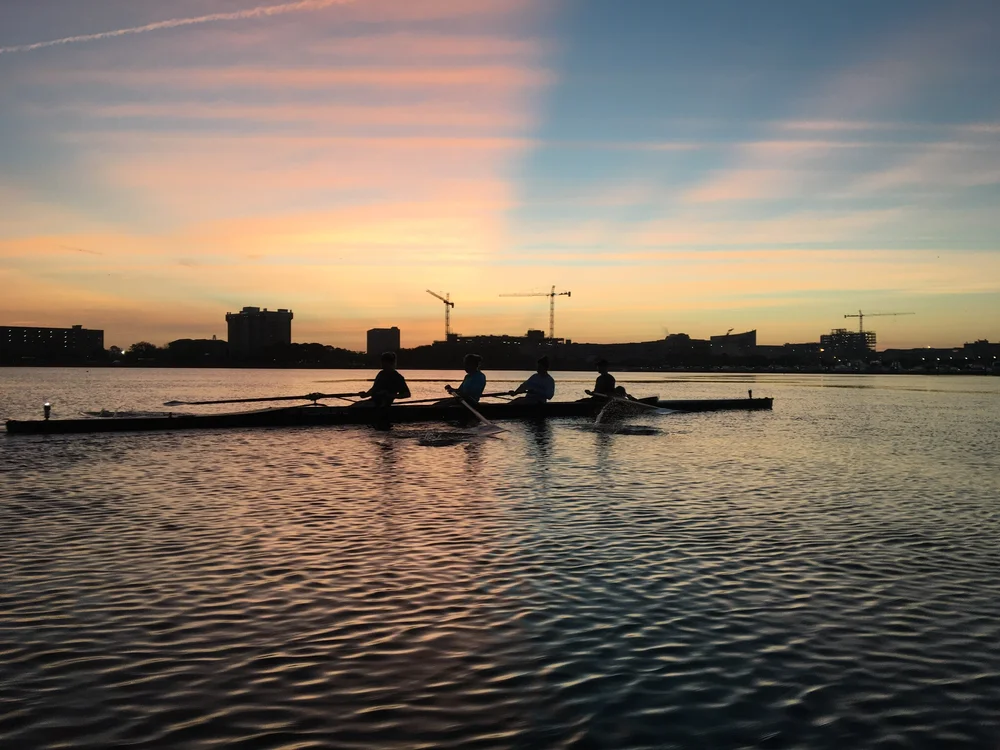
Previews and recap of past Head of the Charles appearances, including the 50th annual regatta in 2014.
Read MoreTeam practice, regatta dates, and meetings are listed on the team calendar. Coaches post weekly schedules and travel details for upcoming race weekends.
Charleston Crew / CCAA
PO Box 12941
Charleston, SC 29422
Email: info@cofccrew.org
Phone: 843.513.5900
Phone: 843.276.4241
Interested in joining the team? Fill out the recruitment form and the coaches will follow up.