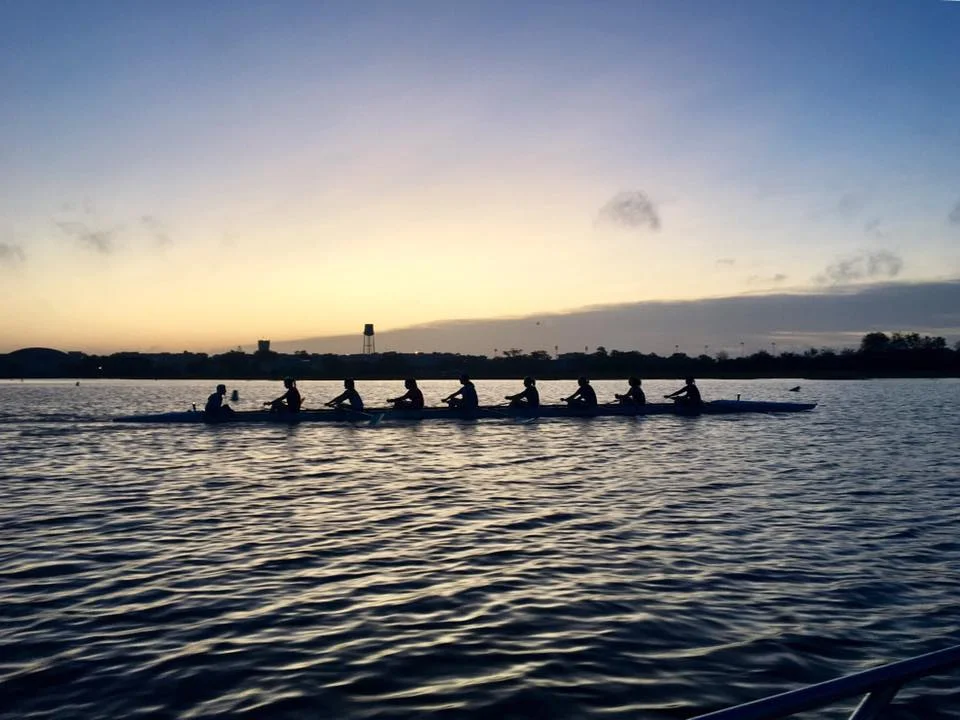
Clemson Sprints Weekend
Coverage and results from the team's trip to Clemson Sprints on Lake Hartwell.
Read More
A non-profit rowing team at the College of Charleston in Charleston, South Carolina.
Charleston crews train on bright tidal water, where the right pair of rowing sunglasses can make a long session more comfortable without interfering with the stroke. Choosing rowing sunglasses for Lowcountry sun means balancing glare control, peripheral vision, secure fit and the changing light of early-morning starts.
That balance matters in Australia, where rowers on Sydney Harbour, Melbourne’s Yarra and Brisbane’s river also face strong ultraviolet exposure, often with intense glare reflected from the water. The same principles apply when ordering for competitions abroad, provided you check the lens specification rather than trusting a dark colour alone.
Start with protection, not tint. Look for lenses labelled to block 100% UVA and UVB, and check for compliance with the relevant Australian sunglass standard. Lightly tinted lenses can provide full UV protection, while a very dark lens does not prove safety. Amber, copper, rose and grey lenses affect contrast differently, so compare them in the same outdoor light.
Polarised lenses reduce reflected glare from water, wet surfaces and other boats, making them useful on Charleston’s open reaches and bright Australian waterways. Polarisation is a glare-control feature, however, not a substitute for a UV-blocking label. It can also interfere with reading some boat displays, so test visibility before committing to a polarised model.
A good rowing frame sits firmly without pinching. Look for lightweight temples, adjustable or replaceable nose pads and sufficient lens coverage to shield the eyes without blocking the forward view. Wraparound styles can reduce stray light, but peripheral vision matters more than dramatic coverage. Try the glasses with a cap, since many rowers wear both.
Sweat, spray and repeated movement expose weak hinges and slippery nose pads. A frame that slides during the recovery phase will distract from technique and may fall into the river. Rinse the lenses with fresh water after training, dry them with a soft cloth and keep spare nose pads in your kit bag.
Water confidence comes first at the College of Charleston. The COFC crew swim test explains why every rower must pass it, and new athletes should complete that step before focusing on accessories.
Before buying, use this shortlist to compare frames and lenses from Australian sports retailers or opticians:
A strong all-round choice is a lightweight, non-polarised frame with a medium-grey or contrast-enhancing lens and verified UV protection. If your club mostly rows before sunrise or in flat light, prioritise clarity and lighter tint over maximum darkness.
An early morning on the Cooper River can begin soft and blue, then turn brilliant as the sun climbs. Dark lenses suited to a Charleston midday race may make an Australian winter start feel murky. A medium tint or photochromic lens can adapt to those shifts, although photochromic lenses usually darken less than fixed sunglass lenses and may not suit every rower.
For hot daytime regattas, neutral grey preserves colour and provides even brightness. Green and brown lenses can enhance perceived contrast on choppy water, while copper and rose help when shadows obscure the next buoy. Polarised versions are attractive for glare control, but instrument visibility should determine whether they are appropriate.
Australian buyers will find familiar sports brands through opticians, department stores and online marketplaces such as JB Hi-Fi and Amazon Australia. Expect roughly $100–$250 AUD for reputable sport frames with good lenses, while prescription inserts may cost more. Buying locally also makes exchanges easier and avoids uncertainty about import GST, customs and charges on overseas parcels.
Charleston regatta times need careful conversion because Australia has several time zones. Sydney and Melbourne change with daylight saving, while Brisbane remains on Australian Eastern Standard Time. Check each event’s posted local start time rather than assuming a fixed offset, especially when arranging replacement lenses from home.
Style also matters within the College of Charleston crew community. The COFC Hall of Champions records the programme’s competitive heritage, and many athletes choose frames that complement team kit and race-day photographs. Dependable protection and a stable fit should still come first; colour and shape are personal preferences for a sport where clear vision is essential.
College of Charleston Crew fields competitive eights and fours in both Fall head races and Spring sprint regattas across the Southeast.
Learn MoreRecent news, recaps, and announcements from the team.
Coverage and results from the team's trip to Clemson Sprints on Lake Hartwell.
Read More
Spring lineup including Clemson Sprints, SIRA, Dad Vail, and ACRA National Championship.
Read More
Previews and recap of past Head of the Charles appearances, including the 50th annual regatta in 2014.
Read MoreTeam practice, regatta dates, and meetings are listed on the team calendar. Coaches post weekly schedules and travel details for upcoming race weekends.
Charleston Crew / CCAA
PO Box 12941
Charleston, SC 29422
Email: info@cofccrew.org
Phone: 843.513.5900
Phone: 843.276.4241
Interested in joining the team? Fill out the recruitment form and the coaches will follow up.