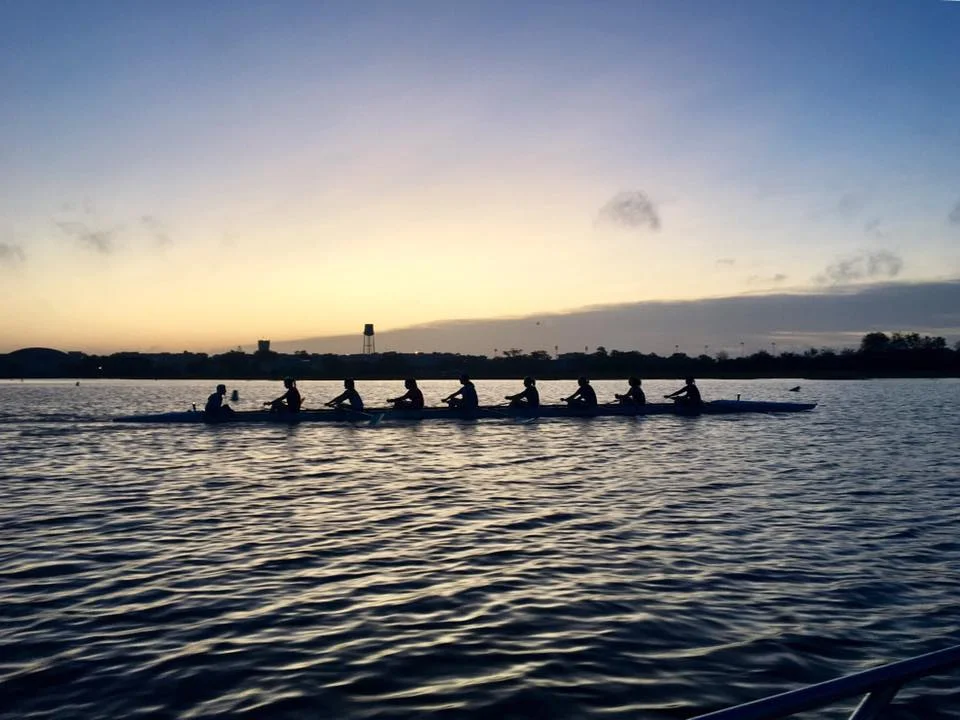
Clemson Sprints Weekend
Coverage and results from the team's trip to Clemson Sprints on Lake Hartwell.
Read More
A non-profit rowing team at the College of Charleston in Charleston, South Carolina.
Ask any College of Charleston crew member why we practise on the Wando River sometimes, and the answer is usually conditions rather than scenery. The tidal water offers sheltered lines near Charleston, yet channels, bridges and marina traffic can change a familiar route. Sessions move elsewhere when wind, lightning or tide makes the safer choice clear.
This guide explains how the crew reads the venue, what a session involves and how visitors can follow its local rhythm. For Australian rowers, kilometre marks, arvo sessions and bring-your-own (BYO) food may feel more familiar than Charleston’s tide-based planning.
The Wando River gives the crew room to develop technique without taking every outing into the exposed reaches of Charleston Harbor. Depending on launch and tide, a row can pass working wharves, residential banks and bridge approaches, all useful markers for distance and speed.
Coached priorities shape each session, so knowing who sets it matters as much as knowing the map. The coaching team describes the technique, conditioning and teamwork behind our work; on the Wando, that might involve repeated starts, steady-state pieces or a quiet rhythm run.
Melbourne’s Yarra offers a useful comparison: a city river used for training rather than spectacle. The Wando feels broader and more tidal, yet both reward crews alert to banks, other users and changing water. A coach can pair a landmark with a split and discuss the cause.
Every plan begins with the tide chart, wind forecast and safety brief. A calm surface can hide a cross-current, while an innocent cloud bank can bring a squall. Charleston’s summer humidity, familiar in Brisbane, favours an early start over a late-afternoon outing.
Timing matters because a route measured in kilometres looks shorter with the tide and longer against it. Crews train in what is available while choosing a launch, distance and emergency plan that match the conditions.
A Wando session is confirmed through the team’s normal channels, and visitors should follow that outing’s instructions rather than assume a generic arrival time. Launch points may suit the tide and access, while heavy rain can replace rowing with land work. Current team updates should guide the final decision.
Charleston’s road and shuttle arrangements deserve attention. Allow time to unload oars, rig the boat and check safety gear instead of rushing the launch. Park only where the team or venue permits and keep access routes clear.
Clean lines emerge when the plan is shared. Turns need clear calls, and crews should know when to shorten the course, regroup or return. Rowers accustomed to other waterways bring the same boat-handling expectations, even when the landscape changes.
Pack for variable conditions rather than a perfect forecast. Charleston can move from bright warmth to a sudden downpour in minutes, and the river may feel cooler than the bank. Light layers, a hat and sun protection belong with mandatory safety equipment.
A practical session is only half the lesson; the other half is noticing how preparation affects performance. The team’s reflection on our first loss shows how a disappointing result can lead to better decisions, communication and preparation. Those habits matter at a Southeast regatta and during a technique rebuild on an easy paddle.
Sessions move from land work to controlled rowing. The crew may rehearse stroke mechanics at the dock, settle into a warm-up, then complete intervals that build pressure. On a tidal river, the coach may alter direction to use the current without changing the technical goal.
Strength and coordination are judged in context. A clean start matters, but staying together also matters when fatigue, current or a gust interrupts rhythm. Crews use calls to manage changes and record what worked, giving the next outing a clear purpose.
The progression is familiar to experienced rowers, although beginners are welcome and receive suitable instruction. The club combines competitive goals with accessible sessions: one outing may teach the basics, while the next tests a longer piece with the full crew.
The Wando River supports several kinds of work in one setting: sheltered technique, measured endurance and exposure to real conditions. It makes planning visible. Tides, bridges, traffic and shifting wind all enter the coaching conversation.
Competitions across the Southeast and East Coast provide a wider competitive horizon, but the home venue supplies the daily details supporting them. A regatta shows fitness and boat speed, while a local outing teaches balance, communication and adaptation. Preparation links both environments.
For Australian rowers watching from afar, the translation is simple: expect miles to become kilometres, a three o’clock session to be arvo training, and a snack labelled BYO. Keep the cultural differences light, because the essentials cross oceans. Launch together, check the water, row with purpose and leave the venue ready for the next crew.
College of Charleston Crew fields competitive eights and fours in both Fall head races and Spring sprint regattas across the Southeast.
Learn MoreRecent news, recaps, and announcements from the team.
Coverage and results from the team's trip to Clemson Sprints on Lake Hartwell.
Read More
Spring lineup including Clemson Sprints, SIRA, Dad Vail, and ACRA National Championship.
Read More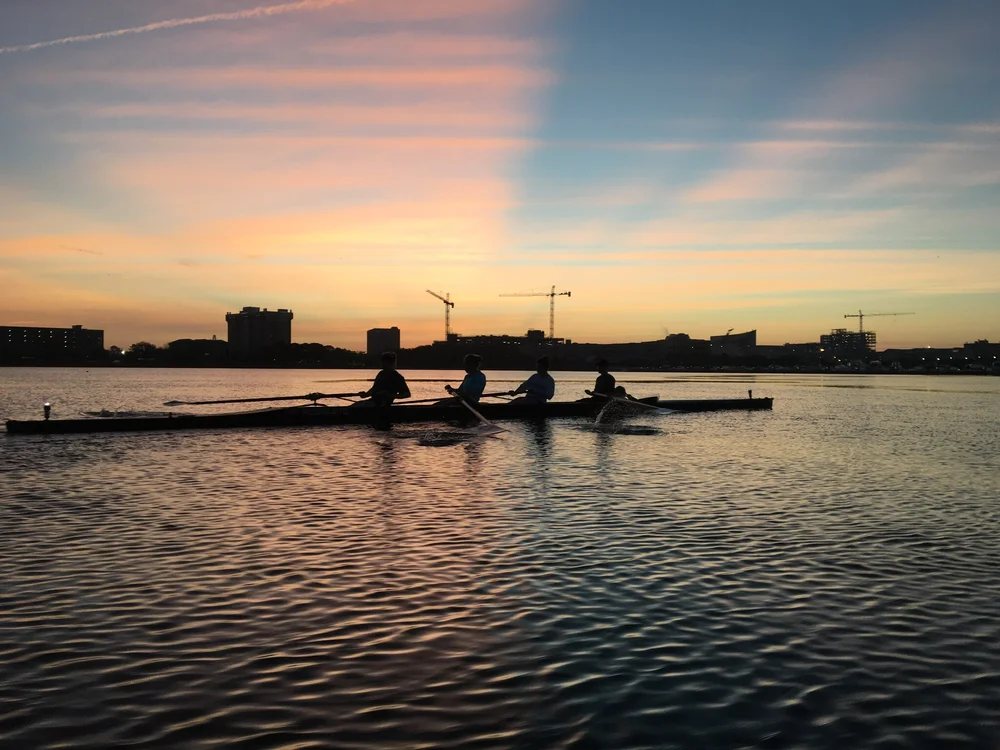
Previews and recap of past Head of the Charles appearances, including the 50th annual regatta in 2014.
Read MoreTeam practice, regatta dates, and meetings are listed on the team calendar. Coaches post weekly schedules and travel details for upcoming race weekends.
Charleston Crew / CCAA
PO Box 12941
Charleston, SC 29422
Email: info@cofccrew.org
Phone: 843.513.5900
Phone: 843.276.4241
Interested in joining the team? Fill out the recruitment form and the coaches will follow up.