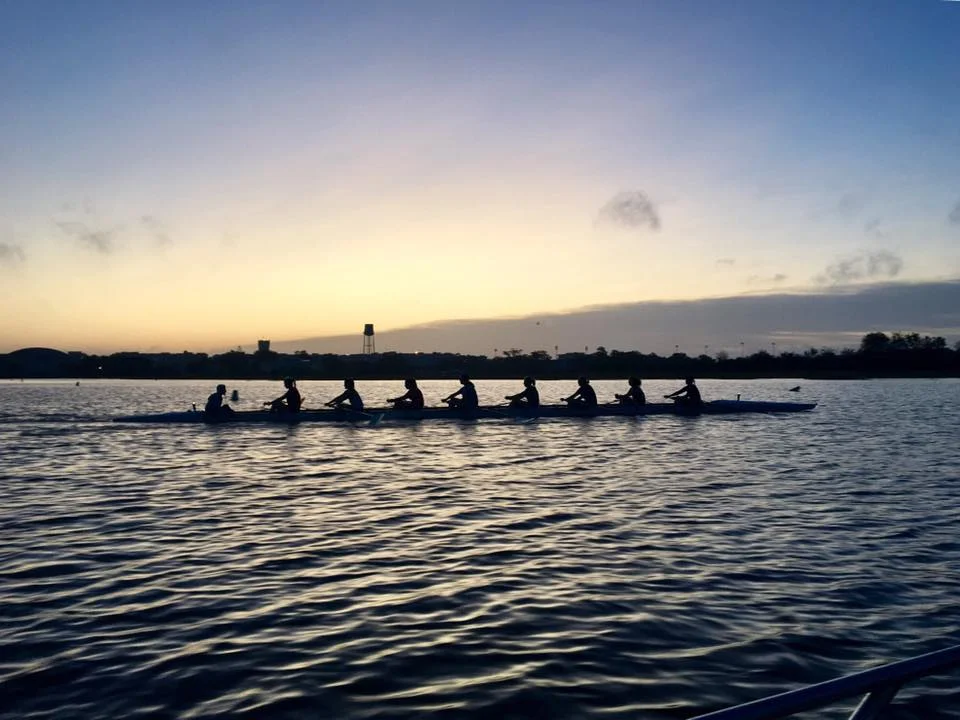
Clemson Sprints Weekend
Coverage and results from the team's trip to Clemson Sprints on Lake Hartwell.
Read More
A non-profit rowing team at the College of Charleston in Charleston, South Carolina.
Moving from a sedentary lifestyle to regular rowing follows the same steady progression that turned Couch to 5K into a global phenomenon. The principle is identical: short, repeatable intervals that gradually extend until your lungs, legs and lower back can sustain continuous work. Rowing simply adds the element of water, meaning your fitness plan must respect a sport that uses roughly 86 percent of your body's muscles in a single stroke.
For Australians eyeing the sweep or sculling boat, the path often begins after seasons in another sport. Many newcomers arrive having pulled on a Guernsey at the local footy club or patrolled the beach with a surf club, then find themselves drawn to the rhythm of a sliding seat. Charleston might be a world away, yet the College of Charleston Crew Team welcomes athletes of all backgrounds, and the same progressive build works just as well on Sydney Harbour or Lake Macquarie as it does on the Cooper River.
Runners and rowers share a need for steady-state aerobic work before tackling harder intervals. If you can manage thirty minutes of jogging at a conversational pace, you can sustain a similar effort on the rowing machine, measured in split times rather than kilometres. Most Australian clubs begin their learn-to-row courses in the cooler months, with Saturday arvo outings on Sydney Harbour or the Yarra easing newcomers into boat work before the regatta season heats up.
The table below shows how a typical Couch to 5K progression maps onto a novice rowing calendar. Pace targets are approximate, with the goal of consistency rather than raw speed.
| Week | Runners | Rower equivalents |
|---|---|---|
| 1 | Walk/jog intervals, 20 min | 4 × 250m on the erg, 2 min rest |
| 2 | Steady 25 min jog | 3 × 500m steady state |
| 3 | 28 min jog with strides | 20 min continuous UT2 |
| 4 | 30 min continuous | 30 min continuous, focus rate |
| 5 | Fartlek intervals | 6 × 500m with 90 sec rest |
| 6 | 5K time trial | 2K test on the ergometer |
By the end of week six most beginners can handle a 5K run and a 2K erg test, which is also the standard distance for collegiate seat racing. Translate the same pattern into outdoor pieces of 10 minutes on the water by week eight and you are ready for a real race plan. A solid sample weekly training plan helps remove the guesswork.
No one expects a novice to deadlift their body weight, yet the rowing stroke rewards relative strength more than absolute numbers. Think of your legs as the engine, your core as the transmission and your arms as the steering. Two short gym sessions a week covering goblet squats, Romanian deadlifts, planks and pull-aparts will pay dividends once you balance a boat on chop water.
Pulling strength matters too. Pendlay rows, lat pull-downs and Australian pull-ups build the upper-back endurance needed to hold a clean finish for 2,000 metres. Track your weights loosely in a notebook so you can see numbers climb across a 12-week prep block, then test your new ceiling with a max-effort 500 metres on the erg.
Aussie coffee culture pairs neatly with early morning rowing, because most rowers still want a flat white or long black after the warm-up. Nutrition rules stay simple: slow-release carbs the night before, a small breakfast around 90 minutes out, and electrolytes during any outing over an hour.
Keep an eye on climate as well. The Brisbane River in February can feel like rowing through warm soup, so liquid intake doubles compared with a winter session on Lake Wendouree. Pack at least 700ml per hour of work and add a pinch of salt to your bottle if you are sweating heavily.
After training, smashed avo on toast with eggs is a tried and true recovery meal that most Australian kitchens already have on hand. A scoop of protein within an hour helps sore shoulders settle by the next morning.
The catch position is essentially a deep lunge, so tight hips and hamstrings turn every stroke into a wrestling match with the boat. Ten minutes of daily mobility work, focusing on the 90/90 hip stretch, the couch stretch and thoracic rotations, helps prevent the lower-back twinges that sideline the keenest beginners.
Pilates and yoga carry a strong rowing reputation in Melbourne and Adelaide, where rowers from Port Adelaide and Melbourne Uni swear by ten minutes of sun salutations before they step into the shell. A foam roller on the glutes and calves rounds out the routine.
Coxswains call "send it" and "weigh enough", and crews talk about blade work, finish and pressure. Before your first seat race, run through a quick rowing terminology 101 so the language on the megaphone stops feeling like a foreign dialect.
A few Australian coaches also throw in local slang, so expect to hear "squeeze" when they mean finish sharply and "push the arms away" when they want a longer reach. Watch experienced pairs in the boat shed, mirror their sequence and ask plenty of questions during the cool-down.
Australia has more than 200 rowing clubs, from Sydney Rowing Club on the harbour's edge to smaller outfits such as Huon in Tasmania. University programs at Sydney Uni, Melbourne Uni, Queensland and Adelaide welcome novices every February and run intensive learn-to-row blocks across the first semester.
When you eventually travel abroad for a regatta or a team-mate mentions the Hall of Champions, the bond between an Australian eight and a Charleston eight runs deeper than a shared time zone. The fundamentals of good rowing travel well, and a steady build from your lounge room to a stable boat begins with the same old rule: turn up, row, recover, repeat.
College of Charleston Crew fields competitive eights and fours in both Fall head races and Spring sprint regattas across the Southeast.
Learn MoreRecent news, recaps, and announcements from the team.
Coverage and results from the team's trip to Clemson Sprints on Lake Hartwell.
Read More
Spring lineup including Clemson Sprints, SIRA, Dad Vail, and ACRA National Championship.
Read More
Previews and recap of past Head of the Charles appearances, including the 50th annual regatta in 2014.
Read MoreTeam practice, regatta dates, and meetings are listed on the team calendar. Coaches post weekly schedules and travel details for upcoming race weekends.
Charleston Crew / CCAA
PO Box 12941
Charleston, SC 29422
Email: info@cofccrew.org
Phone: 843.513.5900
Phone: 843.276.4241
Interested in joining the team? Fill out the recruitment form and the coaches will follow up.