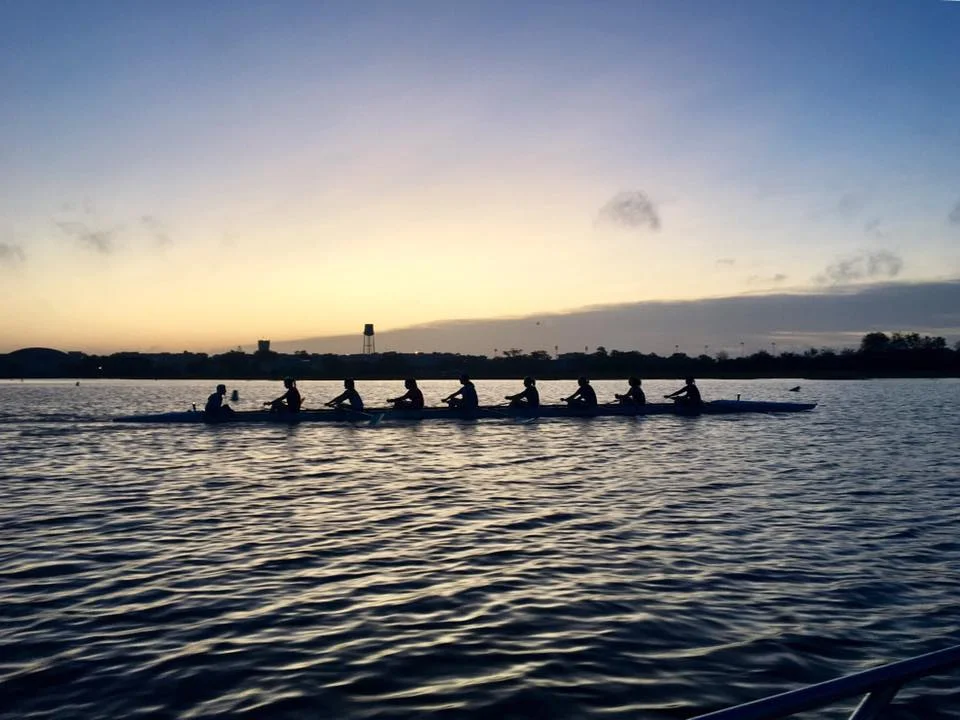
Clemson Sprints Weekend
Coverage and results from the team's trip to Clemson Sprints on Lake Hartwell.
Read More
A non-profit rowing team at the College of Charleston in Charleston, South Carolina.
The College of Charleston Crew Team treats each outing as preparation for competition, whether the crew is racing in Charleston or meeting a strong opponent on the East Coast. Rough water changes the priorities: reliable steering, communication and safe spacing matter more than covering distance under pressure. The Intracoastal can look manageable from the boathouse yet become awkward quickly when wind, tide and boat traffic combine.
For Australian rowers, the habits transfer even though the geography differs. Club sessions around Sydney Harbour, Brisbane and the Gold Coast often begin before sunrise, while thermoses, packed lunches and public transport to the boathouse are familiar features of training. The same principle applies in Charleston: check conditions, assign clear roles and agree on the point at which the crew turns back.
A useful briefing starts with the tide, wind direction, forecast and any storm or fog warning. Compare the exposed reach with sheltered water behind the bridge or marina, and identify landing sites before launching. Wind can switch quickly, so the crew should understand whether the boat will be driven toward open water or held against it.
Emotional control is part of risk management. A session may feel like failure when strokes break or the boat stalls; a crew can apply the same reset described in recovering from defeat, making one correction at a time and returning attention to the coxswain’s calls.
Before launch, inspect the hull, bow ball, oarlocks, riggers, seats and drain plugs. Carry the coxswain’s whistle, phone or marine radio, throw line, first-aid kit, water and suitable thermal protection. Secure loose items in a dry bag and confirm that the coxswain knows the local traffic rules.
Assign roles before the dock is released. A calm bow can judge clear water and traffic; sweeps should keep blades away from the hull and each other; the coxswain should call changes early and use short commands. In rough practice, the crew may switch to a steadier stroke rate and designate a lookout for traffic and obstacles.
Power in rough water should be controlled rather than forced. Short, connected strokes can keep the boat moving while reducing the chance of catching a blade. The crew should maintain rhythm, look ahead through the shell and avoid sudden changes in pressure that make the bow swing.
Traffic often creates the roughest short burst. Give ferries, towboats and powered craft room, follow the applicable navigation rules and never assume another vessel has seen the oars. Charleston crews know local comparisons such as Ashley versus Cooper rowing, but similar conditions can be created by wind against current in almost any estuary.
If balance, steering or visibility deteriorates, stop the outing at the nearest safe landing rather than trying to finish the workout. Reassess on shore, dry off and record what caused the change. A crew that leaves with a sound boat and clear decision-making is better positioned for the next session.
Australian crews can compare open-water exposure with sheltered training zones. Sydney Harbour combines ferry lanes with protected reaches of the Parramatta River; Brisbane’s tidal river runs toward Moreton Bay; and the Gold Coast’s Nerang River sits just inland from a broad surf coastline. These examples show why a forecast alone cannot define the real risk.
Local habits are practical. Pre-dawn club rows, communal kettles, BYO lunches and travel to the shed by train, tram, car or bicycle are ordinary parts of Australian rowing culture. Australian outdoor and rowing retailers stock dry bags, thermal layers and waterproof phone cases, so missing safety items should be replaced before the next coastal outing.
Do not apply Charleston’s rules automatically in Australia. Maritime law and collision requirements vary by state: Queensland uses the Transport Operations (Maritime Safety) Act 1994 and current regulations, while New South Wales and Victoria apply their own marine safety laws. A coxswain should follow the relevant jurisdiction and obtain local advice when visibility or traffic is uncertain. The College of Charleston’s rowing hall of champions offers a useful standard for preparation: disciplined routines should remain in place when the water changes.
Divide the outing into three stages: a sheltered warm-up, a controlled block in the roughest planned water and a calm return. Before the middle block, agree on wind limits, minimum visibility, maximum travel time and two abort signals. The crew should practise steering together before fatigue changes its reactions.
Use the crew’s actual conditions to choose a response. A compact boat, a heavier eight and a novice crew need different margins from a trained four in a stable shell. Keep the session measurable through steering accuracy, calls completed and safe return time rather than raw distance.
| Condition | What changes | Crew response |
|---|---|---|
| Light chop | Short waves increase blade depth | Reduce length and keep an even rhythm |
| Wind against current | Shell slows or swings sideways | Balance sweep pressure and agree on heading |
| Wake or confused chop | Steering becomes abrupt | Pause power and allow the hull to settle |
| Poor visibility or dense traffic | Hazards appear late | Reduce speed, assign a lookout and follow rules |
College of Charleston Crew fields competitive eights and fours in both Fall head races and Spring sprint regattas across the Southeast.
Learn MoreRecent news, recaps, and announcements from the team.
Coverage and results from the team's trip to Clemson Sprints on Lake Hartwell.
Read More
Spring lineup including Clemson Sprints, SIRA, Dad Vail, and ACRA National Championship.
Read More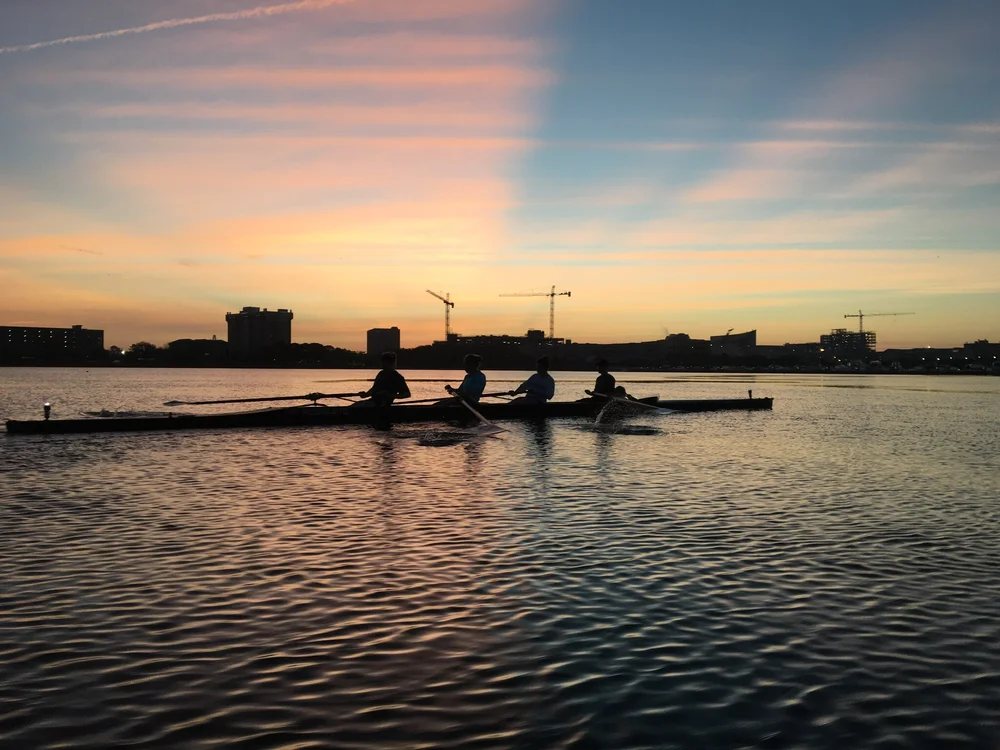
Previews and recap of past Head of the Charles appearances, including the 50th annual regatta in 2014.
Read MoreTeam practice, regatta dates, and meetings are listed on the team calendar. Coaches post weekly schedules and travel details for upcoming race weekends.
Charleston Crew / CCAA
PO Box 12941
Charleston, SC 29422
Email: info@cofccrew.org
Phone: 843.513.5900
Phone: 843.276.4241
Interested in joining the team? Fill out the recruitment form and the coaches will follow up.