Clemson Sprints Weekend
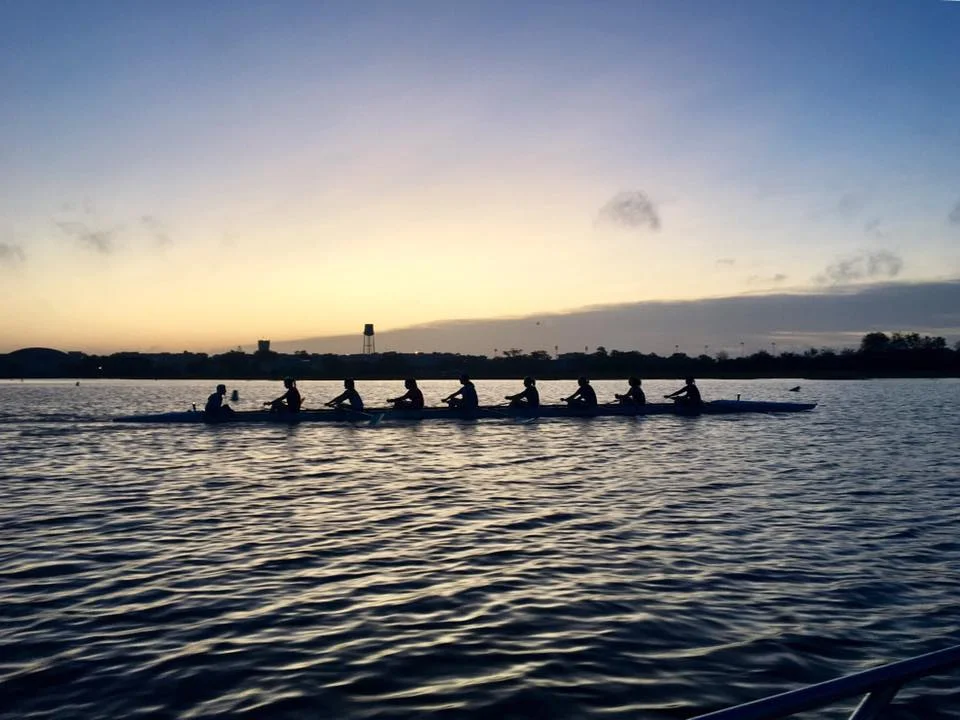
Coverage and results from the team's trip to Clemson Sprints on Lake Hartwell.
Read More
A non-profit rowing team at the College of Charleston in Charleston, South Carolina.
Improving your 2K ergo time in six weeks is less about chasing a heroic final split than building repeatable speed. Australian crews often call this a training block, so use the period like a compact race campaign: establish a baseline, add one quality stimulus at a time, protect recovery and review the data after every session.
The approach works for university athletes, club rowers and masters competitors. It also fits the realities of crews in Sydney, Melbourne and regional centres, where metric splits, early starts and variable weather shape training. College of Charleston rowers can use the same cycle, while Australian squads can translate it into their own racing calendar.
Begin with a controlled baseline rather than a maximum-effort test. Row 2,000 metres after a familiar warm-up, recording average split, stroke rate and heart rate if available. Note how the first and final 500 metres felt. Repeat after another week or two, but only when the first result is representative; fatigue and an unfamiliar ergometer can make early numbers misleading.
Film three minutes from the side and front. Look for a long finish, relaxed shoulders and pressure directed through the legs rather than the arms. Clear feedback builds trust, a principle the coxswain call timing discussion applies beyond the boat. Ask a coach or training partner for one technical cue, then use it consistently until the next test.
Build the aerobic engine with longer, controlled pieces. Two sessions weekly of 12 to 16 minutes at an easy pace can lift endurance without wrecking recovery; keep the effort conversational and hold a steady 20 to 24 strokes per minute. Shorter reps at a slightly harder pace then teach the body to hold speed once oxygen demand climbs.
Melbourne crews often train through a cold, wet winter, while Sydney summer sessions can be humid and punishing. Indoor ergs remove water and wind, but heat still matters: ventilate the room, wear light layers and front-load sessions before work. Clubs in Brisbane or Adelaide face the same challenge, so hydration and an early start matter more than extra volume.
Strength supports the force needed to maintain a high rating. Twice a week, complete three or four sets of squats, Romanian deadlifts, rows or pull-ups, then stop while technique remains solid. Pair strength with eight to ten minutes of steady erg work, but avoid turning every session into a test. Muscle soreness should not erase your next race-specific piece.
| Training measure | Early block | Middle block | Final block |
|---|---|---|---|
| Primary aim | Aerobic consistency | Threshold strength and force | Race rhythm and speed |
| Easy session | 30–40 minutes | 25–35 minutes | 20–30 minutes |
| Quality session | Three 12-minute steady pieces | Four 8-minute threshold pieces | Two 2K tests or race-pace pieces |
| Recovery | About 48 hours | 48–72 hours | 48–72 hours |
At goal pace, practise efficiency rather than brute force. Start each repetition below the target split and settle into it; a smooth 28 to 30 stroke rate should carry the same speed as a ragged 34. Australian rowers use strokes per minute, so check that drag factor and monitor settings match across machines and sessions.
The progression is a guide, not a command. If power drops for three sessions or resting heart rate rises sharply, retain the previous week and recover. A Sydney crew travelling to Penrith for water sessions may need extra sleep, while a Melbourne Yarra session can be shortened by rain.
Race pace begins before the start. For most 2K crews, the first 500 should be controlled: settle one to two seconds per 500m slower than goal pace, then hold an even middle. Save enough for the final 500, where a stronger finish can convert efficiency into place. Write the target split for each 500 before the test.
Practise calls and decisions as part of the effort. A cox or training partner can call each 500, note deviations and prompt a controlled finish. On the water, the same preparation resembles the responsibilities in boat captain leadership: calm communication, shared standards and decisive correction when a crew drifts off plan.
Build race confidence with three 8-minute pieces at goal split, separated by two minutes of easy rowing. This is specific enough to rehearse the effort without requiring three full 2K races. Beginners can use three 2,000-metre pieces instead, adding 250 to 500 metres each week as technique and fitness improve.
In the final two weeks, reduce volume but keep intensity. Replace one demanding session with an 8-minute race-pace piece, retain short sprints and let long workouts become genuinely easy. The goal is fresh legs, not accumulated fatigue. A controlled taper often produces a clearer rating and a better finish than another hard test.
Eat familiar carbohydrate before demanding sessions, include protein afterwards and replace fluids promptly. Australian clubrooms often rely on toasties, fruit and Milo, while a localIGA or supermarket supplies bananas, oats and electrolyte drinks for the week. Avoid changing several foods at once during competition; what works in training should work on race day.
Test at 10 to 14 days before the target race, then resist another maximal effort. If the score improves, identify the change worth keeping: better pacing, stronger power or a cleaner finish. The College of Charleston crew program can use the same review process for its Southeast and East Coast regattas, while Australian crews apply it before major club and state races. Consistent execution beats an occasional spectacular split.
College of Charleston Crew fields competitive eights and fours in both Fall head races and Spring sprint regattas across the Southeast.
Learn MoreRecent news, recaps, and announcements from the team.
Coverage and results from the team's trip to Clemson Sprints on Lake Hartwell.
Read More
Spring lineup including Clemson Sprints, SIRA, Dad Vail, and ACRA National Championship.
Read More
Previews and recap of past Head of the Charles appearances, including the 50th annual regatta in 2014.
Read MoreTeam practice, regatta dates, and meetings are listed on the team calendar. Coaches post weekly schedules and travel details for upcoming race weekends.
Charleston Crew / CCAA
PO Box 12941
Charleston, SC 29422
Email: info@cofccrew.org
Phone: 843.513.5900
Phone: 843.276.4241
Interested in joining the team? Fill out the recruitment form and the coaches will follow up.