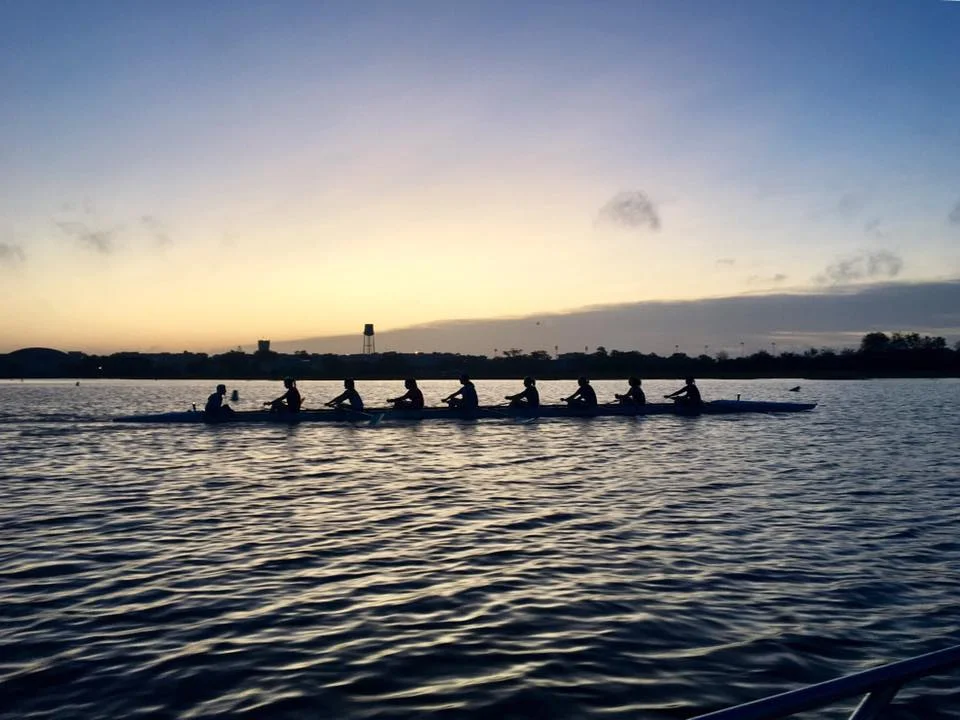
Clemson Sprints Weekend
Coverage and results from the team's trip to Clemson Sprints on Lake Hartwell.
Read More
A non-profit rowing team at the College of Charleston in Charleston, South Carolina.
The rowing machine — the ergometer, or "erg" — is still the most honest place to build raw power. On the water, a hull, a current and a crew's timing can hide a weak stroke. On the erg, every watt appears on the monitor and a sloppy catch shows up as a slower split. For our Charleston program, which takes on first-timers and seasoned oarsmen alike, that transparency is exactly the point.
The difference is the work itself. Most people treat the erg as cardio and grind out steady thirty-minute pieces, which builds endurance but not snap. Explosive power comes from short efforts with full recovery, technique that drives force through the legs, and enough rest to keep every repetition sharp. Australian athletes inherit the timing for free: six o'clock sessions, before a Brisbane January humidity turns the sheds into saunas.
Power is force multiplied by velocity, and the erg measures both as you move. Peak force registers in the drive phase, velocity in the flywheel, and the monitor converts them into watts, splits and stroke rate. That instant feedback is why collegiate programs, ours included, build much of their conditioning around the machine rather than the river.
Nor is the emphasis new. The Southern Intercollegiate history records how racing has shaped crew in the Southeast for generations, and our own schedule follows that tradition, testing crews against strong opposition from spring regattas through to championship meets on the East Coast.
Most fast splits are really poor ones, so start with the setup. Set the seat so shins stay vertical and heels just touch the footplate; a collapsed knee makes the stroke heavy and slow. Check the monitor calibration, note the flywheel setting, and keep the same machine for test pieces.
Australian sheds often hold older gas-flywheel "gassy" ergs beside magnetic models, and they feel nothing alike: the gas wheel rewards a patient drive, while the magnetic wheel spins up fast and suits sprinting. Set the damper by intention too — high for heavy strength strokes, low for quick intervals — and change one variable at a time.
Short efforts with long recoveries are the backbone of power work. A classic set is ten ten-second maximal strokes at a high rate with fifty seconds of easy paddling between, repeated three or four times; the fall-off in pace shows exactly how much you had left. Keep it keen and a bit brutal, because Aussie crews love chucking the handle around for sprints.
Longer contrasts train force under fatigue: three two-minute pieces at ninety to ninety-five percent of your two-kilo rate, or a pyramid of four, two and one minutes that rehearses pace before the short efforts teach you to produce more per stroke. Test 2,000 metres every four to six weeks and record average split, peak watts and best five hundred.
Nearly all power is made in the first third of the stroke. At the catch, shins vertical, arms straight, handle square, and the body swings rather than the arms rowing. Drive with the legs, then the body, then the arms, and finish by tapping the handle down. If your split plateaus, the fault is usually drive order, not fitness.
Hands-away rowing, with arms extended and the handle rolled, takes the upper body out of the equation and forces the legs to do the work — useful in power sets and for anyone with a weak catch. Breathe behind the handle on the recovery and take your breath before the drive, so it does not wreck the rhythm.
The engine you are training is built in the kitchen as much as on the machine. Rowers training twice need carbohydrate before a morning session and protein after it, and our guide to fueling morning workouts shows how to do that on a student budget, which matters in a collegiate squad.
Keep fluids close in summer, add electrolytes for long hot sessions, and treat a humid Adelaide or Melbourne morning as conditioning in itself. Eight hours of sleep and ten minutes of mobility work protect the adaptation; if a session feels flat, cut the volume, because tired legs lift the same watts with far less force.
Erg numbers transfer to race pace when the stroke rate matches. Boats race around thirty-two to thirty-six strokes a minute, so power sets belong at race rhythm or above. The Chattahoochee regatta preview shows how crews plan around conditions and opposition rather than one big effort.
The payoff arrives as a faster start and a cleaner finish: the first ten strokes, rehearsed by ten-second sprints, should feel easy when the gun goes. Clubs on the Yarra or the Derwent structure their seasons much as ours does, racing hard through spring and measuring progress on the erg before each regatta.
This structure suits a collegiate squad and anyone training alone, with two hard days and two light ones. Australian gyms sell snap memberships and cheap direct-debit deals, so two strength sessions alongside the erg work costs little more than a couple of coffees.
Log the watts rather than the feelings. A training sheet with splits, stroke rates and damper settings turns guesswork into progress, and it gives your coach something concrete to build the following week around.
College of Charleston Crew fields competitive eights and fours in both Fall head races and Spring sprint regattas across the Southeast.
Learn MoreRecent news, recaps, and announcements from the team.
Coverage and results from the team's trip to Clemson Sprints on Lake Hartwell.
Read More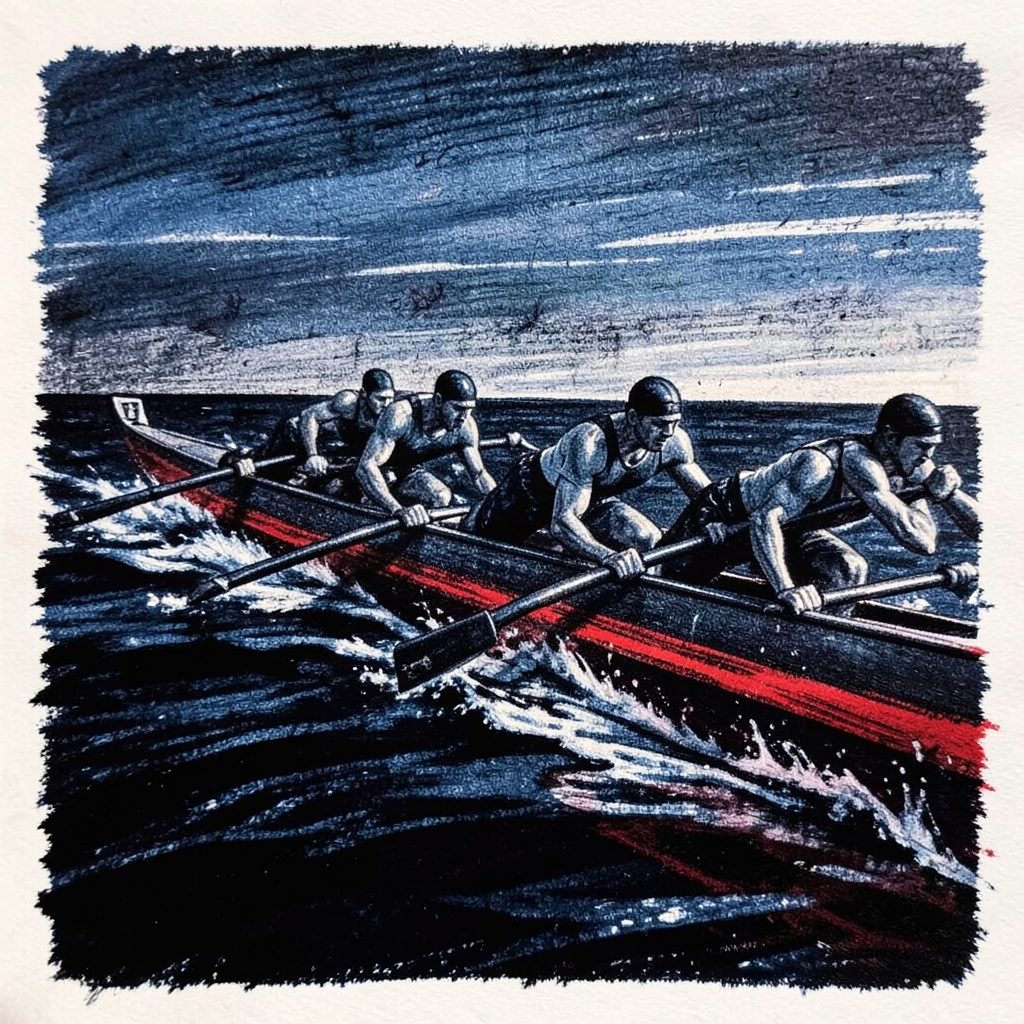
Spring lineup including Clemson Sprints, SIRA, Dad Vail, and ACRA National Championship.
Read More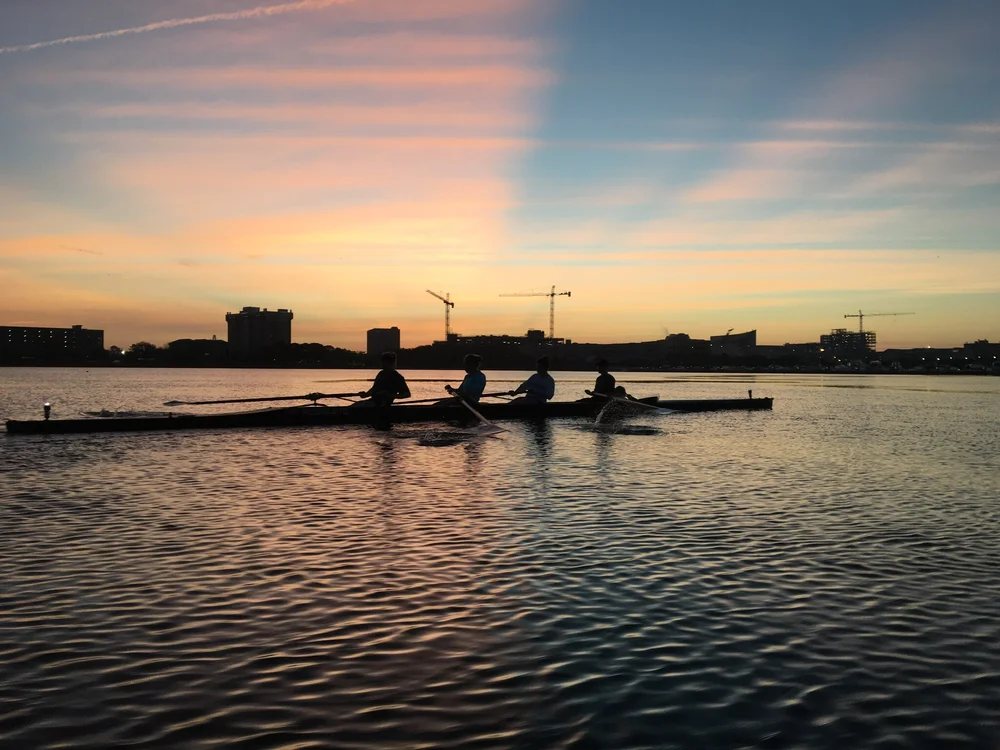
Previews and recap of past Head of the Charles appearances, including the 50th annual regatta in 2014.
Read MoreTeam practice, regatta dates, and meetings are listed on the team calendar. Coaches post weekly schedules and travel details for upcoming race weekends.
Charleston Crew / CCAA
PO Box 12941
Charleston, SC 29422
Email: info@cofccrew.org
Phone: 843.513.5900
Phone: 843.276.4241
Interested in joining the team? Fill out the recruitment form and the coaches will follow up.