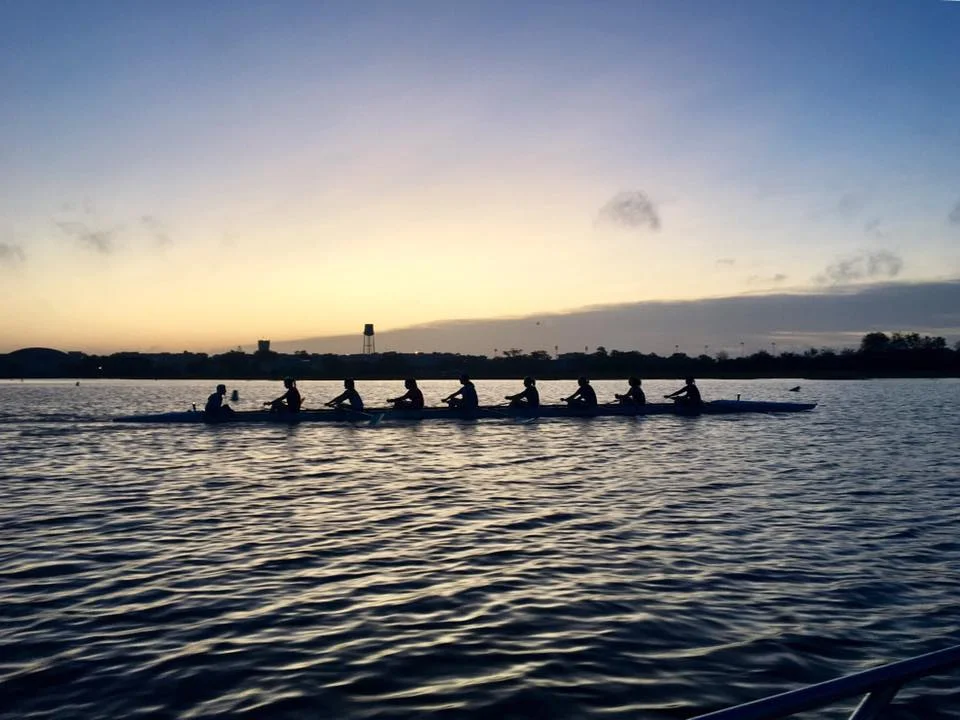
Clemson Sprints Weekend
Coverage and results from the team's trip to Clemson Sprints on Lake Hartwell.
Read More
A non-profit rowing team at the College of Charleston in Charleston, South Carolina.
Technique can feel clear in the moment and confusing afterwards. A coach may call “late arms,” yet a rower may not know whether that means the hands rise too early or the body reaches too far. Slow-motion video turns an abstract instruction into a visible sequence, helping athletes compare one stroke with the next and make a specific correction.
The College of Charleston Crew Team welcomes both experienced rowers and beginners, and the same method suits either: experts can examine timing and connection, while beginners can see how seat, legs, trunk and arms work together. Australian club rowers can apply this with a phone, a stable support and ten focused minutes after training.
A useful review begins with a question that can be observed, not a vague wish to “row better.” Examples include: Does the handle rise before the shoulders open? Is the shins moving too early on the drive? Does the trunk settle before the arms bend? Pick one question for a session.
Choose a reference rep that feels controlled, then compare it with two nearby attempts. On Sydney’s Parramatta River, for example, changing current can make two similar-looking pieces behave differently, so record the direction of travel and keep the comparison local rather than chasing an ideal from another club.
Place the camera where it can show the body in profile and the boat’s path. A side-on view reveals handle height, shin angle and layback; a front or stern view shows whether the hands and knees arrive together. Lock exposure and focus, use landscape mode, and aim for 60 frames per second if the phone supports it.
Keep the setup fixed and capture enough strokes to include a clean rhythm rather than selecting only the best-looking effort. Mark the start and finish of each take, and note any technical stop or coaching call.
At a regatta, reliable footage matters because conditions and attention can interrupt routine. A regatta-day packing guide is a useful reminder to charge the phone, clear storage and pack a stable mount rather than relying on a hurried handheld shot.
Watch at quarter speed and pause at the catch, finish and earliest recovery. Look for events that precede the problem, since a late handle position may begin with early trunk opening. However, use video as evidence rather than proof: a blurred angle or hard catch can create the illusion of poor timing.
Annotate the clip with short notes such as “handle rises at the finish” or “knees and hands separate.” If possible, place two clips side by side and mark the first visible difference. This creates an actionable comparison without pretending that one angle can diagnose every cause.
Translate one visual observation into one physical cue. If the sequence begins too early, try a pause drill that holds the catch, then rebuild the stroke from seat to finish. If the finish collapses, use light pressure drills or controlled strokes without force. Re-record after each change so the next decision comes from evidence.
Strength and mobility work should support the correction rather than mask it; these rower cross-training workouts offer ways to build the capacity for a stronger drive. For a club on Melbourne’s Yarra, a coach may keep feedback plain: give it a go, change one thing and compare the next piece.
A boat that feels fast may expose a timing fault, while a slower crew may be moving well. Compare like with like: same boat type, crew composition, session goal and conditions. For beginners, coordination and balance usually offer safer early targets than boat speed, which can vary sharply with wind and current.
Conditions and equipment matter too. Australian crews often plan around bright sun, Celsius temperatures and distances in metres, so keep phones shaded and take enough water for a long session. Many Australian rowing clubs also rely on a mix of membership fees, fundraising and sponsorship, which makes a phone-based review a practical, low-cost coaching aid.
Before analysing race footage, check the conditions; Charleston rowing weather forecasts can help separate a technique problem from wind, chop and current.
A consistent routine produces better comparisons than a long recording session. Capture enough detail to answer the chosen question, then review only the relevant part of the stroke.
For filming, use this capture checklist:
For analysis, use this review checklist:
Keep athlete clips private unless everyone pictured has consented. Record the coach’s next cue beside the video, then use the same angle and wording for the next comparison. That measured feedback loop turns footage into a practical record of progress, keeping analysis focused and repeatable.
College of Charleston Crew fields competitive eights and fours in both Fall head races and Spring sprint regattas across the Southeast.
Learn MoreRecent news, recaps, and announcements from the team.
Coverage and results from the team's trip to Clemson Sprints on Lake Hartwell.
Read More
Spring lineup including Clemson Sprints, SIRA, Dad Vail, and ACRA National Championship.
Read More
Previews and recap of past Head of the Charles appearances, including the 50th annual regatta in 2014.
Read MoreTeam practice, regatta dates, and meetings are listed on the team calendar. Coaches post weekly schedules and travel details for upcoming race weekends.
Charleston Crew / CCAA
PO Box 12941
Charleston, SC 29422
Email: info@cofccrew.org
Phone: 843.513.5900
Phone: 843.276.4241
Interested in joining the team? Fill out the recruitment form and the coaches will follow up.