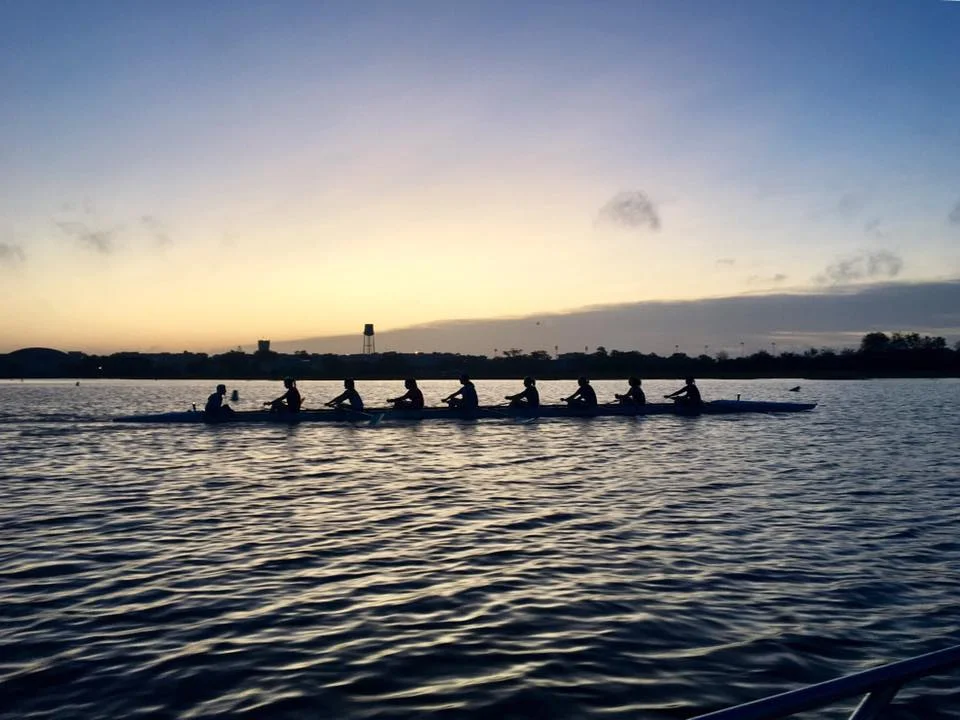
Clemson Sprints Weekend
Coverage and results from the team's trip to Clemson Sprints on Lake Hartwell.
Read More
A non-profit rowing team at the College of Charleston in Charleston, South Carolina.
The CofC Crew Annual Banquet brings the rowing season into one shared room. Current rowers, student officers, coaches, alumni and supporters gather to recognise the work behind every launch, race and early-morning practice session.
It is both a celebration and a team catch-up, with conversation turning to the season’s stories, the people who made them possible and the goals waiting ahead. For guests, the banquet provides an easy way to understand the programme without needing prior rowing knowledge.
The event is especially meaningful because rowing rewards work that often happens out of sight. A rower may spend a winter morning learning a clean stroke, while a coxswain coordinates the crew’s timing and volunteers keep equipment moving. The banquet turns that hidden labour into a shared story.
Australian readers may recognise the underlying rhythm from rowing clubs at Penrith Olympic Centre, Sydney Harbour and Melbourne’s Yarra: training, communal debriefs and volunteer officials who make competition possible. Here, the same culture appears in a collegiate setting, where student leadership and a strong supporter network are equally important.
Guests are generally welcomed, given time to mingle and settle over a meal before the formal portion begins. The programme commonly includes a team welcome, coaching acknowledgements, performance or season awards, and recognition for coxswains, novice rowers and outgoing seniors.
Even newcomers quickly learn that sculling and sweep rowing describe different boat setups and sounds. Former teammates can explain the differences while recounting memorable races, difficult sessions and the rapid conversations held beside the boathouse.
Speeches are usually kept concise so the focus stays on people rather than paperwork. The evening often closes with a group photograph, further announcements and informal time to continue catching up with teammates, family members and guests.
The precise running order can change from year to year, but a typical evening follows a recognisable pattern:
Guests should also check the published event details before travelling:
Photographs and race footage often provide the starting point for the evening’s storytelling. A coach might analyse a strong start, while a coxswain explains the calls that shaped a crew’s rhythm. Veteran rowers also remember the less visible achievements: improving a difficult stroke, arriving before sunrise or encouraging a beginner through a challenging session.
A look back through the Charleston Invitational recap can reveal how race-day conditions, tactical decisions and teamwork influence the outcome. These details give supporters a much clearer picture of what competition feels like from inside the boat.
The storytelling also allows rowers to thank people who never appear in race results. Coaches, equipment managers, families and volunteers contribute to the programme, and the banquet places their efforts alongside those of the athletes.
The banquet gives first-time rowers an informal place within the team. Novice recognition can be a confidence-building moment, while experienced members share advice about training, travel and racing. For supporters, it is an opportunity to meet students at different stages of their rowing careers.
For first-time competitors, the SIRA first-timer guide explains what lies ahead at the Southeastern Intercollegiate Rowing Association championships. It covers the atmosphere surrounding the regatta and helps newcomers understand the competition beyond the final results.
For Australian spectators, the circuit may sound unfamiliar, but its club-based racing culture resembles events around New South Wales and Victoria. Course, climate and race rules can differ, so first-timers should read the guide rather than assume every regatta follows an Australian format.
Rowing at this level requires significant spending on boats, launches, travel, coaching and competition entries. The team’s fundraising information explains how contributions support those activities, while its contact page and social channels provide ways to remain connected with the programme.
Australian community sport often shares costs through local sponsorship, raffles, merchandise and volunteer labour. Supporters should check the crew’s published payment route rather than assume an Australian bank transfer, cash arrangement or card system will apply. Donations made for a specific team purpose are best directed through the official process shown on the website.
The banquet is therefore more than a meal: it combines recognition, shared memory and practical support. For the CofC rowing family, the evening turns another demanding season on the water into a collective celebration of effort, belonging and commitment.
College of Charleston Crew fields competitive eights and fours in both Fall head races and Spring sprint regattas across the Southeast.
Learn MoreRecent news, recaps, and announcements from the team.
Coverage and results from the team's trip to Clemson Sprints on Lake Hartwell.
Read More
Spring lineup including Clemson Sprints, SIRA, Dad Vail, and ACRA National Championship.
Read More
Previews and recap of past Head of the Charles appearances, including the 50th annual regatta in 2014.
Read MoreTeam practice, regatta dates, and meetings are listed on the team calendar. Coaches post weekly schedules and travel details for upcoming race weekends.
Charleston Crew / CCAA
PO Box 12941
Charleston, SC 29422
Email: info@cofccrew.org
Phone: 843.513.5900
Phone: 843.276.4241
Interested in joining the team? Fill out the recruitment form and the coaches will follow up.